
I discovered the Coen Brothers when I was approximately 16 years old. I say approximately because Fargo came out in 1996 when I was 15 and given its 18 certificate that meant I would have watched a VHS rental at some point the following year. Aside from the obvious fact that it was easier to trick the rental store than a cinema about the number of years I had spent on this earth it was the sort of film watched in my formative years that helped cement my love for cinema. I immediately sought out their back catalogue and by the time I worked for my local multiplex at age 17 and was asked for my favourite film in order for it to be daubed on my name badge I requested Miller’s Crossing.
The Coens have made 18 films between 1984 and the time of writing this article. Starting with Blood Simple and currently ending with the Netflix film The Ballad of Buster Scruggs. In that time they have made films across a huge range of genres and what I would consider to be 5 masterpieces. Their style is so ingrained in cinema that the word coenesque is actually now in the Collins English dictionary – “reminiscent of the work US film-makers Joel and Ethan Coen (born 1954 and 1957 respectively), featuring bizarre and involved plots, use of irony and black humour, and allusions to film classics”.
For my research into this piece I have watched all 18 of their films again and drawn from a fountain of information in Ian Nathan’s book “The Coen Brothers, the iconic film makers and their work”. Which is a truly fantastic read for any fan. As well as the musings of journalist Christopher Orr, who did a similar project in 2014 on the 30th anniversary of Blood Simple, their debut film.
In terms of the brothers themselves, they seem incredibly secretive and the sort of people to turn away from fame based on their interviews and interactions with the press. But I think the key thing to know about their work is their longstanding relationships with other artists.
In terms of cinematography, Barry Sonnenfeld shot their first 3 movies before moving on to his directorial debut with the Addams Family. They then looked to all time great Roger Deakins who has shot 12 of their films.
Score wise they have looked to Carter Burwell for all but 2 of their films. With T Bone Burnett providing the folk music for O, Brother Where Art Thou and Inside Llewyn Davis.
Roderick Jaynes has completed the editing for all of their films, but don’t worry about searching for him on IMDb because that is actually the pseudonym the Coens use for themselves editing their films. The apparent reason for this is Union rules related to film credits, which is also the reason that up until The Ladykillers they never shared joint credits for producing and directing. Jaynes is Oscar nominated despite not being real.
And of course they have a troupe of actors they frequently turn to, with the likes of John Goodman, Steve Buscemi, Frances McDormand, George Clooney, John Turturro, Jeff Bridges and Holly Hunter returning for multiple films (to name just a few).
It is also worth pointing out that they are good friends with Sam Raimi and even lived together on the way up and have collaborated with him on multiple films. In fact he cameos in a number of their films and shot 2nd unit on The Hudsucker Proxy.
One of the more fantastic stories of the making of Blood Simple is that the Coens wanted Holly Hunter for the role of Abby, but Hunter was unable to do it because of a play that she was in. Hunter recommended her room mate Frances McDormand, who then fell in love with Joel Coen during filming and married the year it was released. Although that has not garnered her as many roles in their films as you might think, with 6 to date.
Blood Simple (1984)
The Coens debut is a film noir reminiscent of stories by Raymond Chandler and Dashiel Hammet (the title is taken from a Hammet term). A simple story of a jealous husband and a cheating wife complicated by a morally bankrupt private eye.
Marty (Dan Hedaya) suspects his wife Abby (Frances McDormand) is having an affair with one of the barmen who work at his club (John Getz as Ray). When he hires sweaty, sleazy private detective Loren Visser (M. Emmet Walsh) to spy on them events start to spiral out of control.
For a debut feature everything is so perfectly constructed and assured it is breathtaking. The pacing builds tension, the camera work from Barry Sonnenfeld is mostly still, complimenting the tension but it also includes some beautiful long shots and includes a bravura moment when it follows Abby from standing in the bar to falling into bed. And then the score by Carter Burwell is perfect. A haunting piano score that the Coens are confident enough to stop whenever Ray’s car won’t start.
The acting is also all round superb. But whilst McDormand, Hedaya and Getz all give perfectly pitched performances it is Walsh who stands out. The Coens wrote Visser especially for him and he absolutely nails the character and the final line of the movie.
This is 99 minutes that announced the Coens as a real force in cinema.

Raising Arizona (1987)
After the deliberate pacing and tension of Blood Simple the Coens next feature was as far from that as they could go. A screwball comedy featuring Nic Cage, some crazy hair (the use of pomade will pop up again in O Brother Where Art Thou) and a lot of screaming.
Opening with a whirlwind montage of low level crook H.I. McDunnough (Nic Cage) wooing police mug shot photographer Ed (Holly Hunter) the film never seems to slow in pace as it manically unfurls its plot. Ed is barren and furniture magnate Nathan Arizona (Trey Wilson) and his wife have just been blessed with the Arizona quints. So thinking they have too much to handle H.I. and Ed steal one of the toddlers.
Add in a prison break, a man hunter that looks like a literal Hell’s Angel, swingers and a Woody Woodpecker tattoo under the assured direction of the Coens and you have an hilarious film.
Casting wise, Nic Cage is the perfect choice for H.I. with a great physical performance as well as a perfectly pitched narration to bookend the film. John Goodman also makes a mark in his first Coen film as the animalistic Gale.
Carter Burwell produces another distinctive score as well with whistling and yodelling sections which are unmistakable and suit the madcap tone.

Miller’s Crossing (1990)
Coen masterpiece #1.
As mentioned in my intro, Miller’s Crossing holds a special place in my heart and for quite some time was my de facto answer for my favourite film of all time. For the eagle eyed amongst you, you will have noticed the banner picture on my site is from this film. Whilst it has since been usurped by other films (read on to see which Coen is my favourite) it is still a perfectly crafted film.
Set in 1930’s prohibition America it tells the story of a gang war between the Irish and Italian factions in a mob ruled town. Tom Reagan (Gabriel Byrne) is essentially the consigliere for Leo (Albert Finney) and has to negotiate a web of double crosses in advising him in his war with Johnny Caspar (Jon Polito).
The story is influenced by a Dashiell Hammett novel called The Glass Key which was the inspiration for Yojimbo and in turn A Fistful of Dollars which will give you some idea to Tom Reagan’s actions. Also note how similar the name is to Tom Hagen from The Godfather, another consigliere advising their mob boss in a time of war.
Technically everything here comes together beautifully. Carter Burwell’s score is absolutely immense. Taking a traditional piece of music called Limerick’s Lamentation as his starting point he creates a haunting theme that fits the tone of the film perfectly, a strategy he will use again in Fargo. The cinematography is beautiful as well. Barry Sonnenfeld’s final film for the Coens features a glorious title sequence looking up at the trees in the titular Miller’s Crossing and also has some great shots inside the cavernous offices of Leo. The script manages to convey an incredibly complicated plot and to use a completely made up vernacular that feels completely real. When characters complain about being given “the high hat”, ask “what’s the rumpus” and tell each other they can “dangle” you understand what they mean perfectly and it adds tons of character. And it also features one of the finest action sequences put on film when Albert Finney’s Leo, to the perfectly synchronised backing music of Danny Boy, becomes an artist with a Tommy Gun.
I also believe that for two of the actors it contains their finest performance ever put on film. Gabriel Byrne as Tom Reagan has never been better. The entire film sits on his shoulders and his character’s motivations and actions are sold by his conviction. John Turturro’s Bernie Bernbaum on the other hand gets a handful of scenes but boy do they hit home. At turns manipulative and pitiful he is a great antagonist.
And then of course there is the hat. A character all on its own. And an enigma waiting to be cracked.

Barton Fink (1991)
Barton Fink is perhaps a Coen film for their legion of fans because whilst I think it is truly brilliant it has the sticky issue of being an art film about art that is probably completely inscrutable. Although that might be the point.
The titular Barton Fink (John Turturro) is a play write in New York that has just received fantastic success with his play “Bare Ruined Choirs”. He considers himself an artist in touch with and writing for the common man. But when Hollywood comes calling, whilst he hesitates, he soon finds himself in LA being asked to write a wrestling picture. Of course, he wants to stay somewhere a little less Hollywood and finds himself in the decaying Hotel Earle with Insurance Salesman Charlie (John Goodman) as a neighbour. Whilst at the Earle, Fink finds himself with writer’s block and slowly but surely seems to go mad.
Sometimes described as a horror film, Barton Fink is incredibly difficult to categorise. The Coens wrote it whilst taking a break from writing Miller’s Crossing (they deny they had writer’s block despite that being the theme of the film) and apparently wrote the whole film in 3 weeks with Turturro in mind for the lead. The film won the Palme D’or, Best Director and Actor at Cannes prompting the festival to change its rules so no film could earn more than 2 awards. It was also the first film that the Coens worked with Roger Deakins as cinematographer and he makes the hotel look vast and features one fantastic shot where the camera tracks down a drain.
So what is it about? Well first and foremost it is about Fink. A man who seemingly hates himself and his success but who clearly thinks he is better than the people he claims to write for. He is arguably the villain of the film and we are watching his punishment for being such a bad person. Although there is not a single character in the film that is good. It is also very much about the Hotel Earle. Something that may or may not be real. It is a decrepit character with peeling wallpaper and cavernous corridors that we only ever see 2 residents and 1 worker in. Fink’s room only has 1 picture in it, that we often see him focusing on as well, which seems to play a part on his psychological well being.
Personally I think John Goodman’s character tells us at the end. He screams “I’ll show you the life of the mind” and I think the Coens are doing exactly that with Fink. A hypocritical artist who needs to find meaning in everything. But whether that is the true meaning I think it is certainly entertaining to discuss the many different interpretations of the events in the film.

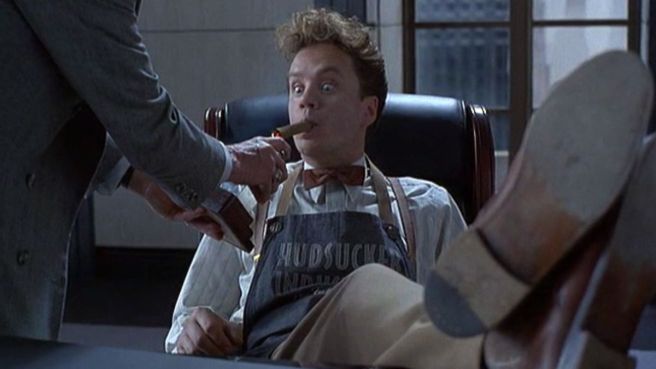
The Hudsucker Proxy (1994)
The Coens were handed their largest budget yet for The Hudsucker Proxy and it was to be their biggest failure in terms of box office. It must have been a hard sell given that it feels like a Frank Capra inspired fairy tale cross bred with the screwball comedies of the 1930’s and 1940’s, is set in 1958 and has a very peculiar title.
The film begins with the suicide of Waring Hudsucker (Charles Durning), the President of an extremely wealthy company just as naive business graduate Norville Barnes (Tim Robbins) walks in looking for a job. The board of Hudsucker Industries led by Sidney J. Mussburger (Paul Newman) decide they must hire an idiot to take over in order to drive the stock down to an affordable price so that they can take over. And of course Norville gets the job. They just did not factor in the possibility he might have some great ideas up his sleeve. Add in hard nosed reporter Amy Archer (Jennifer Jason Leigh) to investigate and you have the possibility of romance as well.
The Capra feeling goes as far as to have a near suicidal man run through snow when he has an epiphany whilst Jennifer Jason Leigh gets to do her best Katherine Hepburn impression as a fast talking journalist who wants to be one of the guys.
There are some really great moments in here as well. Paul Newman seems to be enjoying being a Machiavellian schemer, the recurring theme of circles (Hula Hoops and Frisbee are inventions featured) and Norville’s fantastic catchphrase, “You know, for kids!”. And Sam Raimi’s involvement is felt keenly here as well. He is co-writer, directed two of the best scenes in the film as 2nd unit director (the opening suicide and the hula hoop sequence) and his good friend Bruce Campbell does a great job as Jennifer Jason Leigh’s journalist foil Smitty.
Despite all of these great things, it does not come together as well as their other features. But, a lesser Coen film is still a very high bar.
Fargo (1996)
Coen Masterpiece #2.
Probably the Coen Brothers most famous film and the one that brought them to my attention, Fargo is an undisputed masterpiece. Nominated for 7 Oscars including Best Picture and Director it picked up 2. The Coens won best original screenplay and Frances McDormand won for best actress in a leading role.
The film is a true crime story. In fact the Coens placed a now famously false statement at the beginning of the film that it was based on a true story. It was not. But the goal of ensuring that we understand this is taking place in the real world and not in the surreal ones in some of their previous films is achieved. And perhaps the key to its success is that this is a crime story that is funny and features one of the most heroic and pure people in any Coen film, Marge Gunderson (Frances McDormand).
Jerry Lundegaard (William H. Macy) is in a spot of money troubles. In order to solve them he hires Carl Showalter (Steve Buscemi) and Gaear Grimsrud (Peter Stormare) to kidnap his wife to get a ransom from her rich father. When things start to go wrong and people are killed, Marge is the heavily pregnant police officer on their trail.
Essentially 3 stories that weave in and around each other we are treated to great acting performances tied with a brilliant script. Macy almost elicits sympathy from us when we see how desperate and stupid he is. Buscemi and Stormare make a brilliant double act, with the former being a motormouth who starts off as logical and sane whilst Stormare barely utters a word and manages to be scary and cold hearted. And then 32 minutes into a 98 minute film Marge Gunderson steps into the picture. Her character disarms people with her niceness and the Coens make a point of showing her normal life and how she interacts with people. A beacon of light in a sea of darkness.
Technically everything comes together beautifully as well. Set in Fargo and Brainerd in Minnesota the Coens make great use of the local dialect and create some great comic moments with the repeated use of the phrases “funny looking”, “jaa” and “the heck do ya mean?”. Cinematographer Roger Deakins shoots some truly memorable vistas in the snow. Shots involving cars travelling are particularly great. Composer Carter Burwell creates another memorable score using a similar method to Miller’s Crossing, where he took a Scandinavian folk song called The Lost Sheep and expanded upon it to create the opening theme.
The film does not put a foot wrong. And there is no better compliment to how good it is than Noah Hawley’s TV series that is both a love letter to the film and the Coens entire film catalogue. With 3 series at the time of writing that tap into the film’s themes and create brilliant crime stories.

The Big Lebowski (1998)
Coen Masterpiece #3.
I recently got to see the The Big Lebowski at a 20th anniversary screening and you can read my review HERE.
For fear of repeating my review, which says everything I need to say in regards to the plot and genius of the film I think I will just add a few minor additions.
- All of the pauses and uh’s uttered by The Dude were in the script
- The characters were based on real life people
- This was the Coens first collaboration with T Bone Burnett to put together the soundtrack
- An annual festival called Lebowski Fest began in 2002 and is still going strong!
Overall The Dude is the most quotable character and The Big Lebowski the funniest Coen film.

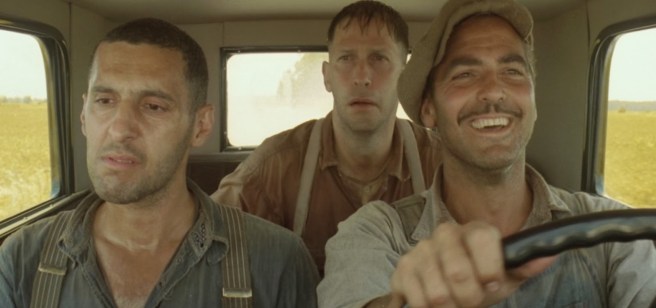
O Brother, Where Art Thou? (2000)
O Brother sounds on paper like an incredibly grandiose affair but is actually very lightweight and a lot of fun. An adaptation of Homer’s epic poem The Odyssey in the form of a musical journey across the Deep South with a trio of escaped prisoners from a chain gang. What this actually transpires as on screen is a series of loosely connected comedy vignettes with the Coens version of The Three Stooges. The trio of escapees is led by George Clooney, in his first of four (so far) collaborations with the Coens where he uses his 1950’s Cary Grant persona to play vain idiots. The trio is completed by John Turturro (by now a Coen regular) and Tim Blake Nelson (who will appear again in The Ballad of Buster Scruggs).
Its biggest commercial success and a part of its most joyous moments are its use of traditional and bluegrass music compiled by T. Bone Burnett. The soundtrack having gone platinum many times over. The runaways even cut their own record during the film taking the group name of The Soggy Bottom Boys.
The plot is simple enough. Ulysses Everett McGill (Clooney) persuades his fellow chain gang members to escape on the pretence that a treasure he buried is going to be flooded in 4 days thanks to a new man made lake. Chased by the devil himself in the form of a sheriff in dark glasses they face the same perils as Odysseus. Their encounters will include a Baptist congregation (The Lotus Eaters), a one eyed bible salesman (Polyphemus the cyclops), a railroad hobo with the gift of foresight (blind seer Tiresias) and three washerwomen singing a transfixing song (the Sirens).
And if all that sounds complicated, remember that this is a screwball comedy crossed with a blues musical and it features some glorious physical humour and delivery from Clooney and some key Coen peculiarities. Such as Everett’s obsession with his hair pomade, “I’m a Dapper Dan Man” and his catch phrase “we’re in a tight spot”.
Finally it would be remiss of me not to mention Roger Deakins absolutely superb photography. Something made all the more complicated by the fact that the summer the film was shot it was particularly verdant and green. Resulting in the film makers taking the step of digitally altering every single shot of the film to desaturate the colour and give it the yellow and brown look they were after.
The Man Who Wasn’t There (2001)
Set in 1949, The Man Who Wasn’t There is about a barber who wants to become a dry cleaner and a blackmail scheme that goes horribly wrong. What makes the film so incredibly interesting is the mood created by the sumptuous visuals, a beautiful piano score and a captivating performance.
Shot in colour and converted to black and white, Roger Deakins’ shots are works of art. The use of shadow and the framing of images give the film an artistic feel that a Coen film has not had before. The piano score (seemingly played by a character in the film) fits perfectly with the melancholic tone. And then there is Billy Bob Thornton. Ed Crane is a man who doesn’t talk much. Although a Coen irony is that he is the narrator of the film, so we will get to hear him talk a lot. On screen Thornton says little, stays incredibly still and appears to be an observer in his own life. In narrating we get to hear Ed’s inner thoughts, a man who seemingly has little emotion and is accepting of anything that comes his way, even his own death. Without a performance this good the film would very likely have fallen apart, so central is it to its success.
The plot is another example of the Coens creating a complex web of coincidence and crime story. Ed Crane (Thornton) married into the barber business. One day when cutting hair with his motormouth brother-in-law (Michael Badaluco) he comes across an entrepreneur (Jon Polito) looking for investors in his dry cleaning business. In order to get the money for the investment he decides to blackmail Big Dave Brewster (James Gandolfini) who is having an affair with his wife Doris (Frances McDormand). When this enterprise goes awry, Ed seeks advice from local lawyer Walter (Richard Jenkins), becomes enamoured with his daughter Birdy’s (Scarlett Johansson) piano talent and things go from bad to worse. The plot even finds time to fit in mentions of alien landings (this is a black and white film set in 1949 after all) and features a rip roaring cameo from Tony Shalhoub as the extraordinary lawyer Freddy Riedenschneider who argues a defense based on Heisenberg’s Uncertainty Principle.
All of this of course seems to leave Ed totally unfazed. If there is any deeper meaning to be had from it all, Ed wouldn’t let that upset him.
As far as Coen affectations go quite a few can be found here. An opening scene telling us all the types of boys haircuts and the idea of a film about a barber go all the way back to a piece of set dressing on The Hudsucker Proxy that the Coens kept. Jon Polito, wears a wig just like a character in Miller’s Crossing, a film he featured in. Big Dave is a war veteran constantly telling stories just like Walter in The Big Lebowski. And the Uncertainty Principle will feature again in A Serious Man.

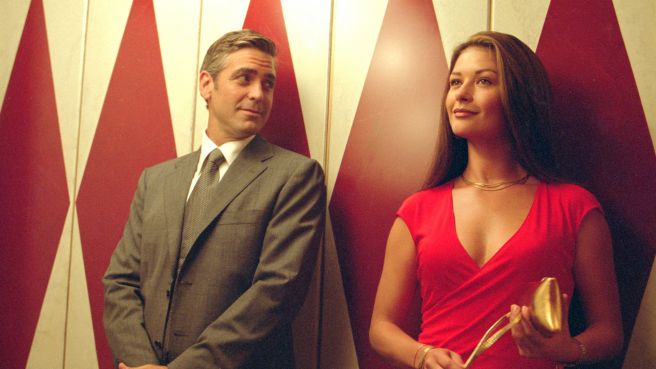
Intolerable Cruelty (2003)
Intolerable Cruelty was to be a first for the Coens as it was their first ever film which they didn’t shape from the very start. Originally hired as script polishers to add some quirk to an already completed work they took on the film when their adaptation of James Dickey’s “To the White Sea” starring Brad Pitt fell through. Originally earmarked as a vehicle for Richard Gere and Julia Roberts the Coens gave the leads in this screwball romantic comedy to George Clooney and Catherine Zeta Jones.
The plot revolves around Clooney’s bored divorce lawyer who can write an impenetrable pre-nuptial agreement and Jones’ professional gold digger. And the question of whether she is truly falling for him or making him a mark. Clooney’s second role for the Coens bares some resemblance to his first in O Brother. In O Brother he only impersonated a lawyer, here he is one. Equally as verbose and this time obsessed with his teeth rather than his hair. He is again brilliant. Doing his best Cary Grant Old Hollywood impersonation and as equally adept at wordplay and physical humour. Jones does not fare so well in so far her only Coen film. She looks ravishing in the role (one of the film makers conceits is that she never wears the same outfit twice). But her ice maiden femme fatale doesn’t quite resonate.
Perhaps Jones’ calculating gold digger doesn’t register because of the world she is in. The Coens here are possibly as close to Raising Arizona zaniness as they ever have been. None more so than with the exceedingly crazy character names and characters on display here. When you have the stupidest hitman imaginable in the form of Wheezy Joe (Irwin Keyes), the incredibly camp Heinz, The Baron Krauss Von Espy (Jonathan Hadary), a private detective obsessed with nailing your ass (Cedric the Entertainer as Gus Petch) and a jilted soap opera producer (Geoffrey Rush as Donovan Donaly) an ice cold femme fatale can seem out of place.
A lesser Coen film then, but thanks to Clooney and some peculiar characters it is still a lot of fun.
The Ladykillers (2004)
The simplest way to start this review is to say that this is hands down their worst film to date, although that isn’t to say there is nothing interesting about it. Originally the Coens role in this film was simply as screenwriters. Barry Sonnenfeld, their Director of Photography on their first 3 features was now a big Hollywood director in his own right and wanted to remake the classic Ealing comedy with Tom Hanks. He enlisted the Coens to write the script but when he was unable to make the film, they were asked and the draw of making a film with a bonafide movie star was too good to turn down.
Whilst this is the Coens only remake to date (True Grit was an adaptation of the book rather than a remake of the film) it oddly changes the winning structure of the Ealing film. In the original the crime is completed cleanly and quickly and the bulk of the film is about the difficulty of killing an old lady to cover their tracks. Here the crime takes up the bulk of the running time with us led through the meticulous planning and completion of it whilst the attempted murder only covers the final 20 minutes. The issue is that this means the comedy has to work on a different level. In the original we have an incredibly smart bunch of criminals unable to kill a frail old woman oblivious to their game. In this remake we have a bunch of bungling criminals with the comedy landing firmly on their peculiarities.
There are 5 criminals. Tom Hanks verbose professor who makes himself laugh in a peculiar way. Marlon Wayans motormouth who will either amuse or frustrate you depending on your comedic preference. J. K. Simmons explosives expert, easily the funniest of the group with his own catchphrase; “easiest thing in the world”. Silent enforcer Tzi Ma and incredibly dumb Lump played by Ryan Hurst. Hanks, Wayans and Simmons make the best mark on the film in terms of actually generating laughs but the group as a whole don’t wholly gel together. And of course we have Irma P. Hall as the titular lady, playing a rather stereotypical gruff black lady.
Visually it has some very striking moments. A portrait on the wall changes expression depending on what is happening and the foggy bridge where the crew dump unwanted items onto a rubbish barge looks fantastically gothic in its representation of the gateway to hell.
Unfortunately some funny moments and striking imagery do not entirely make up for a film that does not quite hang together and certainly does not hold a candle to the original.

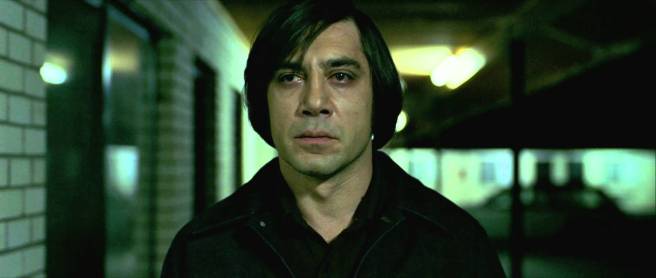
No Country for Old Men (2007)
Coen Masterpiece #4.
The Coens follow up to their worst film was the Oscar winning No Country for Old Men. Winner of Best Picture, Best Director, Best Adapted Screenplay and Best Supporting Actor at the 2008 Academy Awards.
It is a stunning adaptation of Cormac McCarthy’s novel and for the first adaptation by the Coens it is certainly a perfect pairing.
Set in 1980 around the time of a huge escalation in violence around the drug war it is both a mediation on the violence of our times and a cat and mouse chase movie. Whilst out hunting, Llewelyn Moss (Josh Brolin) comes across a drug deal gone wrong with no survivors, finding a suitcase of money he makes the fateful decision to keep it. Assassin Chigurh (Javier Bardem) is set on his trail to recover the money and Sheriff Ed Tom Bell (Tommy Lee Jones) seemingly always a few steps behind feels ill equipped to be the sheriff in a world where he no longer understands the extent of the criminality he now sees.
Dialogue is sparse and the actors do a fantastic job of conveying their characters. Chigurh is essentially the devil represented on screen and will probably be considered one of the greatest film villains of all time. With a unique method of opening doors and occasionally killing with a captive bolt stunner normally associated with killing cattle and a peculiar moral code. A scene where he asks a gas station clerk to call the toss of a coin is particularly tense! Moss is incredibly driven and Brolin does exceptionally in a role originally set to be played by Heath Ledger and that would place him in the Coens list of recurring actors. And Sheriff Bell is perfectly played by Tommy Lee Jones as our human insight into the world. His time is spent contemplating the violence in front of him.
It is very easy to compare to their other exceptional crime story Fargo. Bell is very similar to Marge, appearing nearly 30 minutes into the film he is our human connection trying to make sense of the world and whilst not appearing in the film for a large amount of time he makes a huge impact. He also has a scene just like Marge where he is able to piece together a murder scene with incredible skill. It also features a bag of money that people die over and an almost silent sociopath. Perhaps this is why the pairing of McCarthy with the Coens worked better than that of McCarthy with Ridley Scott in the interesting but divisive The Counselor (or perhaps it is that the Coens are better at writing screenplays than McCarthy).
The biggest complaints I have seen rounded on the film is that a certain key event happens off screen. But I think this is missing the point. The film consistently refuses to show violence as the violence happens. Moss comes upon the aftermath of the drug deal. Bell is consistently behind the curve on finding the killer and even key scenes with Chigurh when he is killing focus on him rather than the victim. It is interested in the aftermath of the crimes and in the devil conducting them.
Overall it is a stunning achievement.
Burn After Reading (2008)
After Oscar glory with No Country For Old Men the Coens returned to comedy. Although, some might consider the incredibly dark humour on display here almost nihilistic. In typical Coen fashion the plot is relatively complex for what actually amounts to a sex farce in amongst Cold War CIA conspiracy.
Osborne Cox (John Malkovich) is a CIA analyst who loses his job thanks to a drinking problem and an inflated sense of self worth. Unbeknown to him, his wife Katie (Tilda Swinton) is having an affair with Harry Pfarrer (George Clooney), a married man who happens to be a sex addict. Pfarrer is Clooney’s third Coen character and as with his others he is an idiot. A deputy U.S. Marshall with a DIY project that would make many blush and an obsession with “getting a run in” to keep in shape. Thanks to this convoluted affair some of Osborne’s writing is misplaced and lands in the hands of Hardbodies Gym employees Linda Litzke (Frances McDormand) and Chad Feldheimer (Brad Pitt). Linda is obsessed with expensive plastic surgery procedures to improve her appearance and Chad is a man-child stupid enough to go along with her idea of trying to sell the information to the Russians.
The story is fuelled by a group of characters who think that the events of their lives are more complex than they actually are. Pfarrer is paranoid he is being followed, Cox thinks that his memoirs will be interesting to everyone and Litzke thinks she can enter into a deal with the Russians to exchange information for money. When J.K. Simmons appears as a CIA head who is keeping tabs on Cox following his leaving the company he is completely bemused and disinterested in the bizarre lives of these people they can surveil.
This is one of the few Coen films that Roger Deakins is not behind the camera. In his stead they had Oscar winner Emmanuel Lubezki who they asked to make the film look like a Sidney Lumet movie.
If you can tune in to the black humour this is a farce that will have you grinning ear to ear.

A Serious Man (2009)
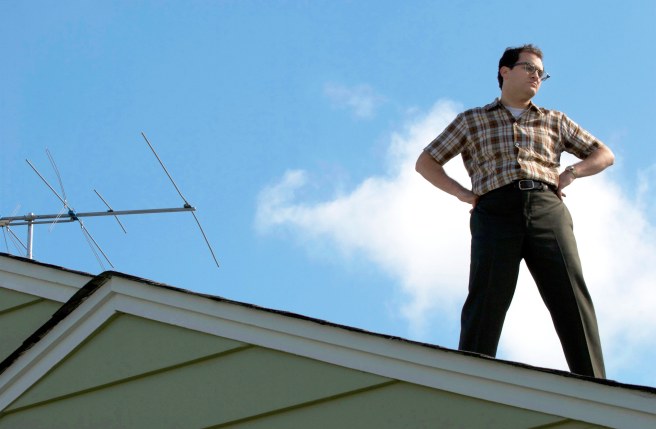
A Serious Man could arguably be the Coens most autobiographical film yet. The one thing for certain is that it’s the film that rose the most in my estimations in this project of mine. I recall seeing it at the cinema and being flummoxed by what it all meant and being slightly perplexed at the number of Jewish terms that were alien to me. But watching it again in sequence with their other films I found two overwhelming sensations. The first was how funny this film is. The second that I almost felt like I might understand what makes them tick.
The film starts with a scene in the distant past. Filmed in a 1.33:1 aspect ratio (whilst the rest of the film is widescreen) and colour graded to look old fashioned. Spoken entirely in Yiddish with subtitles it tells us of a man helped by someone on his way home, a person his wife believes died three years ago. She declares this person to be a Dybbuk, a term that refers to a dislocated soul of a dead person and she declares their family to be cursed. The story is not referenced again and it is for us to decide its bearing on the film that follows.
What follows is the story of Larry Gopnik (Michael Stuhlbarg) a maths professor beset by challenges. In the same way that O, Brother! was a loose adaptation of Homer’s Odyssey this is supposed to be an adaptation of The Book of Job. A man that God beset with trials to prove his faith. Faced with his wife leaving him, his brother sleeping on his couch and in trouble with the police, a Korean student trying to bribe or sue him, his neighbour impinging on his land and issues with his teenage children everything is falling apart. In his struggles he seeks out the advice of three rabbis. Each of these rabbis tell him a story. The bearing they have on Larry’s circumstance is questionable. Larry is unable to make head nor tail of these stories, despite him being a brilliant mathematician.
So what does it all mean? The film opens with a quote from Rashi, a scholar from the middle ages; “Receive with simplicity everything that happens to you”. And it focuses on the Jewish community who are a people with a rich heritage of stories. But our protagonist is A Serious Man, a man of science looking for meaning in everything that is happening to him, something he can not find with reason or with the stories of his religious leaders. Shouldn’t he accept what is happening to him without the added worry of trying to understand it? We see this in Barton Fink, when the titular character is always seeking meaning in everything around him and we can equally apply it to other Coen films. What does the hat represent in Miller’s Crossing? Marge and Ed Tom Bell trying to fathom the evil in this world in Fargo and No Country for Old Men. Is the mystery in the Coen films unlockable or should we just accept it with simplicity?
Other amazing Coen moments to be found in the film. The opening shot is of a camera pulling out of an ear canal to the headphone in the ear, down the wire into the radio whilst Jefferson Airplane’s Somebody to Love blazes out. This is a reverse shot of the Barton Fink sink plug hole shot. Whilst explaining the uncertainty principle Gopnik tells his students, “even though you can’t figure anything out you will be responsible for it on the mid-term”. And the final shot of the film is simply brilliant, with a note in the credits to tell us “No Jews were harmed in the making of this motion picture.”
True Grit (2010)
Where No Country for Old Men is a neo-western, True Grit is very much a traditional one. As with No Country, this film would be adapted from a novel and hew very closely to its text. The Coens have maintained they made this film as an adaptation of the Charles Portis novel, as though the John Wayne film did not exist.
It is perhaps, the least Coen of all Coen brother films as well. It conforms quite closely to most western staples. The cinematography from Roger Deakins is sublime, presenting stunning vistas and beautiful scenery. The story is told in a matter of fact style with death being dealt as just a part of life on the frontier, with the plot being about a U.S. Marshall and Texas Ranger being hired to bring a killer to justice. Although of course the Coens do bring in some unique moments to make the film their own. The most striking image being what appears to be an approaching bear sat on a horse, that turns out to be a dentist keeping warm in a bear skin.
For those unfamiliar with the story, it is fairly simple stuff, especially for a Coen film. Mattie Ross (Hailee Steinfeld) is a 14 year old girl tasked with wrapping up the affairs of her gunned down father. Discovering that the killer is likely to get away she enlists U.S Marshall Rooster Cogburn (Jeff Bridges) to track him down. Joining him on this task will be Texas Ranger LaBoeuf (Matt Damon). What unfolds is a tale of an unlikely father-daughter bond forming and one of our cast displaying the True Grit of the title.
The film is exceptional and this in the main is down to the performances and the characters on screen. The Coens were sensible enough to let the actors do the job for them.
Casting agents supposedly saw thousands of young girls before the pivotal role of Mattie Ross was given to Hailee Steinfeld. At 13 years of age and in her film debut she shows wisdom beyond her years in her portrayal.
Bridges (in only his second Coen film) is on exceptional form once you tune your hearing to his slurring, muffled delivery. I always felt as though the Oscar for Best Actor was given the wrong way round in 2009 and 2010. Bridges won in 2009 for Crazy Heart, beating Colin Firth’s performance in A Single Man. Whilst Firth won in 2010 for The King’s Speech over this Bridges performance. Great actors winning for what I considered to be the wrong performances.
Matt Damon, in so far his only Coen film gets to play the Coen windbag. A Texas Ranger full of himself battling a drunk equally full of himself reaches its hilarious conclusion when injured and drunk respectively they start shooting cornbread out of the air.
And of course the Coens attracted some great actors in small roles with Josh Brolin returning for his second Coen film and Barry Pepper and Domhnall Gleeson rounding out some of the more villainous roles. Albeit not your typical villains.

Inside Llewyn Davis (2013)
Coen Masterpiece #5.
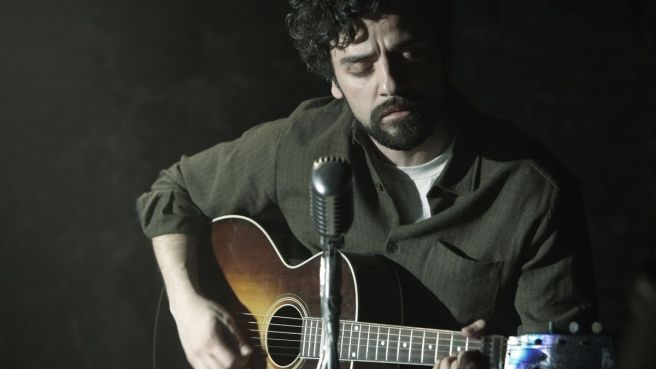
Inside Llewyn Davis instantly spoke to me on my first viewing in the cinema and if I were forced to choose a favourite Coen film this would be it. Featuring a beautifully curated set of folk music, an astonishing lead performance from Oscar Isaac and a melancholy tone I find it breathtaking on every repeat viewing.
Set in 1961 prior to the rise of Bob Dylan it is a week in the life of folk singer Llewyn Davis. As with Barton Fink he is a self defeating artist seeking deeper meaning in his craft. Homeless and depressed, he couch surfs his friends and acquaintances homes repeating what appears to be an unbreakable cycle.
The film opens with a full uninterrupted song performed by Oscar Isaac at one of his regular gigs. Isaac’s performance is so special because it is him singing and playing and it is in those moments that we truly get to see Inside Llewyn Davis. How Isaac was never nominated for a Best Actor Oscar for this performance is beyond me. The music selection was curated by a long time collaborator and a newcomer to the Coens. T Bone Burnett worked with Marcus Mumford (of band Mumford and Sons and would go on to be husband of Carey Mulligan who features in the film) to put together a selection of songs that in Llewyn’s words, “If it was never new, and it never gets old, then it’s a folk song”.
As we follow Llewyn around we are given glimpses into his psyche. He is clearly broken up and depressed about the death of his singing partner and dislikes playing with anyone else, to his detriment in one circumstance. He consistently makes bad decisions thanks to his single mindedness and his lack of financial stability. And even the cat he finds himself ferrying around the city seems to want to get away from him.
The supporting cast is exceptional. Carey Mulligan delivers a deliciously angry performance who loves or hates Llewyn, John Goodman plays the Coen gas bag, Garrett Hedlund plays an enigmatic driver and Justin Timberlake and Adam Driver play fellow performers.
Regular cinematographer Roger Deakins was busy making Skyfall at the time so they turned to Bruno Delbonnel who got an Oscar nomination for his work here. The film looks gorgeous, set in New York and Chicago in winter, it has a washed out and cold feel throughout.
To provide some balance to my gushing review I would point out that someone dear to me thinks the film boring as “nothing happens and he is a horrible person”. But for me the film is utterly perfect. It is very funny, very dark and very reflective as an inspection into the mind of a talented but failed artist. As John Goodman’s character in Barton Fink said “I’ll show you the life of the mind”.
As for the most Coen happening? That is a fight between the name of the cat which we find out near the end of the film, the joke that Llewyn’s partner couldn’t even jump to his death from the most famous New York bridge and the fact that it challenges A Serious Man for the most “what on Earth?” ending.
Hail, Caesar! (2016)
Hail Caesar is a much more fun and breezy Coen film absolutely filled with homage and love for the golden era of studio film making. Set in 1951 at Capitol Pictures (the same film studio that Barton Fink works at) it follows studio fixer Eddie Mannix (Josh Brolin in his third Coen film) over the course of 24 hours as he solves public relations issues for the studio.
Mannix is a real life individual who fixed issues for MGM and has been portrayed on film before by Bob Hoskins in Hollywoodland, but the only similarities to the real life person here are in name and job title. The main plot follows Mannix trying to deal with the kidnapping of lead actor Baird Whitlock (George Clooney) by a group of communist writers but the main fun in the film is everything happening around this plot.
Whilst Clooney plays his fourth idiot for the Coens, the kidnap plot feels like a vehicle to get us into the studio lot. The funniest recurring joke for Clooney is him trying to sit down in his Roman costume which he never changes from. Elsewhere we are treated to movie magic with a whole array of stars. Michael Gambon gives a grand voice over at various intervals and we are treated to clips from a western matinee with an acrobatic cowboy who sings, a synchronised swimming feature, a period drama, a prestige Roman picture featuring Christ and most impressively a song and dance routine worthy of Fred Astaire with tiny glimpses of their stars out of character.
Channing Tatum is our song and dance extraordinaire, dressed as a sailor in the “Swingin’ Dinghy” singing “No Dames” with huge amounts of homo-eroticism. Scarlet Johansson looks like an angel as a mermaid but acts and sounds like anything but when the camera isn’t rolling. Ralph Fiennes channels his brilliance at comedy with his snooty director Lawrence Laurentz. Frances McDormand appears as an editor who should not wear scarves. Jonah Hill as someone who meets the legal standard of personhood and Tilda Swinton plays twins who write gossip columns and hate each other.
And in amongst all of this brilliant peculiarity is the star making turn of Alden Ehrenreich (whom most will know as the young Han Solo). Ehrenreich is the matinee cowboy in question who is unassuming, charming and capable of jumping off horses, playing the guitar and performing brilliant lasso tricks. He is so charming it hurts and the peak of the performance is his “would that it were so simple” line delivery.
It could be argued that it was a vehicle to allow the Coens to exercise their film making skills and try out a slew of films, but when it is this much fun who is to argue?

The Ballad of Buster Scruggs (2018)
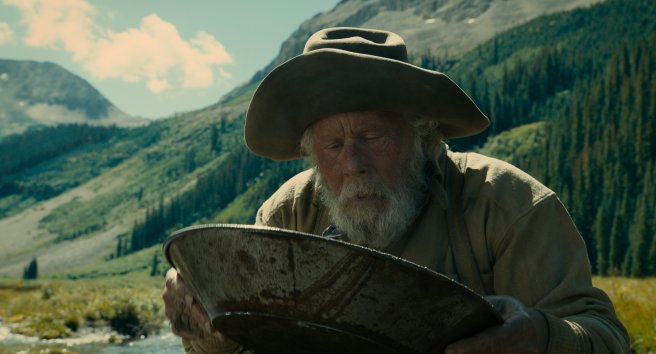
Buster Scruggs was released last year on Netflix Streaming Service and you can read my review HERE.
As with the Big Lebowski earlier I will just add some additional comments here:
- Originally planned to be a 6 episode western television series it is quite intriguing to see just how well it works as a film. All of the episodes mesh together in terms of an overall theme that reveals itself to you as you watch
- The Coens seem at home with the western. No Country For Old Men, True Grit, sequences in Hail Caesar! and these 6 stories
- None of the stories is a weak link. Quite often in an anthology film there will be 1 or 2 weaker stories. Here all 6 are strong and most people I have spoken to will have a different favourite
- Interestingly only Tim Blake Nelson is a returning Coen actor for this series of short films. But their ability to attract talent at this point means that the cast is filled with recognisable and talented individuals
I really would love to see Buster Scruggs on a big screen as the cinematography and sound are fantastic. Perhaps at some point Netflix might choose to do some anniversary releases of some of their films for fans.
Summation
I love Coen movies. It has taken me far too long to write this (damn you work!), but I have really enjoyed watching all of these films again. I even enjoyed the likes of Intolerable Cruelty and The Ladykillers more this time round and I certainly saw the brilliance in A Serious Man that I must have missed on my viewing at the cinema.
As with my comments on my previous piece on Wes Anderson the Coens do a number of similar things that I love in film makers. They have a knack of finding actors that fit their vision and use them in multiple films, they have recurring themes throughout their work and they write and direct films that represent their vision. Their weakest films are the two that were not originally derived by them for them. One thing that they do differently is to cast their net wider in terms of the genre they work in. Whilst they can broadly be described as swapping between comedy and serious films they have moved between contemporary, film noir, western, thriller and comedy.
One thing that has become apparent to me during this project is that the Coens love the idea of representing stories as having a deeper meaning, but never actually reveal what it might be. And if, heaven forbid, one of their characters tries to understand it we will see that the harder they try, the more difficult it becomes. Oh, and if you chase a bag of money you will die!
So, what is your favourite Coen? And do you agree with my five masterpieces?
Coen Brothers Ranked
Essential – A must watch for everyone
- Miller’s Crossing
- Fargo
- The Big Lebowski
- No Country for Old Men
- Inside Llewyn Davis
Good – Exactly that, a good film worth watching
- Blood Simple
- Raising Arizona
- Barton Fink
- O Brother, Where Art Thou?
- The Man Who Wasn’t There
- Burn After Reading
- A Serious Man
- True Grit
- Hail, Caesar!
- The Ballad of Buster Scruggs
For fans of their work – Fans will still enjoy these, less so for casual observers
- The Hudsucker Proxy
- Intolerable Cruelty
Eminently missable – Even fans might struggle, for completionists only
- The Ladykillers
 Phil the Bear's Film Reviews
4 thoughts on “The Coen Brothers Retrospective”