
When I was working at a cinema in 1999 a Magnolia trailer started playing over our television screens in the foyer on a regular basis. It caught my attention because the main bulk of it was a series of whip pans to characters who say their names direct to camera and otherwise it left the plot of the film completely under wraps. When I got to see the film I essentially fell in love with it and the sheer confidence and skill of its creator. Since then, as with the other directors I have discussed in features I have made it a mission to watch everything they create.
P.T. Anderson as he credits himself in his films is already a great American film maker. At the time of writing he has made eight films and I will discuss them all here. But in a break from my usual articles I will also include his work with musicians as he has created a number of music videos with a small group of artists that I enjoy very much.
As with other filmmakers Anderson has a group of key recurring collaborators.
Cinematographer – Robert Elswit has held this position for six of his eight films. Whilst Anderson himself has taken on the role in his other films.
Composer – Michael Penn provided the score for his first two films, Jon Brion then took over for two films before Jonny Greenwood took up the reigns for his next four films.
Actors – Anderson’s regulars include Philip Seymour Hoffman (5 films), Melora Walters (4 films), Philip Baker Hall (3 films), Luis Guzman (3 films), John C. Reilly (3 films), Joaquin Phoenix (2 films), Julianne Moore (2 films) and Daniel Day-Lewis (2 films).
Hard Eight (1996)
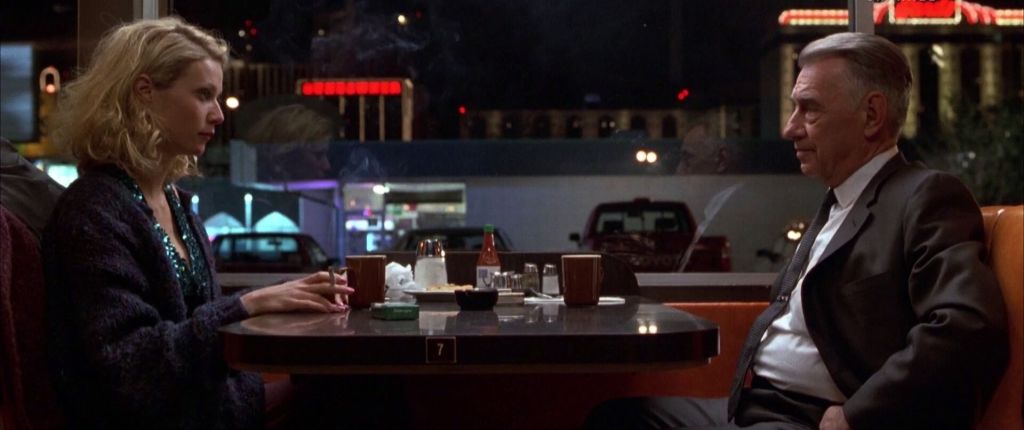
As Sydney (Philip Baker Hall) is walking into a diner for his breakfast he discovers John (John C. Reilly) sitting outside down and out on his luck. John has just tried and failed to win $6,000 dollars in Vegas to pay for his mum’s funeral. Over cigarettes and coffee Sydney offers to show him how to work the Casinos. Cut to two years later in Reno and they are firm friends.
Paul Thomas Anderson’s debut feature is a lean taught film noir with a mysterious central character who is specific in his use of words. When Sydney offers John help at the beginning of the film even John is suspicious about his ulterior motives. Whilst these will be revealed to us by the end of the story they are not as important as the relationships that Sydney forms with John and a similarly lost waitress named Clementine (Gwyneth Paltrow).
As is often the case with debut films the director had a battle on his hands to achieve his original vision. In the case of Hard Eight it was not related to financing or shooting conditions but an argument over the film’s title and final cut. Hard Eight evolved from Anderson’s 1993 short film Cigarettes & Coffee which also starred Baker Hall. Following the short film’s success at Sundance he expanded it to feature length and secured financing. He then shot his feature in 28 days and edited his cut of the film in another 21 days. An incredibly fast and efficient turn around but the film would not come out for another year. The production company were not happy with his cut or his title which was originally the same as its lead character, Sydney. Anderson submitted his original cut to Cannes and when they accepted it he was able to win the argument on the version of the film but not the title. Whilst the film is a character study of Baker Hall’s lead character Sydney the studio wanted to use the term Hard Eight which is a type of bet in the game Craps. A Hard Eight is when you make an eight by rolling two fours.
The film features Anderson’s now trade mark whip pan but is much more understated than his films to come. It also features a rather special group of actors for a debut film. Philip Baker Hall, John C. Reilly, Gwyneth Paltrow, Samuel L. Jackson and Philip Seymour Hoffman all grace the screen with their magnetic presence but it is the two Philip’s who really stand out. Hoffman merely has one scene as an enthusiastic craps player who goads Hall’s character and it is a whirlwind of a show.
It could be considered slow and ponderous by some but it is an excellent character study and a solid debut.
Fun fact, Philip Baker Hall also played a character called Sydney in 1988’s Midnight Run. The character came from Las Vegas and liked to wear nice suits. Was P.T. Anderson giving us a new story of an old character?
Boogie Nights (1997)
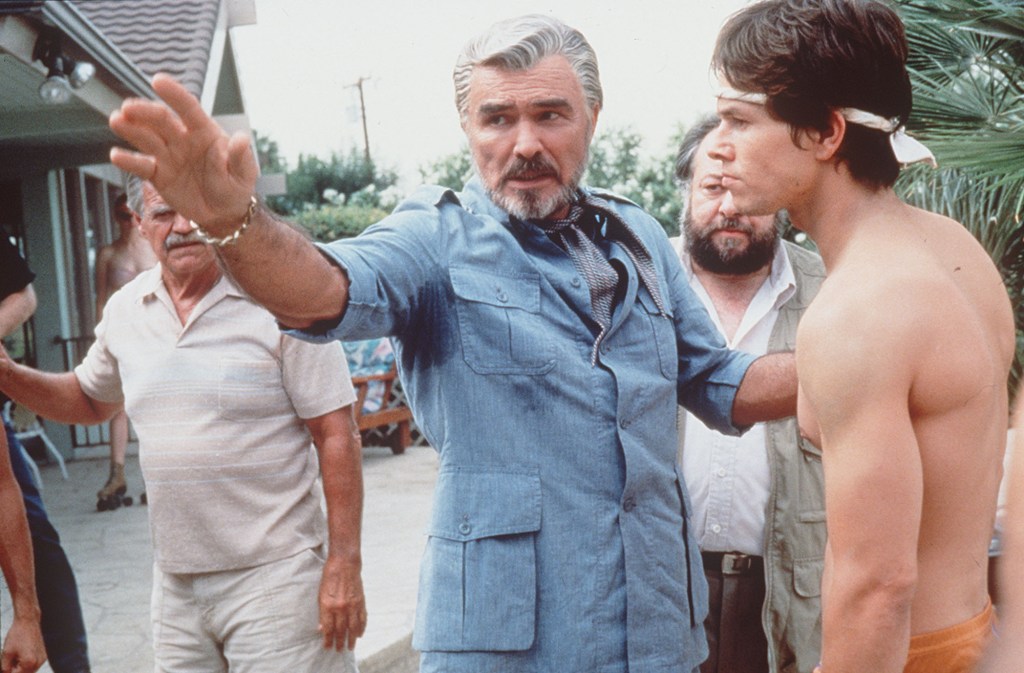
Eddie Adams (Mark Wahlberg) is working in a nightclub in the San Fernando Valley when he is discovered by erotic film maker Jack Horner (Burt Reynolds). Eddie chooses his star name of Dirk Diggler and takes the porn industry by storm as we see his rise and fall in the late 70’s and early 80’s.
What struck me most about watching this film again for this feature is how differently I perceived it as a man approaching forty versus when I first saw it in my late teens. As a teenager I recall the film being about excess and enjoyment that gets out of hand. All drenched in the titillating environment of pornography. Now my focus was more on the damaged individuals that fill the screen who are exploited and chewed up by this industry despite the family they manage to make for themselves. My recollections did not ready me for how dark and troubling it is. Now rather than enjoyment my emotion towards the film was admiration for it taking on difficult subject matter in a mainstream manner. Just like Jack Horner it seems that P.T. Anderson had managed to make a film where people stay for the story.
One thing that especially struck me is how much Anderson is showing off in this film. After his tight and controlled film noir this almost acts as an advertisement for how inventive and clever he can be with a camera. Filled with long takes, whip pans, slow motion and split screen there are two scenes (of many) that I have to talk about for sheer audacity.
The opening one shot. Starting outside on the street the camera follows traffic, enters a nightclub and proceeds to show us all of our main characters. Comparisons with Goodfellas nightclub date are obvious but the sheer audacity here of taking us through the entire club, meeting multiple characters and hearing their conversations whilst hundreds of extras are present is fantastic.
The pool party one shot. As the camera roves around a pool party, again taking in conversations from the many characters in the film it follows a character’s dive into the pool, go underwater and emerge to take in a conversation in a hot tub.
Of course style alone does not make a movie and Anderson does back this up with substance and there are three influences that I think form this film. Firstly, the real life career of porn star John Holmes gives Anderson the nucleus of the plot. Secondly the structure of Martin Scorsese’s Goodfellas as we follow a naive young man bewitched by a dangerous profession rise through the ranks and take a fall thanks to the excess of cocaine. Thirdly the ensemble casts of Robert Altman that really make the world feel alive and add depth to the different way people deal with their environment. The cast includes Don Cheadle as a porn star cowboy who just wants to sell stereos, William H. Macy as a man cuckolded by his wife, John C. Reilly as a sycophant who struggles to tell the truth, Heather Graham as a lost girl desperate for a mother, Julianne Moore as a mother figure who is desperate to replace her real life children whom she can not see anymore with surrogates and Phillip Baker Hall and Robert Ridgely as troubling producers. Both Reynolds and Moore were nominated for supporting actor roles at the oscars but amazingly neither won.
The film is filled with dark humour and manages to present a troubled group of people that have found each other to form a dysfunctional family unit to survive.
Magnolia (1999)
Magnolia opens with a series of amazing stories of coincidence as narrated by Ricky Jay before displaying the film’s title card and introducing us to every single one of the characters in the film as Aimee Mann’s “One” plays. The entire sequence is bravura film making filled with zooms, whip pans and kinetic camera moves and lays the foundation for my favourite P.T. Anderson film.
The film features eight interconnected main characters who are lonely, selfish or both and over the course of one day explores how the sins of the father impacts on the lives of the children. Because as the film points out on multiple occasions, “We may be through with the past, but the past ain’t through with us”.
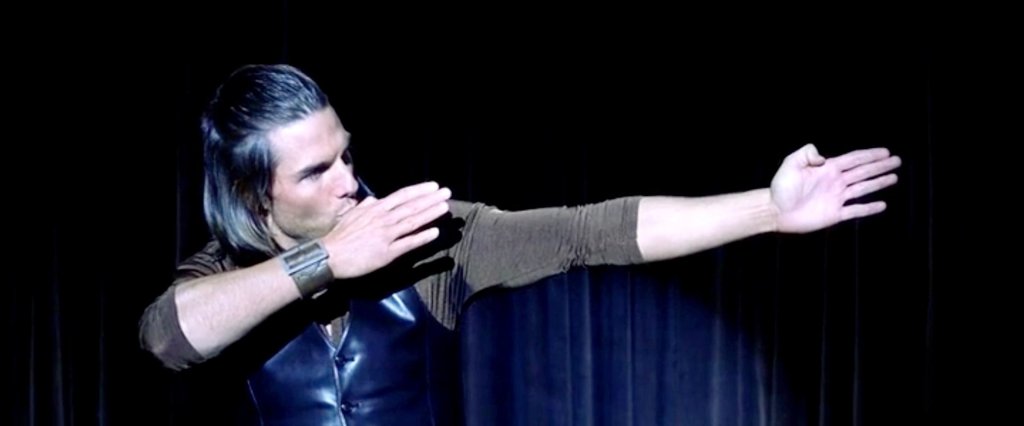
The cast of characters are as follows… T.J. Mackey (Tom Cruise), a man who sales his techniques to “Respect the cock! And tame the cunt!” Claudia Gator (Melora Walters), a drug addict who was abused as a child and is unable to heal. Jimmy Gator (Philip Baker-Hall), a game show host who has discovered he has terminal cancer. Stanley Spector (Jeremy Blackman), a whiz kid currently starring on Gator’s show. Quiz kid Donnie Smith (William H. Many), an ex child star of the quiz show, now washed up and trying to live off his past. Phil Parma (Philip Seymour-Hoffman), a nurse caring for Earl Partridge (Jason Robards), a television producer on his death bed due to cancer. Linda Partridge (Julianne Moore), the trophy wife of Earl and Officer Jim Kurring (John C. Reilly), a well meaning policeman trying to do the right thing.
Over the course of the film we will truly know all of these characters and love and hate them for the things they have done and the obstacles they are trying to overcome. Without exception all of our lead performers put in astonishing performances. Tom Cruise was nominated for Best Actor in a Supporting Role and it seems amazing now to say that he lost out to Michael Caine for The Cider House Rules. Cruise’s performance is probably the best thing he has ever done. Initially trading on his massive charisma he plays completely against type as a misogynist salesman who slowly comes undone as we learn the pain that has made him who he is. Elsewhere Julianne Moore unleashes the F-bomb many times as she slowly has a nervous breakdown, Jason Robards dies slowly, Philip Baker-Hall adds gravitas to a selfish man, Melora Walters is frantic and lost and William H. Macy and Jeremy Blackman show us the before and after of child fame. The anchor performances however are John C. Reilly and Philip Seymour Hoffman’s. Their characters are the only ones trying to help the damaged individuals around them and in them we see the fragility of the psyche of those taking on this difficult task.
Throughout the 3 hour plus running time Anderson does an amazing job of keeping you sucked into these people’s lives. The pacing and intercutting of the scenes creates a sometimes frantic, always gripping environment and he uses some interesting techniques to keep the audience on its toes. Featuring title cards with the weather forecast that reflect the tone of the story, a soundtrack from Aimee Mann and Supertramp that are truly a part of the soul of the story and it literally raining frogs there is never a dull moment. Speaking of the latter two points, there is a breathtaking scene where the entire cast sing Mann’s “Save Me” and obscure references in the background of scenes to Exodus 8:12.
It is very possible that if you do not buy into the idea and methods of the film that you may find it “over the top”, perhaps even histrionic and absurd. But Magnolia covers that too in its opening montage of coincidence, “if this was in a movie you wouldn’t believe it”.
A modern masterpiece.
Punch-Drunk Love (2002)
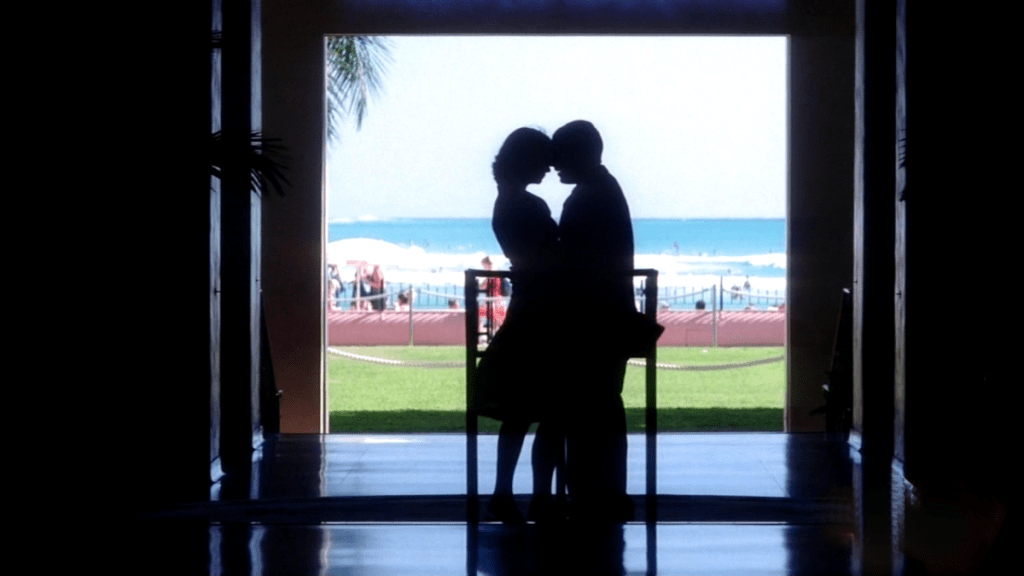
Barry Egan (Adam Sandler) works in a warehouse selling novelty toilet plungers. One morning a harmonium is abandoned on the lot that he works on and he meets Lena Leonard (Emily Watson). Two things that may provide him with an anchor as he battles against his own psychological issues with anger and a phone sex line trying to extort him of money.
Following the complexity and epic nature of Magnolia Anderson decided to make a “simple” film. As a fan of Adam Sandler he decided to make an Adam Sandler film that actually explored the dark nature of the characters he usually plays in his knockabout comedies.
However, simple and P.T. Anderson are seemingly not words that go together and of all of his films it has a weird sensibility that many may find hard to tune in too. The surreal opening scene where Barry witnesses a car accident and steals a harmonium sets the tone. It feels very unreal, just like the subplot where Dean Trumbell (Philip Seymour Hoffman), a purveyor of a phone sex line attempts to extort Barry. Although the other bizarre plot line where Barry buys hundreds of pots of pudding to exploit a free air miles offer is actually based on a real life event!
Anderson also uses visual and aural language to convey the emotions of his characters. You should notice that Barry always wears blue and Lena is in red. That Barry will reach for the harmonium when he is anxious and that the frantic nature of the music will convey his anxiety and mania.
It is a compelling and peculiar look at anxiety and if viewed through the lens of Sandler’s comic creations is actually an incredibly interesting take on what the reality might be for a person like that. And up until Uncut Gems it was Sandler’s best performance on film.
There Will Be Blood (2007)
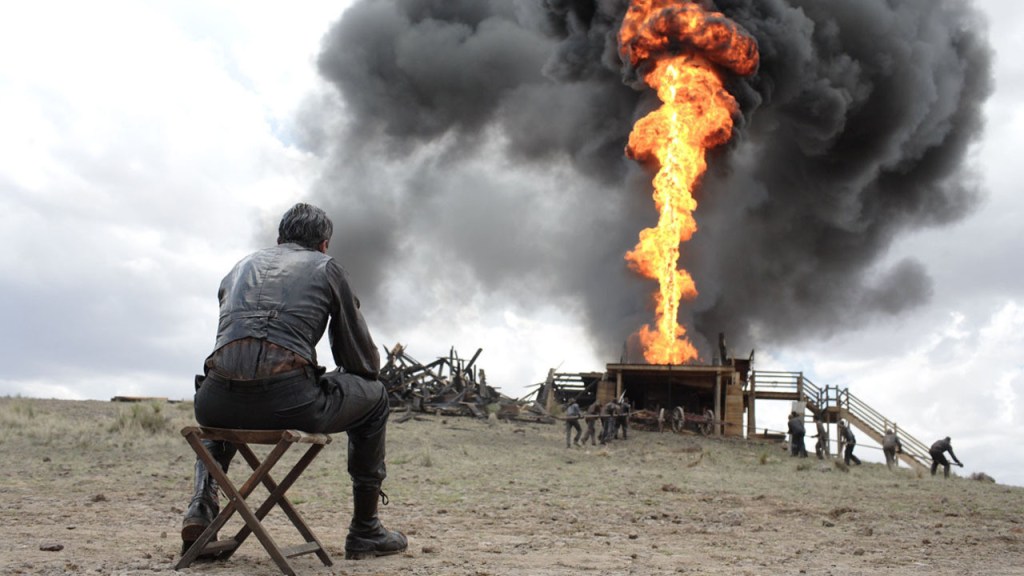
The story of Daniel Plainview (Danial Day-Lewis), a self made ‘oil man’ as he charts his way through the oil boom of the early 1900’s, There Will Be Blood is a modern masterpiece of American cinema.
Opening in 1898 we see a prospector toiling away at his plot. A loose ladder hold results in a serious injury and the camera pans out to the vast countryside that will need to be traversed to realise his efforts. In 1902 the prospector is now digging for oil. Another accident, this time befalling one of his workers leaves him with a baby to father. Then on to 1911 where, for the first time we hear the utterance of a word not cried out in pain in this magnum opus and Daniel Plainview, now with his young son, is pitching his services to a township as the right man to drill oil from their land. Within the opening fifteen minutes of this film, with barely a word uttered we are already aware of the lengths that Daniel Plainview will go, in order to win, in order to be wealthy.
When Paul Sunday (Paul Dano) comes to Plainview to tell him where he believes there is a large oil deposit, they strike a one time cash deal for the location of Little Boston, California. On arrival Plainview begins to buy all the land in the area so as to be able to drill, with his only rival being Eli Sunday, Paul’s twin (also played by Dano). Eli is a fire and brimstone preacher who claims to be the third revelation and will become Plainview’s nemesis.
The battle between Daniel Plainview and Eli Sunday is that of Capitalism versus Religion and ultimately the blood of the title is the life blood of America and that is no longer faith, but oil.
Paul Thomas Anderson wrote his screenplay for the film using Upton Sinclair’s book “Oil!” as loose inspiration and the film would be nominated for eight oscars, winning two for leading actor and cinematography. Whilst it is not surprising at all that it was highly acclaimed I was surprised to see that its score from Jonny Greenwood was not even nominated. This was Greenwood’s first score for Anderson and only his second ever on a film, but he has since gone on to provide the score for every subsequent Anderson film at the time of writing. The score provides so much of the character of the film with strings that at one moment will batter and bruise you and another soothe. It sets the tension and is an astounding piece of work. Add that to the Oscar winning cinematography from Robert Elswit (on his fifth consecutive film with Anderson) which consists of vast hostile backgrounds and intimate close ups and every frame of the film grips you like a vice.
Then of course we have one of the greatest actors of all time giving the sort of performance that beggars belief. Plainview is a complicated man despite his insistence that he speaks plain. At one point he tells his brother, “I have a competition in me. I want no one else to succeed.” And this is critical to his character, because whilst he has some connections, his son HW, his business partner Fletcher (Ciaran Hinds) and a brother Henry, none of them will stand in his way to succeed. Lewis gives a powerful performance whilst caked in oil and tanned from his outdoors activities. He is a powerful orator using a voice that could command legions and this role should go down as one of the all time greats. It is also worth saying how good Paul Dano is opposite him as Eli as well as he needs to be able to stand toe to toe with him and he does just that.
A film with no negatives. A master work and then there is that final line, those final two words that stun you when you thought you could not be more amazed.
The Master (2012)
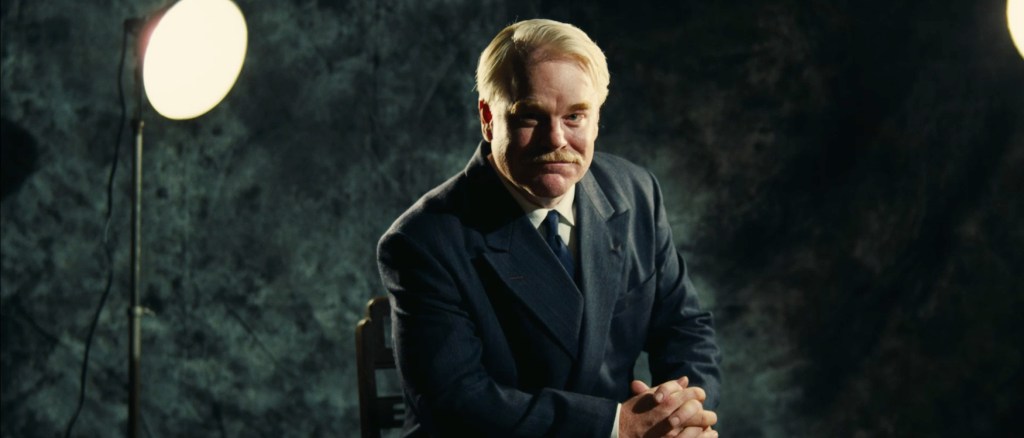
Naval veteran Freddie Quell (Joaquin Phoenix) arrives home from the Pacific War aimless and erratic until he stumbles upon Lancaster Dodd (Philip Seymour Hoffman), the self proclaimed Master of “The Cause”. What ensues is a titanic tussle of will between two strong individuals.
Opening in the pacific we see Freddie languishing on the beaches and the deck of the ship he serves on. Suffering from PTSD he makes home made hooch from missile fuel and curls up lovingly with a woman made of sand. On his return home he becomes a photographer at a department store but when he makes a connection with one of the sales women he sabotages himself and has to flee. As a farm hand his home made alcohol poisons a man and he has to run again. And it is then that he finds “The Cause”. Freddie finds a home there despite the fact that he is uninterested in the methods. It is just simply that he is needed and has a family.
Lancaster Dodd sees Freddie as a kindred spirit. He feels as though they have met before and he is bewitched by his home made hooch. Freddie becomes his subject to run his tests on and he wants to bend him to his will, but Freddie remains a loose cannon despite his best efforts.
The two men are physically and behaviourally opposite with the exception of their penchant to explode with rage. Quell is emaciated and angular. Dodd is doughy and round. Quell is impulsive and erratic, he roams around parties looking for something to calm his mind. Dodd is ordered, in control and wanting to control those around him. But together they have a connection that brings them together in a battle of will.
The film is probably most famous for the fact that “The Cause” is similar in nature to The Church Of Scientology but it is not really its main focus. Dodd is similar to L. Ron Hubbard. In the 1950’s he is authoring books about how we can unlock our true potential and creating a movement that is essentially a cult but pretends to be about helping all human kind. What this backdrop does for the film is simply create an interesting setting for our two main characters quests. Freddie Quell’s search for family and belonging and Lancaster Dodd’s search for acolytes and control. Which of them is the true master is up to you
The acting performances in this film are superb. Phoenix and Hoffman are at the top of their game and the many scenes between the two command your absolute attention. In the supporting cast we have an icy, controlling and powerful Amy Adams as Lancaster’s wife, Jesse Plemons as Lancaster’s son who knows it is all a sham but is clever enough to stay on the side that gives him power and Laura Dern as a preening follower.
As ever there are plenty of beautiful camera shots to discuss in an Anderson film. Shot in 65mm film stock to give it an epic sweep there are some amazing images that linger in the memory and tracking shots that stun. Seeing Quell balancing above the deck of the ship he serves on is particularly memorable as well as the tracking shot that follows the store clerk showing off the shops wares.
Jonny Greenwood’s score for the film is equally as important here as it was in There Will Be Blood. The repetitious nature of certain parts of it work in sync with the images on film to make certain scenes hypnotic as we see Dodd testing Quell by asking him to repeat certain behaviours.
As with There Will Be Blood this is a modern masterpiece.
Inherent Vice (2014)
In 1970 Los Angeles, private investigator and marijuana enthusiast Larry “Doc” Sportello (Joaquin Phoenix) is visited by his old flame Shasta Fay Hepworth (Katherine Waterston) and asked to investigate her concerns that her new boyfriend’s wife is trying to have him committed.
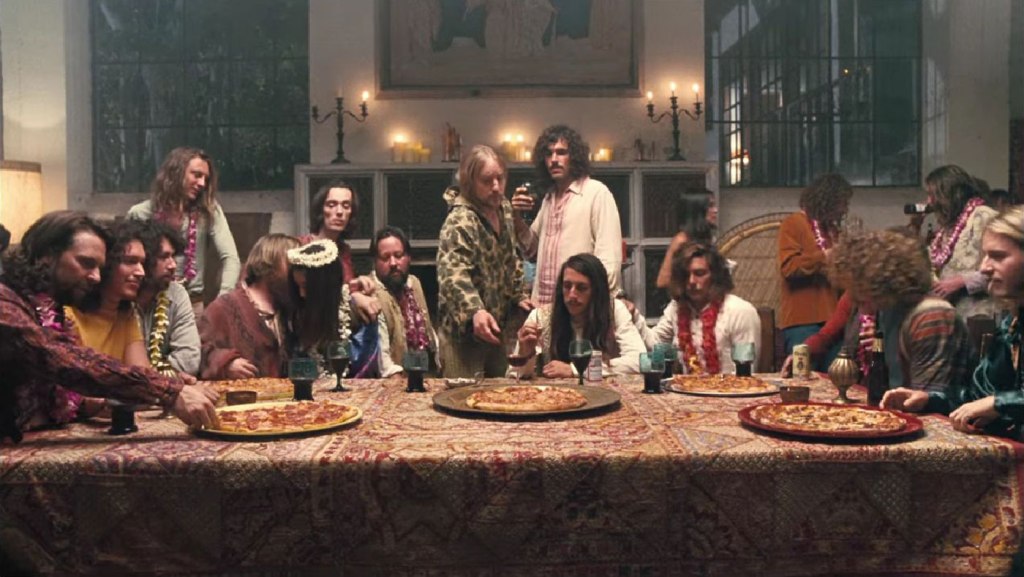
Adapted from Thomas Pynchon’s novel of the same name, Inherent Vice is impossible to categorise and at the time of release was probably the marketing department’s worse nightmare. It is a hard boiled detective story in the mould of Chinatown and The Long Goodbye with a mystery so layered and complex that it is nearly impossible to follow on first viewing. It has many farce like comedy moments with a lead who is permanently stoned like The Big Lebowski, but it is not an out and out comedy. And it is also a meditation on the collapse of the hippie lifestyle with jokes about gatherings of more than three men with shoulder length hair suggesting a cult gathering. And then of course there is that title, “Inherent vice is the tendency in physical objects to deteriorate because of the fundamental instability of the components of which they are made, as opposed to deterioration caused by external forces”. Which in this case seems to refer to the collapse of this society.
Ultimately the film can be enjoyed in many different ways or be completely misunderstood and maligned in a similar fashion to Punch Drunk Love. I have to admit to finding this one tough to love on first viewing, mostly because I had no idea what was going on thanks to the multitude of names, faces and threads that were being thrown at me. I found it hard to luxuriate in the smoke filled haze and humour of it all because I wanted to solve the mystery. But on subsequent viewings I am not sure that is the point. It is in the ridiculousness of the entire situation that we should be finding humour in because Doc is either the greatest or luckiest detective of all time or he has no impact on events at all. After multiple viewings I am still only ‘mostly’ sure that Sortilege (Joanna Newsom), the film’s narrator and assistant to Doc is all in his head for goodness sake.
The entire film hangs on another phenomenal performance from Joaquin Phoenix with a multitude of faces orbiting his presence. Katherine Waterston gives her breakout performance as the old flame who kicks the case off and then disappears, her scene late in the film where she seduces Doc is one of the most captivating in the entire film. Josh Brolin is a straight laced cop who seems to spend most of the film beating Doc up despite their homo-erotic connection. The scene where Doc watches him eat a chocolate covered banana as he drives them somewhere is hilarious. Elsewhere you will see Eric Roberts, Maya Rudolph, Michael Kenneth Williams, Benicio Del Toro, Jena Malone, Owen Wilson, Martin Short and Reese Witherspoon enter Doc’s orbit for one reason or another.
Anderson’s camera and Greenwood’s score are much less intrusive this time. Whilst Anderson still has an eye for a beautiful image he is much more inclined to let his camera stay still and let the cast perform, such as in the seduction scene I mentioned earlier. Whilst Greenwood’s score is less obtrusive and allows events to meander in their smoke filled haze.
A film that requires you to concentrate and let go both at the same time in order to tune in and enjoy. Certainly one that I have enjoyed more with each subsequent view.
Phantom Thread (2017)
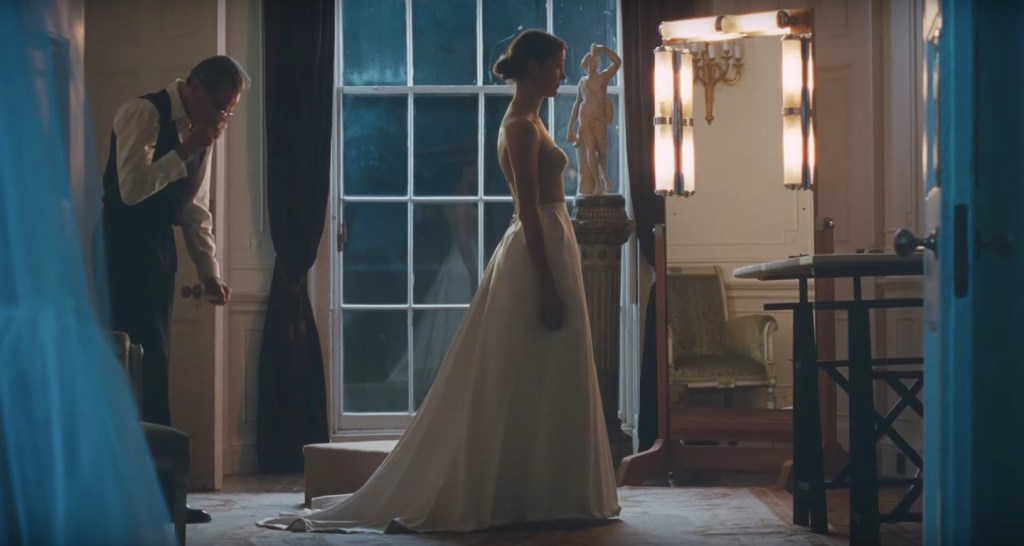
In 1950’s England, Reynolds Woodcock (Daniel Day Lewis) runs a fashion house of great esteem. When he grows tired of his latest girlfriend he escapes to the country where he meets waitress Alma (Vicky Krieps) who becomes his muse and partner.
Watching Anderson’s films back to back it is amazing how much I see of two of his previous works in Phantom Thread. It features the battle of wills between two powerful people that The Master has and the touching love story where two people can save each other from Punch Drunk Love. It is also far more accessible than both by virtue of it being on the surface a love story. If you scrape that surface you do of course see a curious dominant submissive relationship and a man obsessed with his mother and the need to be nurtured. But either way you look at it, it is captivating.
Reynolds Woodcock is another masterful acting performance from Daniel Day Lewis in his second film for Anderson and apparently his last as an actor. Reynolds is particular, fastidious and set in his ways. He learnt his trade as a couturier from his mother who died when he was young. As a result he is obsessed with her spirit and has a need to be nurtured. He is incredibly close to his sister Cyril (Lesley Manville), the only person who shares his love for his mother and between the two of them they build a wall against anyone who might get close. When his girlfriends get overly familiar he pushes them away and has Cyril do the dumping for him. That is until Alma comes along.
Alma is the first woman to challenge Reynolds. She does so from their first meeting and does not back down to his challenges. Reynolds tries to control her by dressing her to his design but she continues to have her own mind. So he tries to push her away and Alma has an answer to this to, one that will make you question which of the two is truly dominant in the relationship, but also one that displays a warmth between the couple.
Some important things to consider when watching. Food is important in this film, take note of when Reynolds is hungry and when he turns away food or drink. And the phantom thread of the title refers to the messages and secrets that Reynolds hides into the fabric of his clothes.
As with Inherent Vice Anderson lets his camera stay much more still when the actors are working. Allowing us to really appreciate the three fantastic central performances at the heart of the film. The costumes and set design are absolutely glorious in this period film and then of course we have Jonny Greenwood delivering another fantastic score. This time with a focus on beautiful sweeping piano at its heart.
Another work of art.
You can find my original review on this blog here and see how my first impression compares to now – Phantom Thread
>This next section has been added to provide links to my reviews for Paul Thomas Anderson’s films since I completed this article<
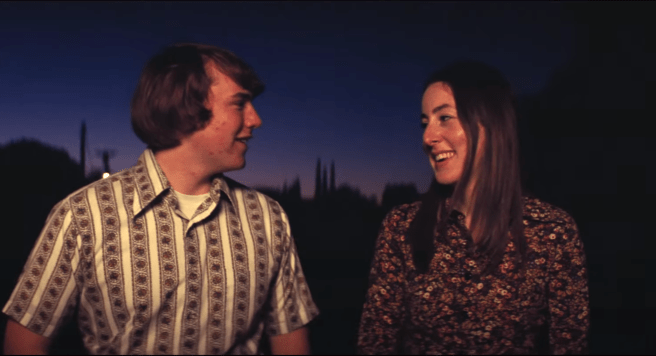
Licorice Pizza (2021)
>Original article resumes<
Music Videos
As promised here are my thoughts on PTA’s music videos. Presented in the main because Anderson seems to have a similar taste in music to me as I love Radiohead, Thom Yorke, Fiona Apple and Haim.
Anderson brings his technical virtuosity to these videos and if you are a fan of either him or the music these are worth a watch. All are available online for free.
Michael Penn – Try (1997)
Michael Penn provided the score to Hard Eight and Boogie Nights, a film he played a cameo role in. This video was filmed during its editing. Penn is the brother of actors Sean and Chris and married Aimee Mann (another Anderson collaborator) in 1997.
The video itself gives the impression of a one take tracking shot of Penn walking down an incredibly long corridor and features a cameo of Philip Seymour Hoffman as a roadie. Whilst I couldn’t profess to find the song anything more than passable easy listening the camera work and complexity of what is happening in shot is very interesting.
This video can be found as a special feature on the Boogie Nights DVD.
Fiona Apple – Across The Universe (1998), Fast As You Can (1999), Limp (2000), Paper Bag (2000), Hot Knife (2013)
Fiona Apple and Paul Thomas Anderson were a couple between 1997 and 2002 and collaborated on four videos in this period and added another one just over a decade later.
Across The Universe is a cover of the Beatles song and can be found on the Pleasantville DVD special features. The video features Apple singing in the diner from the film as it is destroyed by rioters and both the song and video are superb. The whole song has been slowed down compared to the original and to match it the video has the action in slow motion throughout. It is filled with long smooth takes that rotate around and towards Apple as she Sings. There is one fantastic moment of her rotating upside down as things carry on around her as well. This one is a must see.
Fast as You Can, Limp and Paper Bag are from Apple’s second album “When the Pawn…”. Fast as You Can is shot on a vintage hand cranked camera and features a number of close ups of Apple delivering the song’s fast paced lyrics. Limp has Apple wandering a large house and features a chaotic middle section with an impressive array of cuts to match the jazz orchestral in the middle of the song. Paper Bag is the pick of this group however, the best song of the bunch matched to a video that is an homage to musicals and perhaps more specifically Bugsy Malone. Apple looks radiant in a ball dress dancing with a group of youngsters who would not look out of place in that film.
Hot Knife is from her fourth album “The Idler Wheel…”. This video is pure technical artistry. Alternating between black and white and colour and using multiple split screens Anderson is able to portray the harmonisation on the song through the imagery. It looks simple but is absolutely brilliant. This one is also a must see.
Aimee Mann – Save Me (1999)
As mentioned above, Mann is married to Michael Penn and was a critical part of Anderson’s 1999 film Magnolia which she provided the soundtrack to. This video sees Mann in the same locations as the film with the characters who so desperately need to be saved. For me though it will always be overshadowed by the sequence in the film where the characters actually sing her song Wise Up.
Joanna Newsom – Sapokonikan (2015), Divers (2015)
I had not heard of Newsom prior to this article and on the basis of these two songs both on her fourth album “Divers” I am not likely to seek out more of her music. She has a very unique voice and her songs would probably land in the folk genre although she has provided vocals for songs by The Lonely Island, which is her husband Andy Samberg’s group.
Newsom appeared in and narrated Anderson’s film Inherent Vice.
Sapokonikan features Newsom roaming New York whilst Divers is a seven minute epic featuring her as a godlike presence in the sky. Divers has the better visuals but neither caught my attention.
Radiohead – Daydreaming (2016), Present Tense (2016), The Numbers (2016)
All objectivity now goes out of the window I am afraid. Radiohead are in my opinion the greatest band to ever grace the universe but I will do my best to stay level headed. Anderson has used Radiohead’s guitarist Jonny Greenwood as his film composer since There Will Be Blood.
All three of these songs come from Radiohead’s ninth studio album “A Moon Shaped Pool”.
Daydreaming is one of my absolute favourite Radiohead songs. The song features a delicate and beautiful piano melody and the video follows lead singer Thom Yorke as he constantly moves through doors and up lifts and stairs until he finds his way to a cave. There is an amazing fan video by Rishi Kaneria called “Radiohead: The Secrets of Daydreaming” which attempts to unlock the secrets of the video that is an absolute must watch for any fans. Kaneria explores how the video played in reverse represents a life and how the twenty-three doors that Yorke go through represent either or both of his years recording with Radiohead and his relationship with the mother of his children. It also attempts to explain the huge extent to which there are efforts to bury meaning into every shot. One interesting point from me is that when I listen to this song with a pair of headphones and my eyes closed I find it deeply relaxing and beautiful but when I watch the video it is given a much more frantic and desperate quality as Yorke strives forward through the doors of his life.
Present Tense and The Numbers are both live videos of Thom Yorke and Jonny Greenwood accompanied by a CR-78 drum machine. Both are intimate affairs featuring plenty of close ups and whilst I absolutely recommend them they are probably not essential for non Radiohead fans (is that a thing?).
Haim – Right Now (2017), Valentine (2017), Little of Your Love (2017), Night So Long (2018), Summer Girl (2019), Now I’m In It (2019), Hallelujah (2019), The Steps (2020) and Man From The Magazine (2020)
Anderson appears to have found new muses in the rock group Haim. Three sisters who create infectious upbeat pop rock songs that I really enjoy, especially on a summers day.
Anderson filmed five songs from their second album “Something To Tell You”.
Valentine is a short film of live recordings at Valentine Recording Studios. It features three of their songs; Right Now (also released separately), Something To Tell You and Nothings Wrong. Each video is a sequence of long roving takes that span the studio to take in each of the band’s performances. Right Now is the particular stand out as they switch instruments mid song and the sound of someone picking up some drum sticks has never sounded so immediate. Little of Your Love again features long takes of the girls performing a line dance routine in an L.A. Bar called Oil Can Harrys. Whilst the final video for this album is a particularly interesting live version of Night So Long at The Greek Amphitheatre in L.A. The first half of the video is the group performing live during their sound check before it switches to their live performance at the actual gig. It is sparse but effective as it switches from an empty theatre in the day to a packed one at night.
So far Anderson has filmed a further five songs from their third album “Women In Music Part 3”.
Summer Girl features long takes of the girls walking through Los Angeles disrobing from their winter garments whilst the saxophonist who plays the infectious chorus follows them around. They even take a spin round Quentin Tarantino’s The New Beverley Cinema. Now I’m In It follows the lead singer through a day in her life which believe it or not takes her through a car wash before her sisters bring her back to herself and take her out to a bar. It feels much more like a normal abstract music video! The video for Hallelujah returns to a much more intimate setting for a much more delicate song. The girls singing in an empty auditorium for the most part with some visual trickery as clicks of fingers turn off lights and waves of the hands draw curtains. The whole video was shot on location at the Los Angeles Theatre. The Steps was co-directed with Danielle Haim from the group and features the band getting ready for the day in what can only be described as a unique way. Man From The Magazine is an odd choice of song for a music video. It is a two minute acoustic piece and is not “single” material. Anderson has shot this with just Danielle from the band as she serves people in a delicatessen. Anderson allows the sounds of the store to bleed into the music but otherwise it is a low key video.
If you were to only watch one of these I would recommend Valentine or Hallelujah. But given I like the band and the director just watch them all!
Thom Yorke – Anima (2019)
Here is Anderson’s masterwork in his music video output.
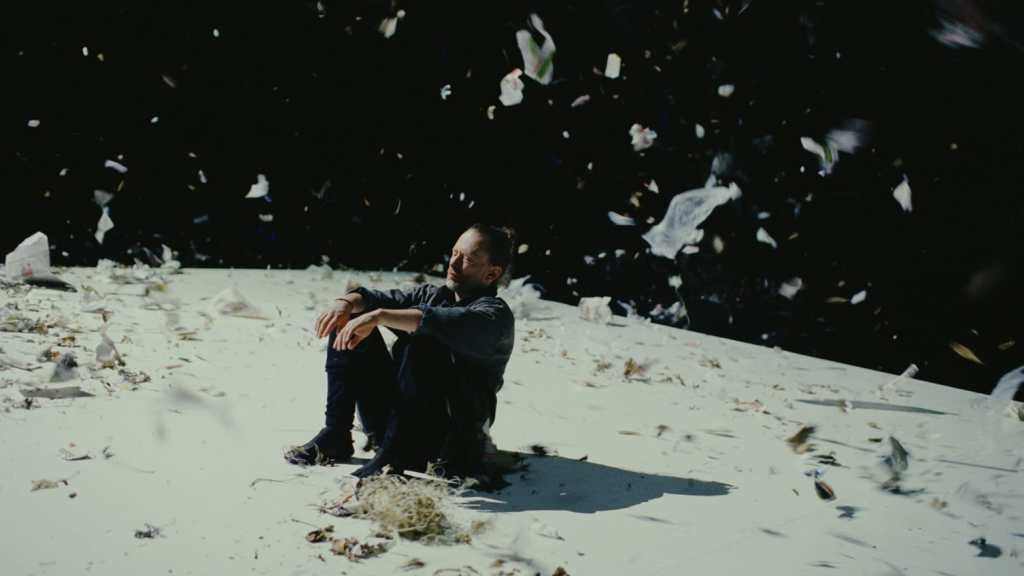
Anima is a short film that encompasses videos for three songs from Thom Yorke’s third solo album of the same name. Whilst this may sound similar to Haim’s Valentine it is not as here we have three separate videos that make one whole story.
Set in a dystopian future reminiscent of 1984 or Brazil the film opens with the song “Not The News” where Yorke rides a train with a swathe of uniformed workers apparently heading to work. Here he spots a woman (Thom’s real life partner, Italian actress Dajona Roncione) who forgets her bag and during the second song “Traffic” he pursues her in an attempt to return it. On finding her the third song “Dawn Chorus” plays and they walk through a city before getting on a tram presumably towards home.
For those unfamiliar with the Radiohead lead singer’s solo work his music has much more of an electronic dance vibe that manage to sound quite beautiful, especially the final song in this trio. Whilst the videos feature Anderson’s usually sublime photography of long takes the real master stroke is Damien Jalet’s choreography which is just amazing at conveying the story. Visually the most stunning video is the second where Yorke and a group of dancers are placed on a tilted platform with the camera at the same angle so that we can not see it.
This film is only available via Netflix but if you have that service is a must watch.
Summation
Watching all of PTA’s films again has been a joy. Every single one of his films is so multi layered that I always seem to get something new from it when I watch it and often I feel like I have missed or misunderstood so much more.
In terms of common themes he seems to return to the ideas of lonely men, father figures or the need or search for family and struggles for power between strong willed individuals. Sometimes these themes are wrapped in accessible and instantly enjoyable films and sometimes they are wrapped in much more challenging films that I can appreciate will not be instantly enjoyable.
He is also a master of camera movement, large ensemble casts and in his collaboration with Jonny Greenwood introducing scores that enhance the films he makes dramatically.
In terms of his feature films it already seems to me that he is assured a position as a “Great American Film Maker”. When it comes to his music videos it feels as though he is much more prepared to have fun and experiment. As his latter films have become more still and prepared to focus on actors performances he has placed his extravagant camera shots into his music videos.
Paul Thomas Anderson Ranked
Essential – A must watch for everyone
- Magnolia
- There Will Be Blood
- The Master
- Phantom Thread
Good – Exactly that, a good film worth watching
- Boogie Nights
- Licorice Pizza
For fans of their work – Fans will still enjoy these, less so for casual observers
- Hard Eight
- Punch Drunk Love
- Inherent Vice
Eminently missable – Even fans might struggle, for completionists only
None
 Phil the Bear's Film Reviews
4 thoughts on “Paul Thomas Anderson Retrospective”