
After six retrospectives I have elected to pick a director who for the first time does not hold a special place in my heart. That is not to say I have not enjoyed their films, in fact there are two films in her career that I absolutely adore. It is just that their films have not connected with the same resonance as my other picks.
The reasons that I picked Kathryn Bigelow are threefold:
- Firstly, this was another request from my readership and frankly that is so miniscule I would be remiss to not pay attention to them when they communicate with me!
- Secondly, I had not covered a single female director. Something that when I look at my short list of other directors I would like to cover is a continued failing of mine. Suggestions are always welcome.
- Thirdly, on investigation of her back catalogue I discovered that I had not watched half of her films! So this article includes my first time impressions of The Loveless, Blue Steel, Strange Days, The Weight of Water and K:19 The Widowmaker.
At the time I started this project Kathryn Bigelow was the only female director to win an Academy Award for Best Director. At the time of publishing, she has been joined by Chloe Zhao who won in 2021 for Nomadland, perhaps a step forward for the Oscars.
Bigelow made her first feature in 1981 at the age of 30 and it would be another 6 years before she could follow that up with her vampire western Near Dark. From there she has made her name as a consummate action director and can claim one of the most revered and quintessential action classics to her name along with her record breaking Oscar.
The Loveless (1981)
In 1950’s America a motorcycle gang head towards Daytona to watch the races. Stopping in a small town they pass the time at the local diner and garage. Some of the locals are not comfortable with their stay and one in particular strongly opposes it.
Bigelow’s debut feature film was as co-writer and co-director with Monty Montgomery and is a film reminiscent of The Wild One, although not one that will be remembered in the same pantheon. Montgomery is probably most famous now for his appearance as “The Cowboy” in David Lynch’s Mulholland Drive and did not write or direct any other feature after this one, whilst it would be another six years before Bigelow would direct again. The film only took twenty-two days to shoot and also went through two title changes before it arrived. It was also the debut film for Willem Dafoe. He did feature in a blink and you would miss it scene in Michael Cimino’s Heaven’s Gate before this, but given that he was fired from that picture because Cimino thought he could speak fluent Dutch it hardly counts. It shows brief shoots of their abilities but is a ponderous slow paced affair which is tough to recommend.
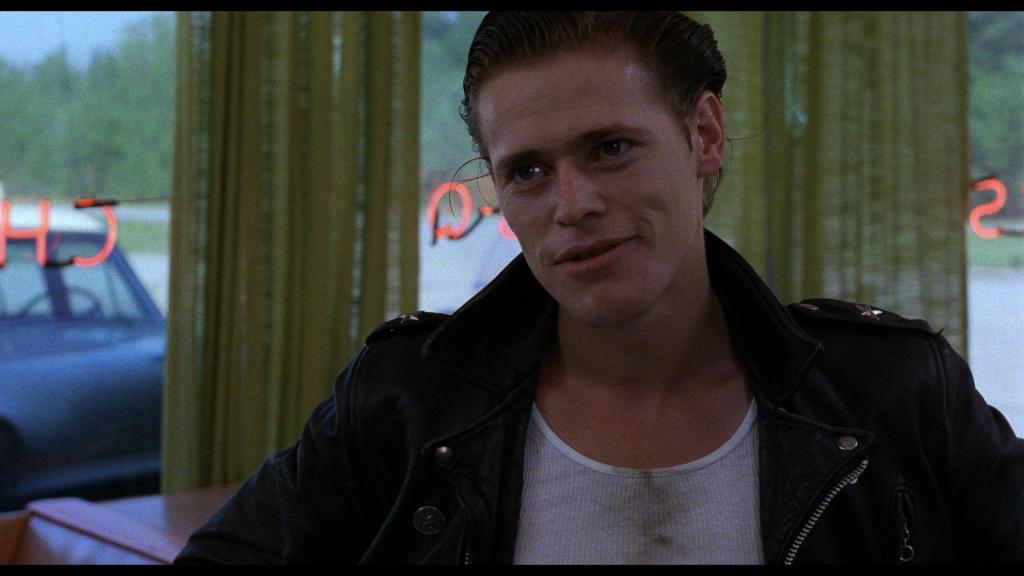
The film opens with Vance (Willem Dafoe) driving solo down the Highway. We see him change a stranded driver’s tyre where he declares that motorcycling on the black top is his life before he arrives at a diner and orders some eggs. Eventually his fellow motorcycle gang members arrive and they generally loiter around the local diner and garage. When Vance takes a ride with a local woman in her car it triggers some violent events.
For a film about a group of people who want to drive fast and are heading to the races it moves at a glacial pace. Every scene is measured and filled with silent moments between dialogue. The camera is still or moves in slow pans and the score is sparse. Perhaps because Robert Gordon who provided the music was also busy co-starring in the film. Running at only eighty-five minutes it only comes to life at the hour mark, with everything to that point setting the scene. Even then, what events do transpire hardly seem authentic.
Worth watching just to see how otherworldly Willem Dafoe looks as a pasty white, muscular and wiry man in black leathers.
Near Dark (1987)
Small town farm boy Caleb (Adrian Pasdar) is out one evening with his friend when he spots the beautiful young drifter Mae (Jenny Wright) with an ice cream. They spend the evening together and have an instant attraction but when dawn approaches she desperately pleas him to take her home. When he asks for a kiss she gives him more than he bargained for and bites him before her “family” grab him.
Near Dark is a cult vampire movie that I loved when I watched it many years ago and it was an eye opening experience to revisit it. My recollections were of an action packed cool feature film with Aliens Colonial Marines as vampires, but actually its far more of a love story with western overtones.
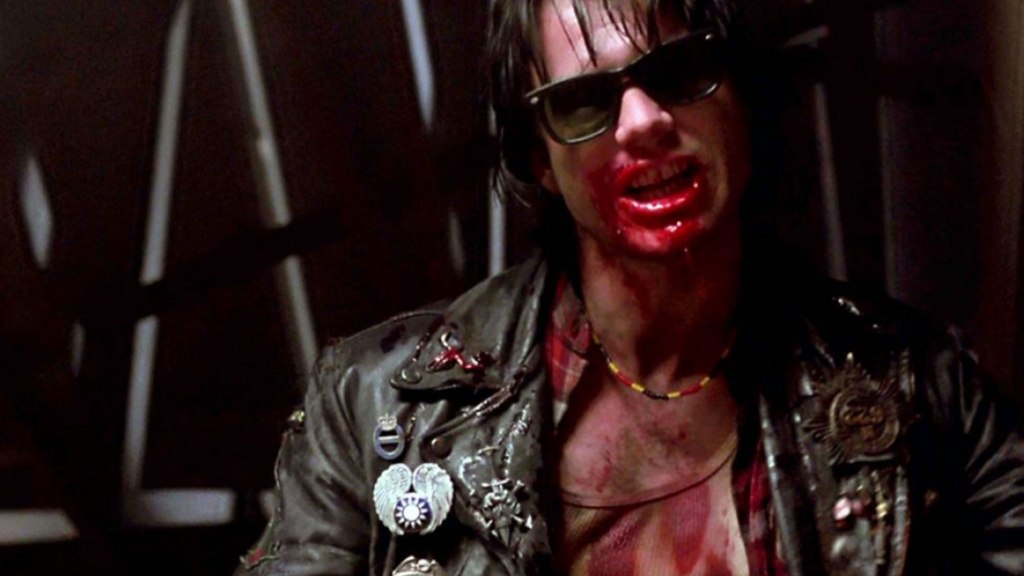
Caleb and Mae are like star crossed lovers. Their love for each other is instant and pure, but their families would never see eye to eye on the subject. Whilst Caleb’s father (Tim Thomerson) and sister (Marcie Leeds) search for him, Mae’s family give him a week to make a kill and become a true vampire. The vampire coven includes leader Jesse (Lance Henriksen) who has been around since before the civil war, Severen (Bill Paxton) who is a loose cannon who prizes his spurs, Diamondback (Jenette Goldstein) who likes to play with switchblades and Homer (Joshua Miller) who is the incredibly old vampire stuck in a child body. The first three of course were part of 1986’s Aliens cast and homage is paid to this early in the film when Caleb walks past a theatre playing the movie.
The vampires use incredibly practical items to keep themselves alive and their whole look is very ramshackle. They use packing tape and tin foil to block the sun in their vehicles and seem to be nomadic drifters with no real plan. In fact this aspect of the coven really frustrated me watching this film again. I constantly wondered how on earth they had survived as long as they had given their behaviour. They seemed to constantly get caught out by the time of day, they killed people and destroyed property at will which would seem to be high risk and their teaching methods to bring Caleb into the fold were non-existent. An interesting undercurrent to Caleb’s behaviour is how he still resists the urge to drink blood when to do so he would need to kill. Something that the rest of the coven seem to be completely oblivious to and unable to address.
Where the film excels is in its action notes and the sense of inevitable death when it focuses on the vampires. The bar scene where they tear through its denizens and the siege and escape from a motel room are particular highlights. The latter really focusing on the ultimate threat of the film, sunlight. The manner in which the vampires singe and burn in light are an example of really good practical effects and we see them often. Conversely its lowlights relate more specifically to the moment in time it was made. The Tangerine Dream score is jarring and the propensity for vehicles to explode in a ball of flame for the slightest transgression is comical.
Co-written with Eric Red, Bigelow takes sole directorial credit this time and their is a dramatic change from her debut film six years earlier. Where The Loveless was static and slow with little event, this is fast paced and filled with incident. Although its characters still seem to act arbitrarily than act like fully rounded believable people (or vampires).
Blue Steel (1990)
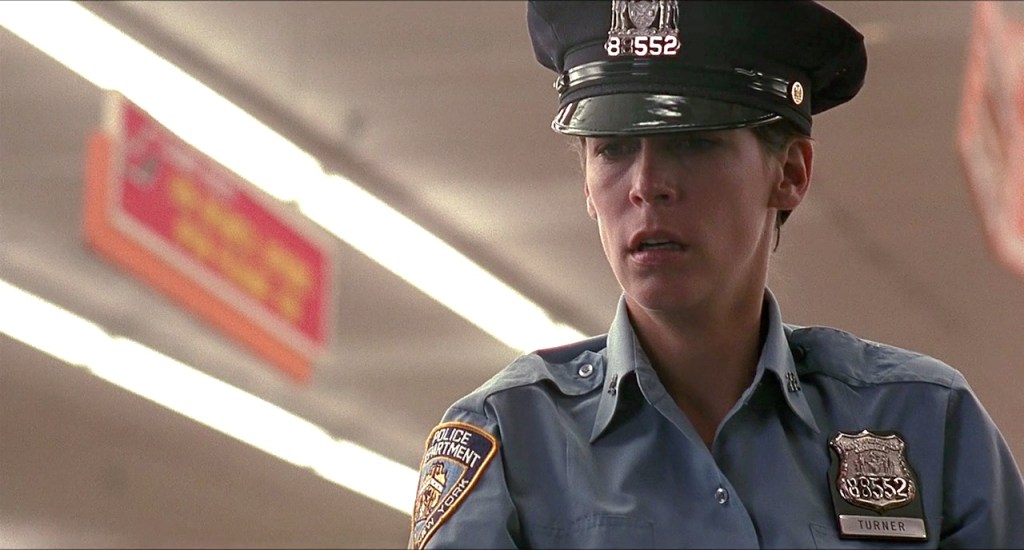
Rookie cop Megan Turner (Jamie Lee Curtis) is involved in a fatal shooting on her first day on the job. Wall Street trader Eugene Hunt (Ron Silver) who witnesses the event becomes dangerously obsessed with her and a game of cat and mouse ensues.
Blue Steel is an absolutely atrocious movie. I found it hard work to make it to the end of the film without shouting obscenities at my television as the plot just spirals from one implausible event to another. My notes at one point read “this plot is utter nonsense” underlined many times. Given that the film features the same creative team as Near Dark that seems quite unbelievable. Co-written again with Eric Red this is a 1990’s action thriller that deserves to be forgotten.
The plot follows Megan Turner, a New York rookie cop who has always wanted to be an officer because of her father beating her mother. On her first day after joking with her partner that she joined up to shoot people she unloads her entire gun on a store thief, played by Tom Sizemore. Failing to secure the dead thief’s gun or notice Eugene take it and leave she is suspended. But when someone is found dead with a bullet casing bearing her name she is inexplicably promoted to detective so that Detective Mann (Clancy Brown) can keep an eye on her. A job that he is awful at. From there it just gets crazier and crazier and I would not want to spoil you discovering its nuances for yourself.
The 1990’s aesthetics that would ordinarily be bearable or even fun in an interesting film becomes unbearable here. Bullets sound like cannons, police chief Hoyt (Kevin Dunn) is a no nonsense angry man, lawyer Mel Dawson (Richard Jenkins) is smug, Detective Mann is a know it all who achieves nothing, the villain is invincible and there is a lascivious sex scene that the film does not earn. Frankly the only thing that is worthwhile in the whole affair is Ron Silver’s utterly deranged turn as a man losing his grip on reality.
An absolute stinker.
Point Break (1991)
Ex-college football player turned hot shot FBI agent Johnny Utah (Keanu Reeves) goes undercover to try and find a group of bank robbers who may be surfers.
Point Break may well be Kathryn Bigelow’s most famous film. So famous that Edgar Wright and Simon Pegg paid homage to it in their action film Hot Fuzz. It features many iconic moments, great action sequences and is frankly one of the best action films made. If you haven’t seen it, you should remedy that situation as soon as possible.
When Utah arrives in Los Angeles he is met by the quintessential permanently mad police chief, here played brilliantly by John C. McGinley who describes him as, “young, dumb and full of cum” and is paired with the equally quintessential partner who gets things done in unconventional manners played by Gary Busey. Both McGinley and Busey do wonders with what could easily have been cliches, providing comic relief and pushing the narrative forward.
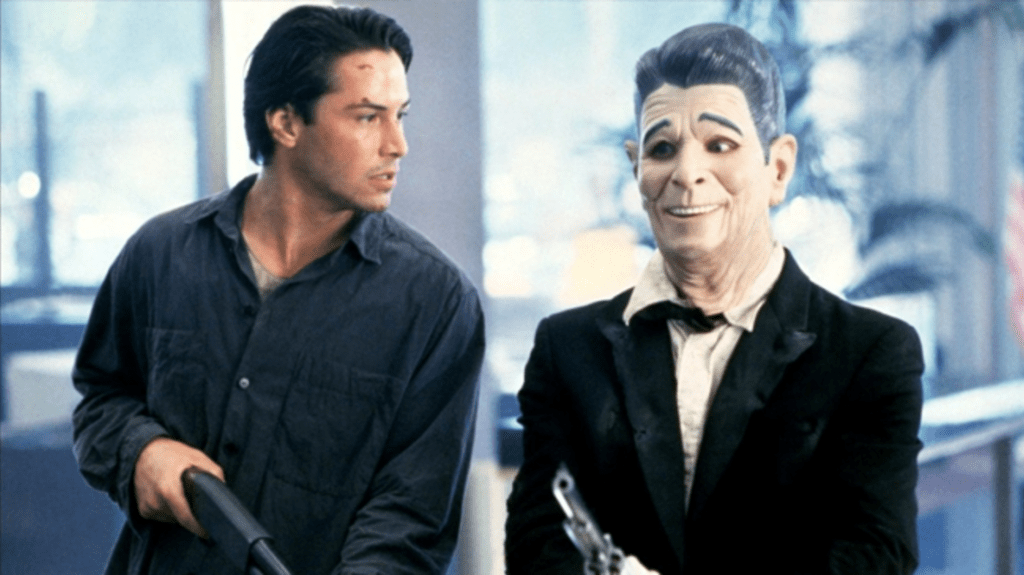
We are then introduced to “The Ex-Presidents”. Bank robbers who have been highly successful whilst wearing masks of Reagan, LBJ, Nixon and Carter to take down banks and the crazy theory that they might be surfers. Utah goes undercover developing a relationship with Tyler (Lori Petty) to learn to surf and eventually getting introduced to Bodhi (Patrick Swayze) and his tight knit group of surfers.
As we are treated to a coherent FBI investigation including the occasional mistake we take in some amazing action including surfing, skydiving, a foot chase, fights, gun fights and bank robberies. The camera work and authenticity throughout is exceptional. All of the lead actors had to learn to surf and skydive for the film and pro surfers were hired for minor roles in order to allow cameras to get up close and personal throughout. Swayze cracked ribs on the shoot and Reeves who learnt to surf for the film still continues to do so as he enjoyed it so much.
The pairing of Swayze and Reeves sparks brilliantly. Watching the film it is easy to draw parallels with Michael Mann’s Heat not just because of the bank robberies where the lead assailant jumps on the counter and barks his orders to the customers. The two characters they play are two sides of the same coin. Both incredibly driven and athletic but where one channels his energy into seeking out the biggest rush and the other into his job. The film excels by putting them both against each other and together. The relationship between Utah and Tyler also works as well, a relationship that is built up over time and earned.
Elsewhere in the cast there are cameos from Anthony Kiedis of the Red Hot Chilli Peppers and Tom Sizemore who cameos in Bigelow’s Blue Steel and would go on to star in Heat.
A genuinely exhilarating ride.
Strange Days (1995)
In the two days leading up to New Years Day 2000 we follow Lenny Nero (Ralph Fiennes), an ex-cop turned black marketeer of SQUID recordings. A device that allows you to record your actions directly from your cerebral cortex meaning the viewers of the discs can feel how you felt. His final days of the 20th century will unearth a conspiracy that will threaten his life and the lives of those close to him.
Strange Days is absolutely bursting with ideas. At a high level it is a conspiracy thriller set in a dystopian future that feeds on the paranoia that the turn of the millennium would bring with it the end of days. Deeper down it is a film that addresses racial violence and appears to have been inspired to some extent by the 1992 riots in Los Angeles. At the same time it posits an idea of future technology that will become a drug and the extent to which voyeurism leads to violence. It is worth noting that this film does feature scenes of quite strong sexual violence for those who might find that troubling.
The film is set in a Los Angeles of the near future that is reminiscent of Ridley Scott’s Blade Runner. The tension of the impending new millennium and the murder of important black rapper Jeriko One (Glenn Plummer) has made the streets a war zone between the police and the citizens. It is in this backdrop that we get to know Lenny who is selling his wares to those people looking for a rush. He watches SQUID videos of his ex-girlfriend Faith (Juliette Lewis) because he can not bare the fact that they are no longer together and leans on his best friend Mace (Angela Bassett) to ferry him around when his car is impounded. When he is given a snuff recording of an apparent rape and murder he is drawn into a conspiracy that may threaten the life of Faith.
With a running time of 145 minutes Strange Days has a rather sprawling plot that takes in police officers Steckler (Vincent D’Onofrio) and Engelmen (William Fichtner), best friend Max (Tom Sizemore getting a full role in a Bigelow film after previous cameos), music impresario Gant (Michael Wincott), prostitute Iris (Brigette Bako) and SQUID dealer Tick (Richard Edson). All play a part in the unravelling of the conspiracy at the film’s core.
The film features some incredibly impressive visual work. All of the SQUID videos we see are filmed from the point of view of the protagonist making them technically impressive and immersive whilst the crowd scenes of revellers waiting for the turn of the millennium have a massive scale. And whilst I have said that some of the visual stylings appeared to be inspired by 1982’s Blade Runner it also seemed as though the scenes where Nero reminisced about the love he lost may have inspired those in 2002’s Minority Report.
Ralph Fiennes does a great job in a role it is unfamiliar to see him in. Whilst he is not an action hero, he certainly is not the sort of squeaky clean person Fiennes is now known for portraying. Juliette Lewis also gets to show off her rock vocals as a singer. I had the luck of seeing her play as Juliette And The Licks in 2007 and she can rock pretty hard.
The film’s story is from James Cameron who co-wrote the screenplay with Jay Cocks. Cameron and Bigelow were briefly married between 1989 and 1991.
As a conspiracy thriller the film is pretty successful. There are enough possible villains to keep you guessing for a reasonable amount of time and the threads that lead to the solution are there for you to work it all out. As a commentary on racism it is mildly successful. This very much seems like a precursor to Detroit which I will discuss further below. In terms of its use and depiction of violence it is quite intriguing as it is a female director at the helm portraying some strong scenes of sexual violence towards women. Perhaps something that would have been much more controversial if the director was a man. But the film’s biggest weakness is its running time. In trying to do so much with such a sprawling plot and cast it feels overly long for this sort of thriller.
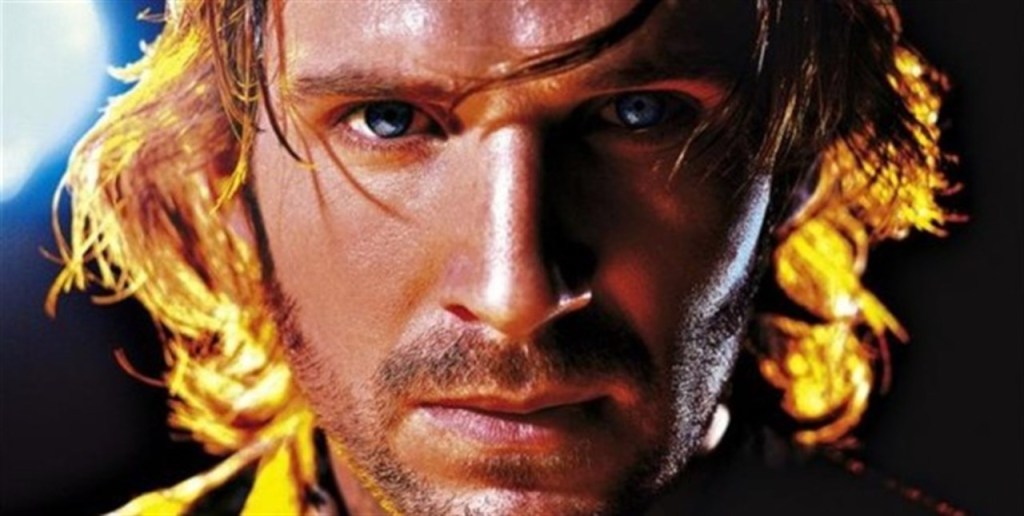
The Weight Of Water (2000)
In the present day newspaper photographer Jean Janes (Catherine McCormack) is researching a double homicide from 1873. The events of which we get to see in parallel with her investigations.
Jean and her husband Thomas (Sean Penn) appear to have a very strained relationship. Leaving their child at his mothers they meet with his brother Rich (Josh Lucas) and his girlfriend Adaline (Elizabeth Hurley) to sail out to the small island where the murders took place. Over the course of the weekend Adaline flirts outrageously with Thomas whilst he seems oblivious to his wife’s distaste at the fact that he is happily ogling her. At the same time we are treated to a completely separate story which covers the events of the double murder in 1873. Where Maren (Sarah Polley) claims to have seen Louis (Ciaran Hinds) brutally murder her sister and sister in law.
It is worth noting that the historical double murder did actually take place on the island of Smuttynose in the Isle of Shoals, but the events in the film which are based on a novel are completely fictional. The novel of the same name written by Anita Shreve is a work of fiction inspired by the real life happenings.
It is conventional for any film that includes two different narratives to have those narratives share some thematic tie. Perhaps the story is repeating itself over time or the characters within it share the same trials and therefore a connection. However I spent the majority of this film wondering what on earth connected the female leads that are separated by over one hundred years. The best I could come up with was that they were both unsatisfied in their marriages and that there was sexual tension happening in their immediate sphere. The result of course was that I spent most of the time completely baffled as to why I was watching two unconnected stories. This issue was compounded by the fact that both stories were awful. The present day story is a melodramatic soap opera whilst the story in the past is a dour whodunnit with an obvious solution.
The only actor to come out of the film relatively unscathed is Sarah Polley who gives a convincing turn as a repressed and isolated immigrant to America. Elsewhere Elizabeth Hurley and Sean Penn turn in some of the most painful performances ever put on screen. Hurley has clearly been told her task is to titillate. In one scene she is sunbathing topless whilst suggestively sucking on an ice cube which she proceeds to rub down her semi-naked body. All in view of Thomas and his wife Jean. This scene being the pinnacle of the horrific soap style flirting from her. Penn on the other hand is a vapid, pretentious writer who seemingly could not care one jot for his wife and would rather stare at his brother’s girlfriend. The fact that the women seem so fascinated with him is baffling on two levels. Firstly, he seems to be a semi famous but non prolific writer that is pretentious beyond words and secondly, because he is sporting one of the worst moustaches in film history with incredibly floppy hair.
Whether we should be blaming the source material or the screenplay from Alice Arlen and Christopher Kyle for the utterly awful storylines and lack of connection between the two I am unsure. I have never read the original novel, nor heard of it until I watched this film. Either way it is also true that Bigelow does nothing to lift the material. She only reinforces the melodrama by switching to black and white imagery on occasion and cross cutting between crucial moments at the film’s end.
I thought that Blue Steel would be her lowest ebb but I was wrong. This is a rightfully forgotten film.

K-19 The Widowmaker (2002)
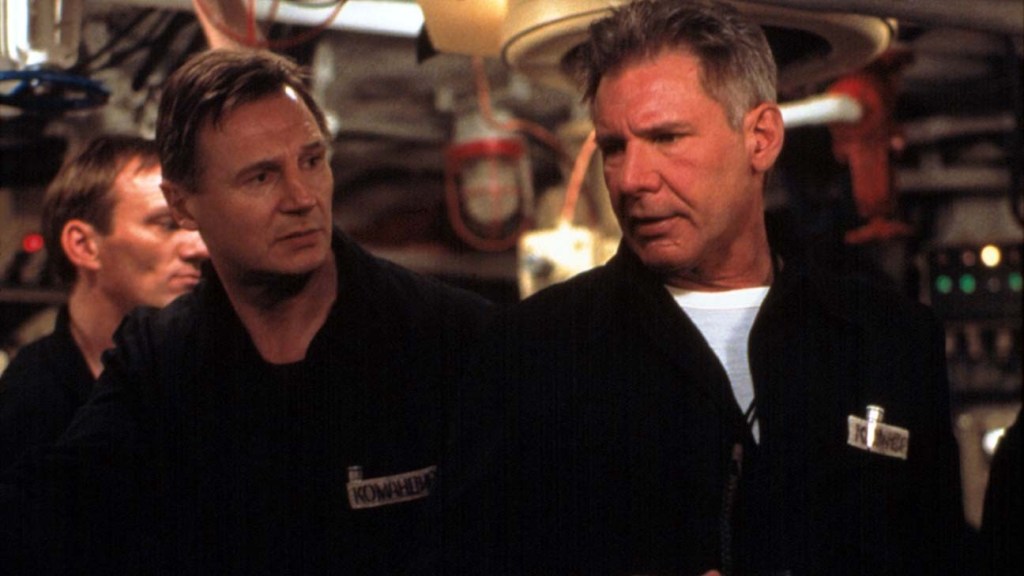
Russia, 1961. The K-19 Nuclear Submarine is in dry dock under final construction overseen by Captain Mikhail Polenin (Liam Neeson). Fearing it will not be complete in time Captain Alexei Vostrikov (Harrison Ford) is brought in to take over final works and lead Polenin’s crew into the field for testing. Whilst on manoeuvres the coolant system of the reactor fails risking the lives of the entire crew and threatening global nuclear war.
The Russian leadership want to use the new submarine as a way to send a message to the U.S. about their nuclear capability. Whilst the boat and crew are not quite ready the main focus is on the clash of leadership styles between Polenin and Vostrikov. With Vostrikov believing that Polenin has been more interested in the crew’s morale than driving them to be the best they can be.
Based on a true story that was declassified following the fall of the Soviet Union, K-19: The Widowmaker has a difficult task by trying to tell a story of Russian patriotism with an entirely non-Russian cast. It would be intriguing to know what the feeling towards such a story was at the time of release as well when the history and feeling toward Russia would be much fresher in people’s minds. I have to say that whilst the on board tension works well the entire Russian patriotism aspect of the story falls incredibly flat. The actors clearly were allowed to decide for themselves what level of Russian accent they could choose to put on with some more prevalent than others with a result that can at times be off putting.
The film is full of tight spaces increasing the claustrophobic and tense nature of the pressures the crew and its two captains are facing. Will they mutiny, surrender or struggle on? Overall the result is solid, but uninspiring. It would not topple the likes of Das Boot, The Hunt For Red October or Crimson Tide as my go to submarine thriller but it certainly is entertaining enough.
The Hurt Locker (2008)
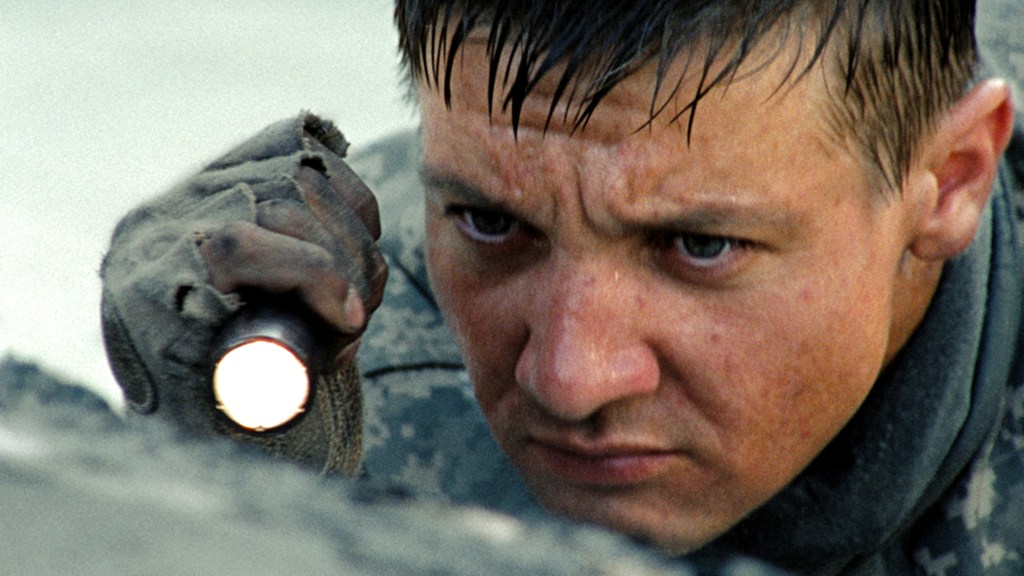
Staff Sergeant William James (Jeremy Renner) is assigned to elite bomb squad unit Bravo company mid rotation when their team leader is killed in an attempt to disarm a bomb. His fearless approach to his job puts him at odds with his team who are still reeling from the loss they have faced.
The Hurt Locker opens with a quote from Pulitzer Prize winning journalist and war correspondent Chris Hedges, from his book “War Is A Force That Gives Us Meaning”. It reads, “the rush of battle is often a potent and lethal addiction, for war is a drug”. It perfectly defines the film’s lead character who is an adrenaline junkie incapable of living in the real world. A man who keeps a photograph of his baby son in the same box that he keeps parts of the bombs that he defuses.
The focus of the film are the final 38 days of Bravo company’s rotation. Sergeant Sanborn (Anthony Mackie) is instantly unimpressed with his new team leader. Sanborn is a man fixated on the safety of his team and following the rules and procedures put in place to protect them. Specialist Eldridge (Brian Gerraghty) is shook by his experiences in Iraq and just wants to leave the place he associates with death.
Using handheld cameras and a fly on the wall documentary style filming technique The Hurt Locker is a tense film. Every single time the team are called out to investigate a possible bomb threat there is a very real tension that death is just around the corner and there is a balance between being thrilled and dismayed by James’ actions that make him both a “wild man” and a liability.
It also has the classic war movie trait of having some cameos from more well known actors with Guy Pearce and Ralph Fiennes making big marks on the film with small roles. Other fun acting facts are that it includes quite a few supporting actors from K-19 in supporting roles here and features four actors who would go on to star in the Marvel Cinematic Universe. Renner would go on to play Hawkeye, Mackie to play Falcon, Pearce to play the antagonist Killian in Iron Man 3 and Evangeline Lilly who would go on to play Wasp appears as James’ wife.
Visually it’s stark and harsh. Acting performances are incredibly strong with this being both Jeremy Renner and Anthony Mackie’s break out film. And the visceral and gripping nature of the film is incredibly strong. And the Academy Awards agreed giving it six awards for Best Picture, Best Director, Best Original Screenplay, Best Sound Editing, Best Sound Mixing and Best Film Editing. Jeremy Renner also received a nomination for Best Actor. Most famously of course this was the first time that an Oscar for Best Director had been awarded to a woman.
It is a fantastic movie and it was the start of a new film relationship between writer Mark Boal and director Kathryn Bigelow. Boal, just like the man quoted at the beginning of this film was an investigative journalist and spent time as a war correspondent embedded with troops and bomb squads in the Iraq War.
Zero Dark Thirty (2012)
Opening with real life audio recordings taken from emergency calls and radio chatter of 9/11 before snapping to two years later and CIA agent Maya (Jessica Chastain) arriving in Pakistan. We will follow her decade long hunt for Al Qaeda leader Osama Bin Laden.
Following Bigelow’s successful partnership with screenwriter Mark Boal in The Hurt Locker they successfully join up again here to make what at the time of writing is so far the pinnacle of her career. Over the course of 157 minutes Zero Dark Thirty is never anything less that completely riveting.
The focal point of the film is Maya. When we meet her in 2003 she is fresh faced and can barely stomach the brutal interrogation and torture of a prisoner that she witnesses at the hands of Dan (Jason Clarke). By the time she returns to the US sure of the location of Bin Laden she is laser focused, desensitised and her entire life is consumed by her mission.
Bigelow and Boal’s approach to Maya’s ten year crusade is to bookmark her journey with chapter points. The Saudi Group, Tradecraft etc etc. These provide natural pivots and jumps in time to the story, one that takes in the 2004 attack on Saudi Arabia, the 2007 London bombings and the 2008 attack on the Marriott hotel in Pakistan just to name a few. Throughout the entire timeline there is one thing that remains ever present and that is the strict adherence to CIA procedure and the humdrum activities of analysing data as well as on the ground operations.
In fact when reflecting on the film it is the fact that the film never dumbs down its language and sticks so specifically to following the long process of finding Bin Laden that it remains so intense. The singular focus on finding the mysterious Abou Ahmed, the courier for Bin Laden is completely all encompassing for us as it is Maya.
There are so many brilliant performances in the film it would be hard to name them all. Kyle Chandler portrays the embittered station chief in Pakistan with quiet dignity, Jason Clarke is the CIA agent who plunges Maya into the dark world of torture and burns himself out before returning to the US to wear a suit, Jennifer Ehle plays one of the more human CIA agents in the film which may suggest something about those who survive in the industry, Mark Strong and James Gandolfini feature as senior agents forced into difficult decisions and Joel Edgerten, Chris Pratt and Frank Grillo play navy seals in the final mission. All of them are superb, but all fade into insignificance in the face of Jessica Chastain’s performance. Nominated for a best actress Oscar but losing out to Jennifer Laurence for Silver Linings Playbook, Chastain puts in a tour de force. Her transformation through the film and those final moments of realisation are stunning and in hindsight it feels wrong that it was not her collecting the Oscar.
There is of course always controversy when trying to portray such a seismic moment in real life history. Especially one linked to the CIA and a black ops mission. Smaller issues surrounding exact historical accuracy and the amalgamation of certain characters are always an issue for these types of films. Also the fact that the film chooses to give us a single agent as the focal point for the entire campaign is of course disingenuous. But all of this falls to the wayside when you consider the portrayal of torture as a key force for good in obtaining information that directly led to Bin Laden’s capture. The reality is that this happened and was green lit by the US Government at that time. The fact that the film does not condemn it surely comes from the fact that it is taken entirely from the perspective of those agents focussed on the capture of Bin Laden who would go to any length.
A stunning and essential movie.

Detroit (2017)
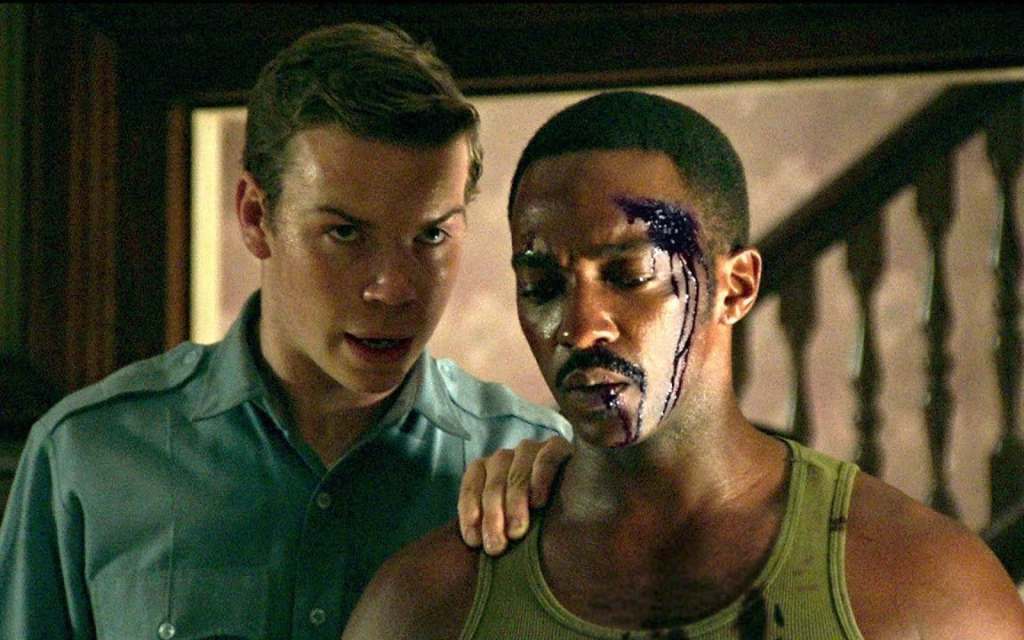
Set during the race riots in Detroit, 1967 this film focuses on the events at the Algiers Motel and their impact to those involved.
Following my revisit of this film I read my review that I posted on this site when I saw it in the cinema on release. On reflection there is not much that I did not say there that I could add now. Except for the fact that I feel incredibly naïve to have said that I was astonished at the institutionalised racism that was present only fifty years ago. Given the constant stream of news over the last year it seems that has not gone away even now.
My original review can be found here: Detroit
My key takeaways to reiterate from that review though are that the scenes inside the motel are an absolute pressure cooker, that the intercutting of real footage with the film footage is seamless and really shows how expertly they have recreated the period feel and that Algee Smith and Will Poulter’s performances are superb.
Summation
So this was a very interesting journey. For the first time whilst going through a director’s back catalogue I came across some films I thought were truly risible. The three films that I have placed in the “eminently missable” group are ones that I have no inclination to ever watch again. And yet, the three films that I have placed in the “essential” group are absolutely stunning and not to be missed.
The main thing that really struck me with Bigelow’s catalogue of films is that if I did not know they were directed by a woman I do not think I would be able to discern any facet that would call them out as such. It feels very much like her style very much fits that of any male action film director. Her films feel like they are told from a masculine perspective and in fact women are treated pretty poorly in them (if they even appear). Strange Days is probably the worst example for treatment of women. This all changes however with what for me is her masterpiece, Zero Dark Thirty. A film in recent times to feature an incredibly strong female lead. Perhaps the strongest since we saw Jodie Foster as Clarice Starling in The Silence of the Lambs.
One thing for certain is that her creative partnership with Mark Boal that began with The Hurt Locker has elevated her work an exponential amount. Already a skilled technician and excellent at capturing intense action sequences, his writing has given the sort of subject matter that has provided exceptional stories to go with that technical proficiency.
Lets hope that her next film can capture the sheer action joy of Point Break or the hyper realistic tension of Zero Dark Thirty and The Hurt Locker.
Kathryn Bigelow Ranked
Essential – A must watch for everyone
- Point Break
- The Hurt Locker
- Zero Dark Thirty
Good – Exactly that, a good film worth watching
- Near Dark
- Strange Days
- Detroit
For fans of their work – Fans will still enjoy these, less so for casual observers
- K-19: The Widowmaker
Eminently missable – Even fans might struggle, for completionists only
- The Loveless
- Blue Steel
- The Weight Of Water
 Phil the Bear's Film Reviews
One thought on “Kathryn Bigelow Retrospective”