
Martin Scorsese is a cinematic god.
When I was a teenager Goodfellas was a film that you pretended you had seen even if your parents absolutely would not let you watch it. By the time I was in college I had probably viewed it a dozen times. In fact for me when I began watching Scorsese it went hand in hand with Robert De Niro. The two were intrinsically linked and I was mesmerised by Travis Bickle, Jake La Motta, James Conway and Max Cady. De Niro will forever be one of my all time favourite actors regardless of what late career comedy he stars in. Scorsese on the other hand just seemed to continually produce master works.
By the time I was old enough to go to see a Scorsese film at the cinema, his partnership with De Niro was on hiatus. My first Scorsese feature experienced on general release on the big screen was Bringing Out The Dead with a manic Nicolas Cage headlining. It was a departure I probably was not ready for because I do not recall being particularly wowed by it.
In 2002 Scorsese would begin another long lasting collaboration, this time with Leonardo DiCaprio and I would have the pleasure of seeing these as they released in the cinema.
As I start this project of watching all of his films in release order Scorsese is currently filming his latest project that will bring his two most famous acting collaborators together for the first time under his director’s eye. Killers Of The Flower Moon should release in 2022 and will be his 10th film with De Niro and 6th with DiCaprio.
Whilst DiCaprio will draw level with Harvey Keitel on 6 film collaborations with Scorsese the true mainstay in Scorsese’s career and a key component of his success is Thelma Schoonmaker. Schoonmaker has been Scorsese’s editor for 20 of his 25 films to date and their partnership has been a key part of the way his films look and feel.
So lets begin our journey into a world of religion, gangsters and crime. I am especially interested for my 5 first time watches which are Who’s That Knocking At My Door, Boxcar Bertha, Alice Doesn’t Live Here Anymore, The Last Temptation of Christ and Kundun.
Who’s That Knocking At My Door (1967)
J.R. (Harvey Keitel) is a young man in New York City. He spends the majority of his time hanging out with his friends drinking and generally killing time. That is until he meets a girl (Zina Bethune) on the Staten Island Ferry and falls in love. Deciding that she is the one he proposes marriage and to settle down but his Catholic guilt is unable to cope with her revelation that she was raped before she met him.
Scorsese’s debut feature is actually an amalgamation of two projects and it really shows. Beginning in 1965 as a film called “Bring On The Dancing Girls” its focus was on J.R. and his friends killing time in New York City and generally having fun. In 1967 Scorsese added the romantic plot to the film and changed the tile to “I Call First”. This is the title that it first debuted with at the Chicago International Film Festival in November 1967. In 1968 Joseph Brenner agreed to buy the distribution rights to the film on the basis that Scorsese added a sex scene to the film in order to be able to better market it. When that scene was added it became “Who’s That Knocking At My Door” and received a wider release.
Who’s That Knocking On My Door was not just Scorsese’s first feature. Harvey Keitel makes his debut here and at the time of writing has made six films with Scorsese up to The Irishman. This was also Thelma Schoonmaker’s second feature as an editor and she would go on to forge a lasting bond with Scorsese and at the time of writing has acted as editor on twenty of his 25 films.
The first film, the one with J.R. and his friends enjoying themselves throughout New York has a naturalistic tone and comes across as very realistic to the life of young men in the city at the time. It is also meandering and not particularly engaging.
The second film, the romance is the best facet of the film. It features some interesting conversation between J.R. and The Girl (yes she really has no name in the film) that feature J.R. discussing his love of movies and John Wayne in particular. It also features very overt Catholic images and old fashioned reactions to marriage perhaps best described by J.R. explaining the difference between “broads and girls”.
The third part of the film is the sex scene added later. It is an odd experimental dream sequence that features The Doors song “This is the End” whilst J.R. fantasises about a number of “broads”. Keitel looks noticeably older in this part of the film given that three years had passed since initial filming and it is incredibly over the top featuring full frontal nudity of Keitel and the women involved.
Stylistically the film has lovely crinkly black and white photography but in places it is far too dark where the lighting seems absent. There are also some great angles and cutting used in the first meeting of J.R. and the girl. Credit must go to Schoonmaker for being able to splice together two different projects and the additional scene to bring everything together as a consistent whole.
Overall it is a solid foundation for a debut film but it does suffer from it being two short films merged together to make a 90 minute feature that slightly lacks in plot.

Boxcar Bertha (1972)
Set during the great depression the story follows Boxcar Bertha (Barbara Hershey) and Big Bill Shelly (David Carradine) as they become criminals and rob the anti union railroads that treat the communities they run through so badly.
Following the death of Bertha’s father in a very low budget and mildly unconvincing plane crash she joins forces with union leader Big Bill Shelly. Their relationship is romantic and professional, in as far as their petty theft can be. Forming a gang with Rake Brown (Barry Primus) and Von Morton (Bernie Casey) they travel the rails as they rob the train cars.
Based on a novel called “Sister of the Road”, a fictionalised autobiography of Boxcar Bertha by Dr. Ben L. Reitman written in 1937, Boxcar Bertha was produced by the legendary Roger Corman in an attempt to cash in on the success of female crime film “Bloody Mama” that he made in 1970 with Shelly Winters. Whilst this film may be more technically accomplished than Scorsese’s debut it is far less interesting with the likes of Bonnie and Clyde (1967) and Badlands (1973) much more successful at portraying romantic criminal couples on the run from the law.
Whilst the film features fine performances from the likes of Hershey and Carradine it is hard to focus on them over the sex and violence that has clearly been inserted in an effort to titillate audiences. Of course this being something Scorsese was specifically required to insert in his debut feature as well.
This is very much Scorsese proving his worth as a director for hire after a promising debut and not a particularly engaging film in its own right.

Mean Streets (1973)
Charlie (Harvey Keitel) is a catholic man who believes you do your penance on the streets, not in the church. His uncle is a crime boss and he is a small time criminal hanging out with his friends and enjoying himself. The penance that he chooses for himself is Johnny Boy (Robert De Niro), a man who borrows everywhere, speaks out of turn and is a loose cannon. Charlie spends his time trying to talk sense into Johnny and calm down the men that he owes money to. The fact that Charlie is in love with Johnny’s cousin Therese may have helped Charlie select his chosen penance.
Whilst I had seen Mean Streets many times before, I had never seen it with the knowledge of Who’s That Knocking At My Door. Having now done so it seems apparent that J.R. and Charlie are essentially the same person and perhaps facets of them are parts of Scorsese as well. Both are young men, involved in petty crime, enjoying their time with friends on the New York streets and driven to some extent by their deep seated Catholic beliefs. To some extent Mean Streets seems like an evolution of the story and character from that first film.
What Mean Streets represents though is the breakthrough for both Scorsese and De Niro and the beginning of a phenomenal film collaboration. De Niro’s performance is the epitome of scene stealing. He is very much a secondary character here but every time he is on screen it is electric.
The energy on display in the film is phenomenal. Opening with a monologue read by Scorsese; “You don’t make up for your sins in church. You do it in the streets. You do it at home. The rest is bullshit and you know it”. Followed by home video footage of our lead characters set with title cards before the opening credits roll to “Be My Baby” by The Ronettes. It is like a nuclear bomb goes off in your mind. The film opens with a bang and you are instantly gripped. In fact a large chunk of the budget must have gone on the music for this film as it also features a couple of Rolling Stones songs and Derek & The Dominoes amongst others. Those scenes backed by the rock soundtrack are pivotal to the feel of the film as well. The other mic drop moment in the film is the party sequence where they attached a camera to Harvey Keitel to provide a bravura shot that makes you feel as drunk as he is in that moment.
Scorsese does a much better job of portraying both the religious and cultural pressures on his main character here. Charlie has eyes on two different women over the course of the film but feels unable to pursue either properly thanks to what he believes God and his peers would think of him.
Mean Streets is where it all came together and it is an exhilarating ride.
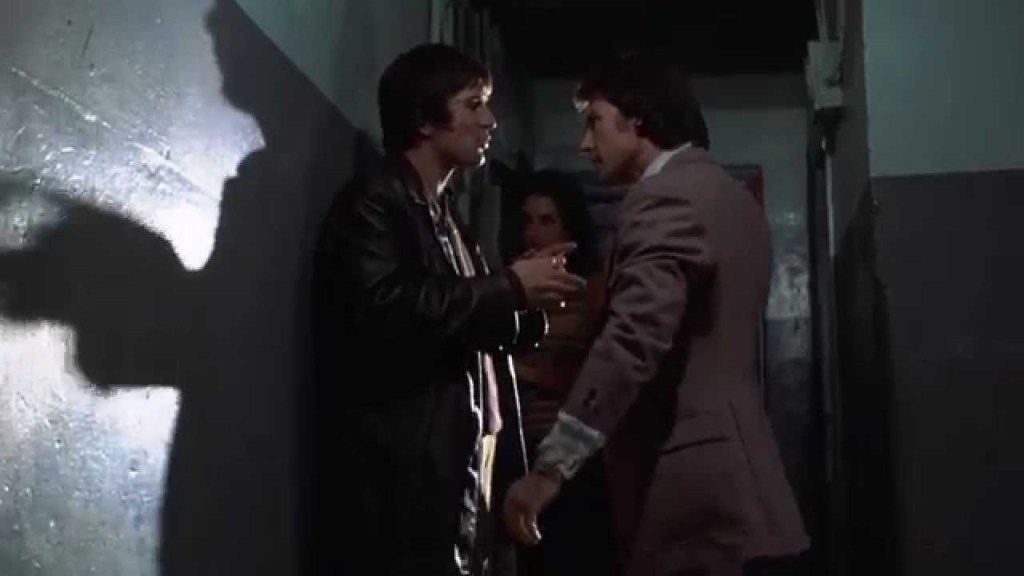
Alice Doesn’t Live Here Anymore (1974)
Alice Hyatt (Ellen Burstyn) sets out on the road with her eleven year old son Tommy (Alfred Lutter) after her husband dies in a truck accident. Selling all of her worldly possessions she has a dream that if she can return to her childhood home she can still make it as a singer as she once dreamed as a young girl.
Their road trip will include stops in cheap motels where Alice will need to get jobs to save enough money to make the next step in their journey. Whilst working as a singer in a bar she will meet Ben (Harvey Keitel) and later as a waitress she will meet divorced farmer David (Kris Kristofferson).
The film opens as though it is 1939’s The Wizard Of Oz. The aspect ratio is a small box, the colour is drained away and even the title cards and music feel lifted from that era of film making. It is here that we meet an eight year old Alice with dreams of becoming a singer. Then, returning to full screen and colour we cut to twenty-seven years later and an Alice seemingly trapped in a marriage that has lost its spark and one where she was told she could not pursue that dream. The ultimate thrust of the film then is about a woman whose dream was once crushed has another chance to pursue it. But does she really want to?
The real heart and soul of this road movie is with the relationship between mother and son. Tommy is a frustrating child on the verge of being a teenager, constantly talking back and being antagonistic. Alice however is on his wave length and their banter and playfulness with each other is at turns amusing and touching. The rest of the film however feels uneven and is sometimes engaging and sometimes not as Alice meanders through the county in search of her dream.
The films biggest success was for its performances with Ellen Burstyn winning the Academy Award for Best Actress in a Leading Role. Whilst Diane Ladd was nominated for Supporting Actress for her performance as a fellow waitress in the latter half of the film. Elsewhere we see Harvey Keitel returning again for Scorsese playing a suitor for Alice and Jodie Foster appearing as a friend of Tommy’s.
Worth watching for Burstyn but uneven and not completely engaging.

Taxi Driver (1976)
Travis Bickle (Robert De Niro) is a Vietnam war veteran who is adrift in the mean streets of New York. Twenty-Six years old, with little education he is disenfranchised from society, unable to make a meaningful connection. In an effort to keep his mind busy he takes a job as a taxi driver and works long hours on the night shift. As he tries and fails to make connections with other people he begins to wonder if he was meant for something greater, something that will make an impact on everyone around him.
Taxi Driver should stand as one of the greatest films of all time. Released forty-five years ago it has not lost any of its visceral impact and contains a scintillating lead performance, a no holds barred script, a legendary score, perfect editing and an array of memorable secondary characters. The fact that Scorsese has gone on to match and arguably better the perfection on screen here is a testament to his skills.
After De Niro’s scene stealing supporting role in Mean Streets he is promoted to lead actor here and delivers one of the finest performances on screen. Travis Bickle is a misanthrope and a wholly unlikeable human being but we are able to feel sorry for him and wish that something was out there that could save him thanks to De Niro’s performance. Throughout the film Bickle narrates as he writes in his journal and we are given insight into his mind. The most telling line early on in the film is that he wishes that, “someday a real rain will come and wash all this scum off the streets” and as the film progresses it is clear that to some extent he believes that he may be that rain. Bickle struggles to engage with people and his efforts to engage with Betsy (Cybill Shepherd) are clumsy and tantamount to stalking, whilst his reaction to her rejection removes any real doubt they could be anything else. And yet, De Niro takes this monster and shows us his vulnerability and makes us wish that there was someone he could connect with who could save him.
The no holds barred script comes from the mind of Paul Schrader who would go on to write the scripts for The Last Temptation Of Christ and Bringing Out The Dead and co-write the script for Raging Bull for Scorsese. Schrader has famously said that he wrote the script when homeless and at his lowest ebb saying that Bickle is a version of him and the jacket and boots De Niro wears were Schrader’s. As phenomenal as the script is it did not even include Bickle’s famous “you talkin’ to me?” line. The scene in the script had no dialogue so Scorsese asked De Niro to make something up and the rest is history.
Bernard Herrmann’s score is another aspect of Taxi Driver that is unforgettable. Herrmann’s most famous score may well be for Hitchcock’s Psycho but Taxi Driver would enter into the conversation after that one. The theme is a jazz mixture of saxophone and drums that manages to veer between melodic beauty and dark brooding. It is a perfect match to the film and De Niro’s performance.
Interestingly Taxi Driver is one of the very few Scorsese films not edited by Thelma Schoonmaker but it still contains an absolutely top rate assembly from Tom Rolf and Melvin Shapiro. The way that the images cut between blurry street lights, busy sidewalks, neon lit stores, traffic lights and Bickle’s face in the early stages of the film is mesmeric. The taxi meter itself almost becomes part of the film’s make up as it is engaged and disengaged by Bickle. The final shoot out is also worth a mention in the way it is cut together to show us the trail of destruction left in Bickle’s wake.
Whilst De Niro’s Travis Bickle is the heart and soul of the film it also contains an array of interesting supporting characters. Peter Boyle plays a taxi driver called Wizard who dolls out advice as though he is a guru. Cybill Shepherd and Albert Brooks work within the political campaign office attempting to get a Senator elected for President. And Harvey Keitel plays a pimp to a twelve year old prostitute played by Jodie Foster. All of them will have an impact on Travis’ actions with Shepherd’s Betsy and Foster’s Iris those characters that Bickle hopes will save him.
Elsewhere you can see De Niro’s first wife Diahnne Abbott playing an uncredited concession counter server and Martin Scorsese delivering a twisted cameo as a jealous husband. Whilst Bickle will buy Betsy a record by Kris Kristofferson who starred in Scorsese’s previous film. And further to all of those interesting facts there is the quite disturbing knowledge that John Hinckley Jr. attempted to assassinate Ronald Reagan in 1981 in an effort to impress Jodie Foster taking Bickle’s actions as inspiration resulting in all of the key players in the film being interviewed by the FBI.
I have watched this film more times than I can recall but it is still as powerful now as when I first watched it. It is a phenomenal film.
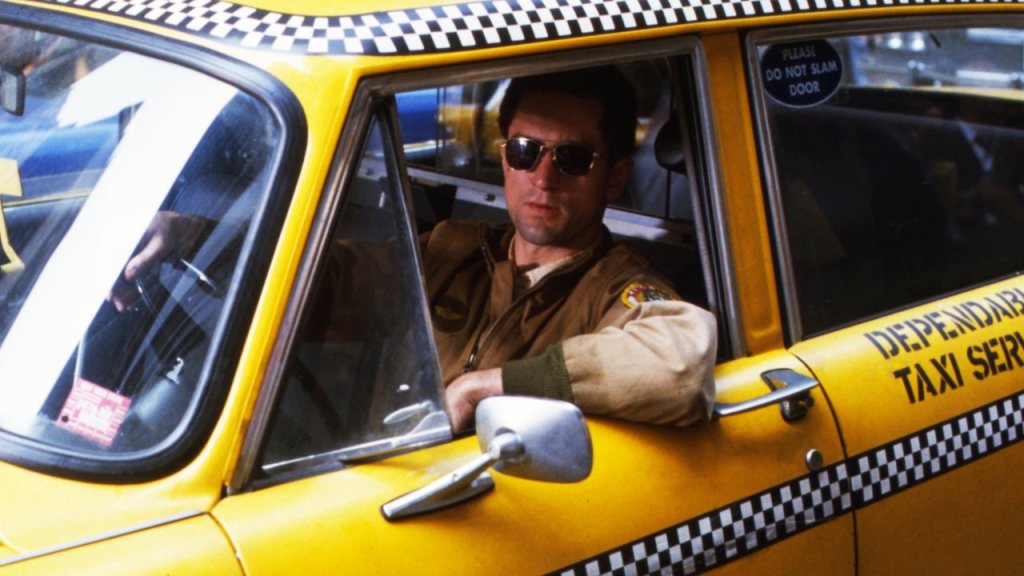
New York, New York (1977)
Opening on Victory in Japan day 1945 New York, New York opens and closes on the shoes of jazz musician Jimmy Doyle (Robert De Niro). Recently returned from the war and desperate for some female attention he harasses USO (United Service Organisations) singer Francine Evans (Liza Minelli) for her phone number. As their paths cross again she saves him from an audition that is going badly, singing along to his saxophone solo resulting in them getting a job together. As the film plays out we see their tumultuous relationship unfold as Francine’s star soars and Jimmy’s self destructive behaviour results in him jealously looking on from the sidelines.
New York, New York is Martin Scorsese’s ode to jazz and old fashioned musicals. The opening victory party features the Tommy Dorsey Orchestra, a huge star of the time and the leads of the film are talented musicians who play and sing jazz staples at points throughout the film. Its links to musicals are found in both its presentation and its theme song. The 1944 musical On The Town which became a hit film in 1949 featured Gene Kelly singing about the wonders of New York and it was this that would become inspiration for the theme song here. Written by Fred Ebb and John Kander and now more famously known by Frank Sinatra’s cover version recorded two years after this film released Liza Minelli’s barnstorming performance of the song in this film is one of its highlights. But it is not just in the theme song that the film owes inspirations to musicals, it is in the set design and occasional interludes featured throughout the film. All of the sets are purposely made to look like the backlot sets that older musicals were filmed on whilst there are occasional moments such as Jimmy stumbling upon a couple dancing on a train platform or himself performing a moonlit saxophone solo that really look like they could have been lifted from a 1940’s musical.
My main issue with the film though is in its dramatic clashes of style. The presentation features big bright fake sets and musical numbers, but the plot is a gritty dark romance that is doomed from the start. Liza Minelli is giving a fantastic big musical over the top performance to fit in with the former stylistically whilst De Niro is giving an neuroses filled angsty performance about a man who is self destructive and filled with jealousy. On paper this sounds really exciting and interesting. After all, recent films like Moulin Rouge feature doomed romances and are fantastic musicals. But that film despite its supposed dark ending is still a full blown musical and does not plumb the emotional vindictiveness that Scorsese and De Niro follow here. The clash is jarring and when the film runs at 163 minutes that can make it painful.
Speaking of running time, if you saw this film at the cinema or a long time ago it may be worth you checking this out again. The film was originally released at 155 minutes before being cut to 136 minutes when it was performing badly. Box Office takings were only 16.4 million dollars on a 14 million dollar budget. It was only restored to its full length when released on DVD. My understanding is that the cut version omitted what I would consider to be the best moment in the film, which is Minelli’s character appearing on Broadway. More on that later though.
Another aspect of the film that I think it struggles with is De Niro’s weakness with love stories. I have always found him to be a fantastic actor who has a vast body of work that shows him to be excellent in almost all genres. But when it comes to being in love on film he has only really succeeded when that love is obsessive or dysfunctional in some way. And of course Jimmy’s relationship with Francine is dysfunctional here. It is obsessive, jealous and on occasion very cruel. But at some point in the beginning of the relationship I felt that it should feel genuine and caring in order for the collapse of their love to be more impactful. I do not get that sense at any point here though.
There are loose comparisons to A Star Is Born featuring Kris Kristofferson (who starred in Alice Doesn’t Live Here Anymore and whose album featured in Taxi Driver) which was released a year earlier than this film. Both films feature musicians falling in love and struggling when their careers diverge. Although in this film both start at the bottom rather than one already being famous.
There is a lot to like here though and I think it is worth seeing even if those issues above make it a little bit of a struggle at times. As mentioned before, Liza Minelli’s Francine hits fame with a Broadway Musical aptly named Happy Endings and the musical montage we see of this near the end is absolutely sublime. It also leads into her rendition of the theme song that is now more famous than the film. And then there is a bitter sweet ending that features a fantastic split diopter shot of Minelli looking in a mirror. De Niro is of course eminently watchable as the talented jazz player who I suspect is very much an inspiration for Ryan Gosling’s Sebastian in La La Land.

Raging Bull (1980)
The life of world middleweight champion Jake LaMotta (Robert De Niro) spanning his rise to world champion, his rivalry with Sugar Ray Robinson, his relationship with the mob, his abusive family relationships with his brother Joey (Joe Pesci) and wife Vickie (Cathy Moriarty) and his retirement as an overweight club owner and wannabe actor are the subject of this seminal biopic.
Raging Bull is possibly my favourite Scorsese film. Its opening minutes are so captivating that when I first saw the film I remember being transfixed at the transformation in front of me. Opening in 1964 we see the overweight, cigar smoking LaMotta reciting lines to his dressing room mirror before the film cuts to 1941 and LaMotta at absolute peak physical fitness is both receiving and inflicting damage in a boxing match that ends in a riot when the fight is awarded to his opponent on points.
Raging Bull is technically an absolute masterclass. It is presented in a glorious monochrome black and white which at one point in the film is broken up by a lovely montage of colour home videos. The boxing matches in the film feel visceral and brutal as the camera whirls around the ring, putting you there in the thick of the action. The acting is absolutely phenomenal, De Niro won his only Best Actor Oscar for this film but the performances of Pesci and Moriarty who both received nominations is sublime. But what makes the film infinitely fascinating is how it can take a man who is so morally repulsive, who behaves so unforgivably and yet it makes you absolutely fascinated by him and what will become of him.
De Niro sparred over a thousand rounds over the course of a year to get into shape for the film and the real life LaMotta said that he became so good that he could have become a boxer. Something he believed so much that he actually scheduled three professional bouts for him and De Niro won two. Then of course there was the four month hiatus in filming where De Niro ate his way through Italy and France to destroy his figure and gain sixty pounds in weight resulting in him having breathing difficulties. De Niro’s performance is not just about this physicality and change in weight though. He is able to give a wretched character human qualities and struggles that make you care about him. For all the hideous things that he does, beating his wife, beating his brother and enabling prostitution in his sleazy club there are moments when we feel gut wrenching sadness for him and what he has become. The scene where he takes a fall as ordered by the mob and breaks down is heart breaking.
The other performance that is perhaps a career high is Joe Pesci as the brother who is just trying to look out for him. Pesci is quiet and withdrawn for large periods but there are explosions as well and when they happen they are quite considerable.
As far as sound and image go the film is equally spectacular. Added to the gorgeous monochrome image are brilliant tracking shots such as the one that follows LaMotta from his dressing room to the ring in a title fight and the brutal boxing matches where the camera gets up close and personal. Then of course there is the choice of music with Intermezzo by Pierre Mascagni providing the film with the operatic sense of destiny the film deserves.
Raging Bull is utterly spectacular in every aspect. And its final scene is no different and gives me chills just thinking about it. LaMotta in his dressing room looking in his mirror, reciting lines before uttering “I’m the boss, I’m the boss, I’m the boss” and cut to black.
Cinematic history.

The King Of Comedy (1982)
Rupert Pupkin (Robert De Niro) is an unsuccessful comic with an obsession for talk show host Jerry Langford (Jerry Lewis). Living in his mother’s basement Pupkin dreams of being famous and appearing on Langford’s show as his friend and equal. After an incident outside the stage door of Langford’s show Pupkin mistakenly believes that he has made the connection he so desperately craves so when Langford rejects him he decides the only way he can make an appearance on the show is by kidnapping its host.
The King Of Comedy always seemed to me as the most under appreciated and least well known of Scorsese’s films with Robert De Niro. But its commentary on the cult of celebrity is still prescient today and the performances from De Niro and Jerry Lewis are phenomenally good.
Pupkin is a man whose delusions are so complete that it can be difficult to establish what is real and what is not. He has created a version of Langford’s set in his basement complete with cardboard cut outs of the audience, Jerry and other famous people so that he can fantasise about his appearance on the show. He has created a fake laugh that he clearly thinks is endearing but is actually incredibly scary and he dresses in pristine suits modelled after his idol and he spends hours preparing answers to questions for the show. On the whole Pupkin feels mistreated, cast out and ignored. He truly believes that he could be famous if he was given that one chance to prove everyone wrong. And what makes De Niro’s performance so great is how he manages to make us feel both sorry for and scared by Pupkin.
The opening scene leading in to the credits is so perfect at establishing the mood and tone of the entire film it is worth singling out here. Jerry Langford has just finished a show and is trying to leave by the stage door where there is a throng of adoring fans. When too much jostling occurs Pupkin, who of course is one of those fans steps in to help Jerry get into his car. This is Pupkin’s moment of connection, he thinks he has saved Jerry and that therefore he has a right to enter his life. As the door slams Scorsese freezes the film at the perfect moment, Langford’s hands against the window in a pose eerily similar to a horror film slightly obscuring Pupkin’s face as he peers in. Then as the titles roll so does ‘Come Rain Or Come Shine’ by Ray Charles where he declares “I’m gonna love you come rain or come shine” just as Pupkin will always love Langford.
The film and its themes were such an influence on Todd Phillips that when he made Joker in 2019 it was hard to get past its parallels with The King Of Comedy, even casting De Niro to play Murray Franklin, a talk show host whom its protagonist is obsessed with. Personally whilst I understand all artists are influenced and inspired by others I always find it frustrating that when a film is so close to its influence that there should be a greater sense of appreciation for the original work.
So lets do exactly that. The King of Comedy is a fantastic achievement with a stunning lead performance. The opening and closing moments are bravura film making and the cult of celebrity it portrays is never more real than at this present moment.

After Hours (1985)
Paul Hackett (Griffin Dunne) is an ordinary guy working in a dead end job but when he agrees to meet a woman he just met in a diner (Rosanna Arquette) at her friend’s loft in Soho he does not realise he is about to have the worst night of his life.
After Hours is essentially an extended length Twilight Zone episode. We follow Paul around Soho as he encounters one issue after another that prevents him from getting home. There is no real logic or reason for his misfortune, it is simply something for him to endure. The entire film plays out like a slightly scary and tense screwball comedy.
Unfortunately for me I have never found any connection or enjoyment with the film. I have now seen it twice with each viewing approximately twenty years apart and both times I have found myself bored by its antics. We never really learn anything about any of the characters and I never feel any connection with our protagonist Paul either.
Perhaps the point of the film is to make us feel trapped and frustrated just like its character and it certainly achieves that. Whilst Paul is losing his money, getting frustrated by the cost of train fare going up and getting trapped in the rain we are left to wonder what we might do in that situation. Albeit in a world pre mobile phones and Uber.
If you are still engaged by the time the ending comes around it does have a moment that could warrant additional thought or it could just be a continuity error.
Unfortunately I am inclined to think this is one of Scorsese’s bigger misses and something that given he did it on short notice when The Last Temptation Of Christ initially fell through was under baked.
Even when the comedy series Ted Lasso did an entire episode in homage to the film they managed to turn out the worst episode of the show for heavens sake.

The Color Of Money (1986)
‘Fast’ Eddie Felson (Paul Newman) has retired from the pool hustling scene and is now a liquor salesman. Or so he thought, because when he sees Vincent (Tom Cruise) playing pool the inexorable pull of the hustling scene grips him like a vice. Appealing to Vincent’s far more savvy girlfriend Carmen (Mary Elizabeth Mastrantonio) they agree to go on a road trip together to the world pool championships. On the way Eddie will teach them the art of the hustle because “money won is twice as sweet as money earned”.
The Color Of Money is a phenomenal film both for what it achieves on screen and for the manner in which it was created and achieved. So I am going to talk about the latter first because for me I think it adds to the richness of what we see on screen. At the time of writing a mere thirty-six years after it was released The Color Of Money is Scorsese’s only sequel and of course it is a sequel to a film that Scorsese had no involvement in. Twenty-five years earlier Paul Newman starred as ‘Fast’ Eddie Felson alongside Jackie Gleason in The Hustler directed by Robert Rossen earning him his second of eight best actor Oscar nominations. Newman would become the first ever actor to win an Oscar for portraying the same character whom he had been nominated for an award for in a previous film. Sadly Robert Rossen passed away five years after the original film released and when Newman saw and admired Raging Bull he approached Scorsese to ask him if he would make the sequel with him. Both films were based on novels by Walter S. Tevis although this sequel would eschew most of the plot of the book whilst Jackie Gleason declined a part in the film feeling his character was not integral to the plot. Tom Cruise who also happened to release Top Gun in the same year as The Color Of Money spent hours every day practising for the film and performed all but one of the trick shots in the film lending it a much greater credibility allowing Scorsese to have his camera wherever he needed for the pool scenes.
The film opens with a voiceover from Scorsese that gives you everything you need to know about what is to come. If you do not know the rules to nine ball pool or have never seen The Hustler this voiceover has you covered and will get you ready, “luck is an art”.
The plot is exceptional for a sports movie in that it never plays to the norms and will constantly keep you wrong footed. Every time you think you know how the plot will play out you would be wrong and I do not think there is any other sports movie that ends how this one does because ultimately this is not about the end result of winning a pool game. This is about human nature and the art of the hustle.
In a film about human nature then the characterisation and acting is key and every one of our three leads step up and give sublime performances. Paul Newman who as mentioned had previously inhabited the shoes of his character is exceptional. His Oscar win for this performance may in some circles be talked about as a career award for the fact he had not been awarded for his many previous exceptional performances but that could not be further from the truth. The mileage and emotion that is expressed on his face at all times is a sight to see and the way his character transforms when he starts to get the buzz of the hustle created a huge smile on my face. Tom Cruise also took an early opportunity in his career to show how good an actor he could be. At the beginning of the film he is a wide eyed naïve boy who would happily play for the fun of it. By the end of the film he is a hardnosed hustler who has his eye on any angle that could make more money. And then there is Mary Elizabeth Mastrantonio who earned what is so far her only nomination at the Oscars for best supporting actress in what was only her second feature film. Her Carmen is steely and determined and is more than happy to manipulate both Eddie and Vincent for her own gain.
Perhaps the biggest asset in this sports movie during the actual sporting scenes are Scorsese’s innovative use of the camera and his long time editor Thelma Schoonmaker’s work. With Cruise making all of his own shots it allows the camera to spin around the scene taking in the action on and off the table. We get to see montages, time lapses and even the balls eye view of the shots. It is inventive and exciting.
There are also a number of cameos to keep your eyes open for with the likes of John Turturro, Forest Whitaker, Iggy Pop and the real life Jake LaMotta appearing to a greater or lesser extent.
It may turn out to be Scorsese’s only ever sequel but it is an astonishing film.

The Last Temptation Of Christ (1988)
The story of Jesus (Willem Defoe) as he initially struggles with God’s call to him before taking on the mantle of Messiah, spreading the word of forgiveness and love and then dying on the cross.
Scorsese had previously explored man’s relationship with God in his earlier films but here he would tackle it head on. The Last Temptation Of Christ is an exploration of Christ’s dual nature as a man filled with temptation and sin whilst also being the son of God preaching forgiveness and love. The film is based on Nikos Kazantzakis 1955 book and begins with an opening write up that explains that it is not based on the gospels and is a fictional exploration of the duality of Christ. Paul Schrader in his third collaboration with Scorsese wrote the screenplay whilst another returning collaborator in Harvey Keitel would feature as Judas in a supporting role.
When we initially meet Jesus he is making crosses for the Romans to crucify people with in a bid to make God hate him as he believes it might make his calls to him cease. Judas is an assassin sent to kill him who becomes his follower whilst Mary Magdelene (Barbara Hershey) is a prostitute with whom Jesus seems to have some history with. Whilst the film and book are meant to be fictional interpretations of Jesus’ life they still follow the main story beats. We see the “he who is without sin cast the first stone” speech, John the Baptist, forty days in the desert, water being turned to wine, money collectors being turned out of the temple and the crucifixion. Probably the biggest difference in the telling of the story is that Jesus (who speaks to us of his difficulties in voiceover) seems wracked with guilt and temptation and as a result is completely uncertain of his path.
The entire film was shot in Morocco and the sets and costumes absolutely look the part. In terms of time and place I was impressed with how alien the entire venture feels. In terms of performances it feels a little less assured. Defoe’s Jesus feels like a cross between a hippy and a cult leader whilst Keitel’s Judas is incredibly wooden. Virtually no other actor really registered to me until a late stage cameo from David Bowie as Pontius Pilate. He appears for less than four minutes but makes quite an impact.
Scorsese clearly is deeply interested in the subject matter and has made other films directly about spiritual matters which I will come to in this venture later on but I have to be honest and say that I found this an absolute slog. With a running time of 163 minutes it felt as though it might never end and whilst I appreciate this was my first time viewing of a film made 34 years ago I know that Scorsese has made more interesting films with similar themes since this.
I might respect the earnestness and the craft but I could not enjoy this in the slightest.

Goodfellas (1990)
“As far back as I remember I always wanted to be a gangster.” Freeze frame on Ray Liotta’s Henry Hill and cue ‘Rags to Riches’ by Tony Bennett. Film history made. Or at least for me anyway. I was only ten when Goodfellas released so my first viewing of the film must have been on VHS in my early teens perhaps. It left an indelible mark and whilst it has not remained my favourite Scorsese film it was the one that introduced me to his work and that of Robert De Niro.
Based on a book called ‘Wiseguy’ by Nicholas Pileggi the film is the true story of Henry Hill and his life as a gangster. Traversing his life between 1955 and 1980 we see him as a teenager making a start in the family, a seasoned professional of his trade and a strung out drug addict making mistakes that will lead to his downfall. Alongside him are his troubled partners, the psychopathically short fused Tommy DeVito (Joe Pesci) and the paranoid top earner Jimmy Conway (Robert De Niro) and his strong and long suffering wife Karen (Lorraine Bracco). Along the way he will take part in two huge robberies involving airports, spend time in prison and be part of numerous criminal enterprises.
Stylistically Goodfellas still feels fresh today over thirty years since its release. Just like Mean Streets, Scorsese has peppered the soundtrack with music from the era including the likes of Cream, Derek & the Dominoes, Aretha Franklin and the already mentioned Tony Bennett. There is frequent use of freeze frames to focus on key moments and there are some fantastic tracking shots. The most famous of course being the Copacabana scene where Henry takes Karen to the club via the staff entrance and the camera follows them through the entire cavernous club to the tune of ‘Then He Kissed Me’ by The Crystals. And then there is the narration which in the main comes from Liotta with Bracco joining in for the key moment of when their characters meet. This narration instead of bogging the film down and taking away from the discovery of what is on screen manages to zip along and enhance every scene it appears in.
As far as performances go it is filled with breathtaking moments. Ray Liotta and Lorraine Bracco have probably never topped their performances in this film in their long careers. Liotta commands the entire film and successfully plays Hill at differing times in his life. His strung out obsession with a helicopter in the final third of the film is particularly amusing whilst the already mentioned narration is pivotal to the film’s success. Bracco achieves a similar feat, changing from naïve to knowing over the course of the film and her scene where she confronts Hill’s girlfriend over the intercom at her apartment building is brilliant. Elsewhere Pesci, De Niro and Paul Sorvino deliver the sort of supporting performances that actually imprint on your mind as being larger than they were. Pesci’s Tommy will forever be known in history for the “Funny how?” scene, not to mention eating a late night dinner with his mother (played by Scorsese’s mother) whilst one of his victims is in the boot of his car and killing a spider whilst playing cards. De Niro is barely in the first half of the film but becomes pivotal in the second half and plays the smiling killer very well. His scene where he is trying to get Karen to look at some clothes is particularly chilling.
Scorsese is intrinsically linked to the gangster genre because of this film. This was the first of arguably only three films he has made that are about the Mafia but its impact is so huge that he is known for them. I counted at least three cast members here that would go on to star in The Sopranos but a little research suggests that twenty-seven cast members from this film would go on to have some part in the ground breaking TV series including of course Lorraine Bracco, Michael Imperioli and Tony Sirico.
An eminently stylish film that gets better with every view.
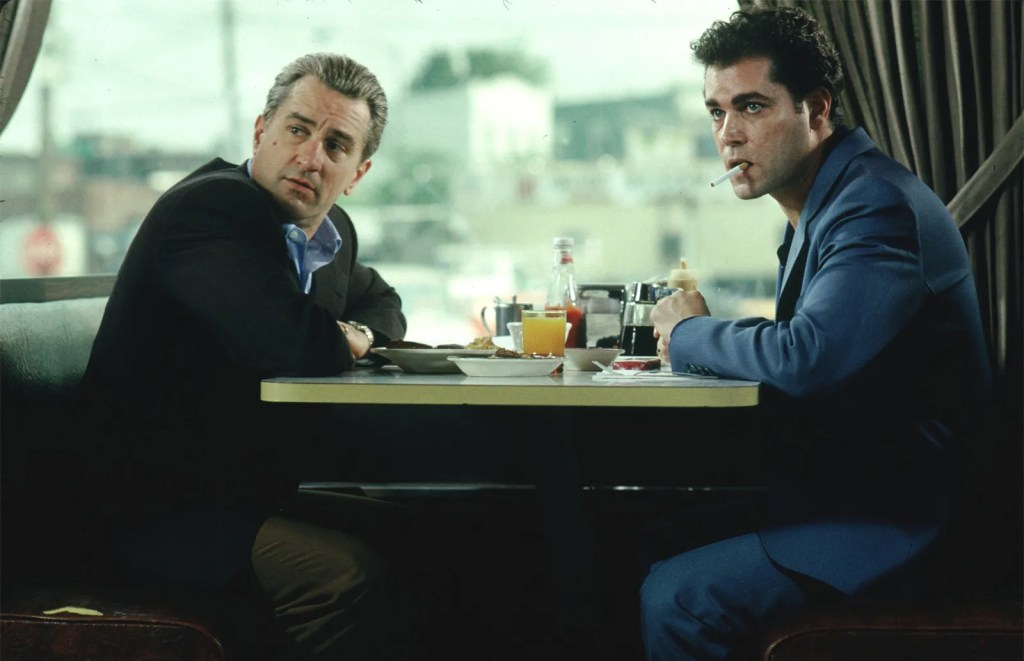
Cape Fear (1991)
Max Cady (Robert De Niro) has served fourteen years in prison for rape and battery and on his release he has only one thing on his mind. To get his revenge on the court appointed attorney who failed to represent him as ably as he might have.
Having tracked down Sam Bowden (Nick Nolte) he sets about terrorising him, his wife Leigh (Jessica Lange) and his fifteen year old daughter Danielle (Juliette Lewis). Having spent his time in prison educating himself on the law he treads a tightrope that allows him to always stay on the right side of legality frustrating Sam into behaving more and more erratically. Cady has become a master manipulator and is even more scary for it. His interactions with Danielle are creepy especially the extended scene where he pretends to be her new drama teacher whilst his actions towards Bowden’s closest work colleague Lori (Illeana Douglas) is outright scary.
Cape Fear happens to be one of the foremost examples of why film remakes are not necessarily a bad choice. The 1962 original film of Cape Fear starring Robert Mitchum and Gregory Peck is an all time classic. This 1991 iteration however is equally good and they stand alongside each other as equally brilliant. Scorsese was of course keen to reference this classic film and manages to get three of the key actors from the original film significant roles here. Robert Mitchum who played Cady in the original portrays the police lieutenant whom Bowden frantically seeks help from. Gregory Peck who played Bowden in the original can be seen here as a lawyer assisting Cady in obtaining a restraining order in what would be one of his final film performances. This of course echoes Peck’s other most famous role as a lawyer in To Kill A Mockingbird. Whilst Martin Balsam who played the police chief in the original appears as a judge. Both films credit the original novel “The Executioners” by John D. MacDonald in their credits but this remake also credits the original film’s scriptwriter James R. Webb as well.
The cast and the script are not the only places that the film pays credit to the 1962 film either. Given that it features one of the best scores ever composed for a film by Bernard Hermann it would have been foolish for them not to have reused it in some way. Elmer Bernstein does an excellent job of adapting and reusing it here allowing us to appreciate it again.
The style Scorsese adopts here is also something particularly worth noting. In line with the uneasiness that Cady looks to develop in the Bowden family Scorsese does the same with his use of zooms and colour. The title sequence created by Saul and Elaine Bass (they also provided the titles for Goodfellas and would go on to provide them for The Age of Innocence and Casino) are set to images of rippling water foreshadowing the famous ending for the film. Whilst at various points Scorsese will flood the frame with reds or yellows or monochromatic X-Ray like images during key moments and dissolves. On watching the film it is hard to imagine anyone else being able to give it such a feeling of disorientation and unease, which makes one of the most famous facts about the production of the movie such a massive impact. The film was originally in the hands of Steven Spielberg who swapped a little known feature called Schindler’s List with Scorsese because he thought that Cape Fear was too violent for him. A good choice for both film makers.
Possibly the best aspect of the film and one that comes dangerously close to unbalancing the entire thing is just how amazing Robert De Niro’s performance is. This was his seventh film with Scorsese and would earn him his fifth nomination for Best Actor, three of which were in Scorsese films. The performance is intensely physical with Cady at the peak of physical fitness and covered in tattoos. Whilst also featuring a broad accent and becoming the pure embodiment of menace. There are times when the likes of Nolte and Lewis (who earned a supporting actress nomination at the age of seventeen here) struggle to keep up with him, although Lange fairs much better.
If you can it is worth watching close to or alongside the original film because this is a Scorsese classic that is often forgotten when it should not be.

The Age Of Innocence (1993)
New York, the 1870’s. A young lawyer named Newland Archer (Daniel Day-Lewis) has just become engaged to May Welland (Winona Ryder) and wishes to share the news with the world. But then her outspoken cousin, Ellen Olenska (Michelle Pfeiffer) who is separated from her husband comes to visit and his life becomes rather more complicated.
Initially Ellen is shunned by society. After all she is separated from her husband and rather outspoken in her opinions. But Newland sticks up for her and makes her case with a number of important socialites in order to have her accepted into the fold. Becoming her lawyer for her possible divorce his counsel is to not move forward with it as it may break her socially. A piece of advice that he comes to regret when they slowly fall in love with each other as kindred spirits.
Of course though, that love can not be requited given the social orders of the time.
At this point in my project of watching all of Martin Scorsese’s films in order I can safely say that this one has resulted in the biggest change of heart in my overall opinion formed on previous viewings. Whilst I have appreciated other films and gained a better appreciation of them in subsequent watches this film has gone from me considering it one of his lesser works to considering it one of his essential works. Perhaps as a younger man I failed to appreciate “a costume drama”, especially one about repressed love. But on watching this film again I have to say I was rapt with admiration for every facet of it from its perfect narration, lavish costume and set design, use of symmetry, consummately skilled acting and overall critique of society of the time.
Based on the 1920 novel of the same name by Edith Wharton the overall theme is about how society at the time gave the outward appearance of innocence whilst behind the scenes all sorts of machinations and schemes were happening all at once. Can an individual work against the group in such a society? In fact there is such a perfect moment of realisation near the end of the film where an understanding of what has truly been going on dawns on one of the lead characters it is quite jaw dropping in a quietly brilliant way.
Our narrator for the film is Joanne Woodward, whose voice and delivery perfectly match the eloquence of the film and the society it represents. She tells us about the balance of high society and the various important characters that shape it.
The set design, costumes and symmetry on show is lavish and exquisite and feels to some extent that it may have had a massive impact on one of my other favourite directors, Wes Anderson. There is one particular sequence at a dinner party where four characters sit facing each other at opposite points of a rectangular table which has candlesticks on it. Each time the camera cuts to whomever is speaking we see them perfectly central in shot framed by those candlesticks. Elsewhere we will see the intricate detail of the rituals everyone adheres to, especially when it comes to food and lunch/tea/dinner. The camera moves for these shots are slow and considered allowing us to see every perfect detail of the pageantry involved.
The trio of lead actors are all superb and deliver a completely believable love triangle. Daniel Day-Lewis is rarely anything less than excellent and here he is brilliant at displaying the conflicts in Archer’s mind. A man who believes himself to be progressive and forward thinking but who finds himself unable to break the social constructs around him. Will love or duty be what wins out in his mind. Winona Ryder who was nominated for a best supporting actress Oscar is quietly brilliant as well. Outwardly naive but with far more of a grasp on how to work within the bounds of her position in this world. Whilst Michelle Pfeiffer is probably even better than her other famous costume drama performance for Dangerous Liaisons which was five years earlier. Her Countess Olenska also struggling to balance between what she wants and what might be best for her socially.
Personally for Scorsese this film will resonate with him as well because his father died shortly before the film was released and it is dedicated to him. You can briefly see Charles Scorsese with his wife Catherine (who can be spotted in many of Scorsese’s films) in a scene at a station. Scorsese who co-wrote the film with friend Jay Cocks cameos in a different scene as a wedding photographer.
It may be a change in pace for Scorsese but it is just as perfectly made.
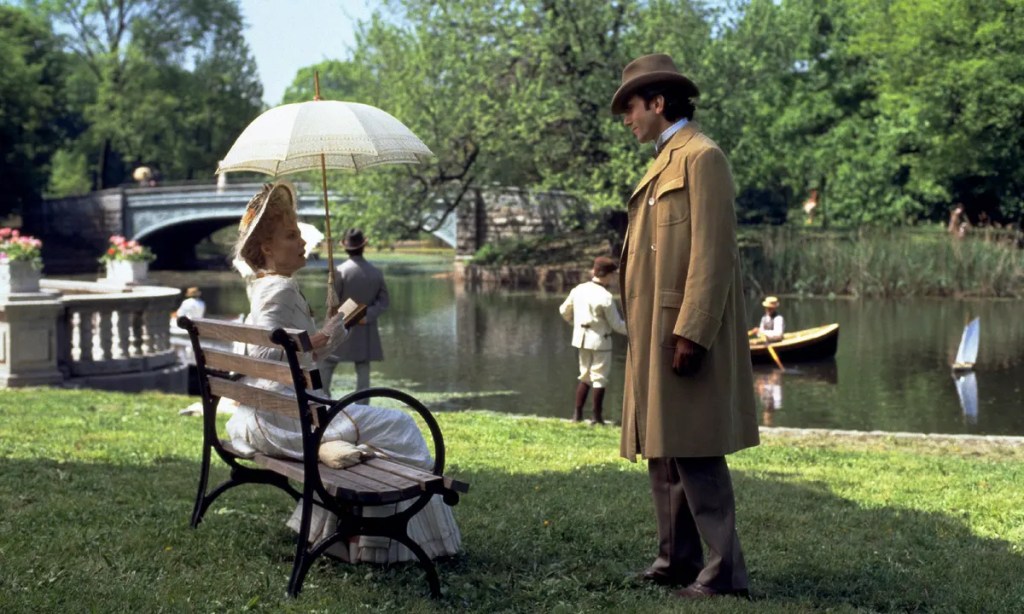
Casino (1995)
Sam ‘Ace’ Rothstein (Robert De Niro) is a bookie and gambler who makes a lot of money for the Italian mafia. So much so that they hire him to run the Tangiers Casino in Las Vegas. A legitimate job, so long as he keeps changing his job title so that his gaming license application never gets reviewed. Everything seems to be going smoothly until his best friend Nicky Santoro (Joe Pesci), an enforcer in the mafia decides to come to Vegas and get in on the action. And then of course Ace falls in love with a hustler called Ginger McKenna (Sharon Stone). What follows is a decade of crime, corruption, murder, deception and power struggles.
Casino opens in 1983 when Ace turns the ignition on his car only for it to explode. We then jump back to 1973 and Ace’s arrival in Las Vegas and Ace tells us very early on the cause of his downfall, “When you love someone, you’ve gotta trust them. There’s no other way. You’ve got to give them the key to everything that’s yours. Otherwise, what’s the point? And, for a while, I believed that’s the kind of love I had.” Everything that follows is an exploration of the relationships between Ace, Nicky and Ginger.
Ace is good at gambling because he looks at every angle. He wants things to be stable and boring. But his love for Nicky and Ginger blinds him to how they destabilise everything around him. Nicky is a psychopath who gets his power through fear and violence. Whilst Ginger is an addict who can not break away from the power of her old pimp Lester Diamond (James Woods).
Perhaps the biggest issue with Casino is that it lives in the shadow of Goodfellas. Both Goodfellas and Casino are based on true stories, both are based on books by Nicholas Pileggi, both have scripts co-written by Pileggi and Scorsese, both star De Niro and Pesci in similar roles (especially Pesci), both are about the Italian Mafia and both feature huge amounts of narration from the protagonists. I am sure many will say that Casino is the spiritual successor to Goodfellas. The issue though is that this film is not as laser focused as Goodfellas and actually feels repetitious. Where as in Goodfellas Henry Hill’s life kept moving forward to different circumstances here Ace is resigned to the fact that Ginger will keep getting high and having meltdowns and Nicky will keep killing people and making it difficult. Over the course of the 178 minute running time we always feel like we know where we are headed.
That is not to say that it is not good. This is a film that features Sharon Stone in her best ever performance, one that she was nominated for a best actress award at the Oscar’s and has an amazing period feel and look for the 1970’s and 1980’s. It is also fascinatingly true to the real lives of the characters involved, just the names have been changed in most parts.
It just feels oddly flat for a Scorsese film. Which is a huge shame given that it was the last film that he would make with Robert De Niro for a huge twenty-four years. Something that seems even more massive a gap when you consider this was their eighth film together in the space of twenty-two years.

Kundun (1997)
The story of the fourteenth Dalai Lama from childhood to adulthood. Kundun spans the years 1937 to 1959 and takes in Kundun’s selection, training and the oppression of Tibet by China that results in him fleeing his home.
1997 was a year that Hollywood’s interest in Tibet and the Dalai Lama peaked with the Brad Pitt led ‘Seven Years In Tibet’ and this released. Whilst the Pitt film focused on an outsider’s friendship with the Dalai Lama, Scorsese’s effort is a far more straight forward biopic. The script, written by Melissa Mathison was the result of a series of interviews that she conducted with the Dalai Lama personally after requesting if she could write the story of his life. It charts him being selected as the Dalai Lama after a test where he is asked to identify possessions from his previous life, his spiritual and academic learning, the Chinese revolution and invasion of Tibet and his subsequent need to flee from this tyranny. Everything is told in a straightforward, matter of fact and linear fashion and there is nothing along the lines of the questioning nature of faith as seen in The Last Temptation of Christ or his other films.
The film uses entirely unknown Tibetan actors including Tenzin Thuthob Tsarong, a grandnephew of the Dalai Lama, as the adult Dalai Lama, and Tencho Gyalpo, a niece of the Dalai Lama, appearing as the Dalai Lama’s mother. All perform reasonably well to the material but no one stands above it.
Absolutely the most interesting facets of the film are the beautiful photography by Roger Deakins with the film shot in Morocco and a typically fantastic score by Philip Glass. The film looks and sounds fantastic despite the plotting and story feeling incredibly staid and dull.
Whilst the fact that Disney who financed and distributed the film later apologised to China for making the film and have not made it available to stream anywhere is perhaps the next most intriguing and definitely most controversial aspect of the film. The fact that the only way I am aware of that you can watch this film is to buy it on physical media makes it a lot trickier to get any wider knowledge of its existence in the social conscience.
Ultimately though, despite the look and sound of the film it is perhaps one of the least interesting films Scorsese has made. It represents what is on screen as a matter of fact rather than something as a way to explore and question the faith in the existence in such a spiritual leader.

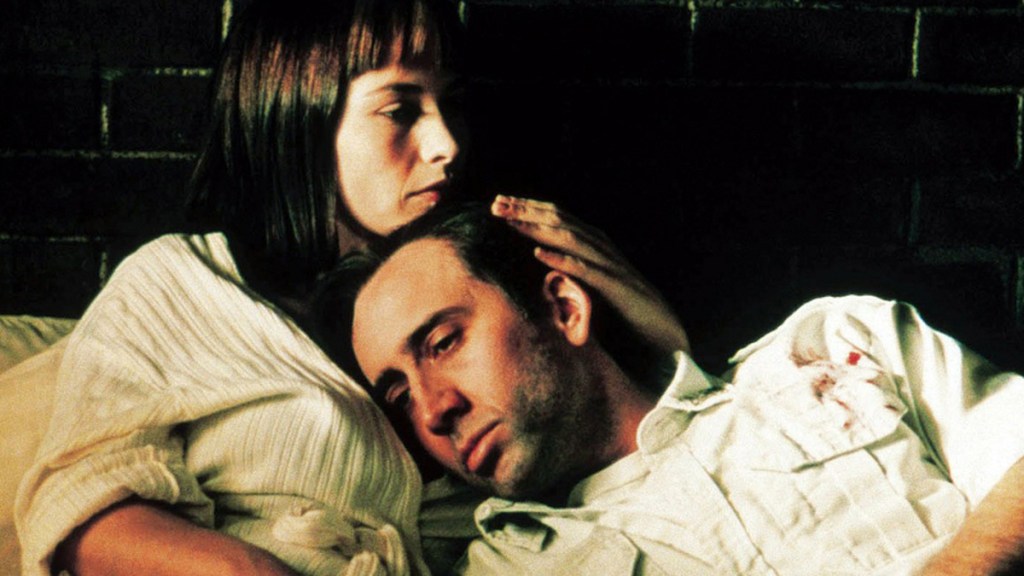
Bringing Out The Dead (1999)
Three days in the life of burned out ambulance paramedic Frank Pierce (Nicolas Cage) in New York City in the early 1990’s.
Frank used to enjoy his job but now can only see the ghosts of those people that he was unable to save. Especially a young woman named Rose who haunts him. Unable to sleep he is desperate to be fired so that he no longer has to come in to work. Each day he will be accompanied by a different partner. The first day he has Larry (John Goodman) who is detached and only interested in what they are going to eat next. The second day he has Marcus (Ving Rhames), a born again Christian with a wicked sense of humour. The third day he has Tom (Tom Sizemore) who is savage and gives out more punishment rather than healing people. Whilst Frank spills his soul to these partners who ignore him he is able to find someone who may be able to offer him salvation. The estranged daughter of a man he resuscitated but who is in a coma called Mary (Patricia Arquette) sees him regularly at the hospital as he makes stops there to bring patients in. She is a former drug addict with a kind heart who listens to him.
Bringing Out The Dead is another Scorsese film that is about religion without really being about religion. I think the three days are meant to represent Easter and the time between Jesus being crucified and rising from the dead. This is represented in Frank hitting his lowest at the beginning of the film and spending it searching for a spiritual rebirth, one that comes to him through Mary. Who again to me seems to represent Mary Magdelene, a woman who Jesus looked past her faults and treated as an equal, just like Frank does here with Mary. The final shot represents this rebirth or Frank’s being saved. And of course there is the very fact that Frank talks about how in those moments of saving someone’s life that not only is God working through you, but that you are God briefly.
The other way to look at it is that this is a spiritual sequel to Taxi Driver. Whilst based on a novel by Joe Connelly, the script is written by Paul Schrader who wrote Taxi Driver and features a man stalking New York City in a vehicle at night taking in the sights and people that inhabit it. Both Travis Bickle and Frank Pierce are lost and seeking spiritual salvation and both are seeking assistance. Although the difference is that Pierce is fundamentally a better person deep down.
For me it has three key facets going for it as a film. Its sense of chaos, its sense of humour and its lead performance.
As far as chaos goes there is a feeling that at any moment the whole thing could spill over into absolute disaster, if of course you do not think it has already. Scenes where the ambulance is being driven around are often sped up with the camera placed on its side or even upside down. Through each day it builds to an insane level of mania in time for Sizemore’s even more unhinged partner to join him.
The dark sense of humour running through the film helps to cut through this level of chaos and mania though. The hospital security guard whose catchphrase is “Don’t make me take my sunglasses off”. The job where they pick up a homeless person who smells so bad they drive back to the hospital as fast as they can hanging their heads out of the windows. Ving Rhames bringing back an overdose patient from the dead with evangelical zeal. All of these things are hilarious in the moment despite the hugely dark tone of the film.
Finally there is Nicolas Cage in one of his best performances bringing the whole thing together. Over the course of the film and the three days he becomes more tired and more hunched over. The bags under his eyes get deeper, his hair gets worse and he looks more and more like he is dead. It is actually sometimes painful to watch him it is so realistic.
It is not perfect though. It can feel episodic and as a result has peaks and troughs in both enjoyment and drama. Patricia Arquette also feels a little out of place. Her character is not drawn particularly well and alongside Cage she can fall a little bit by the wayside which is difficult given her character’s role in Frank’s rebirth.
The ambition is huge, the result is not quite as large.
Gangs Of New York (2002)
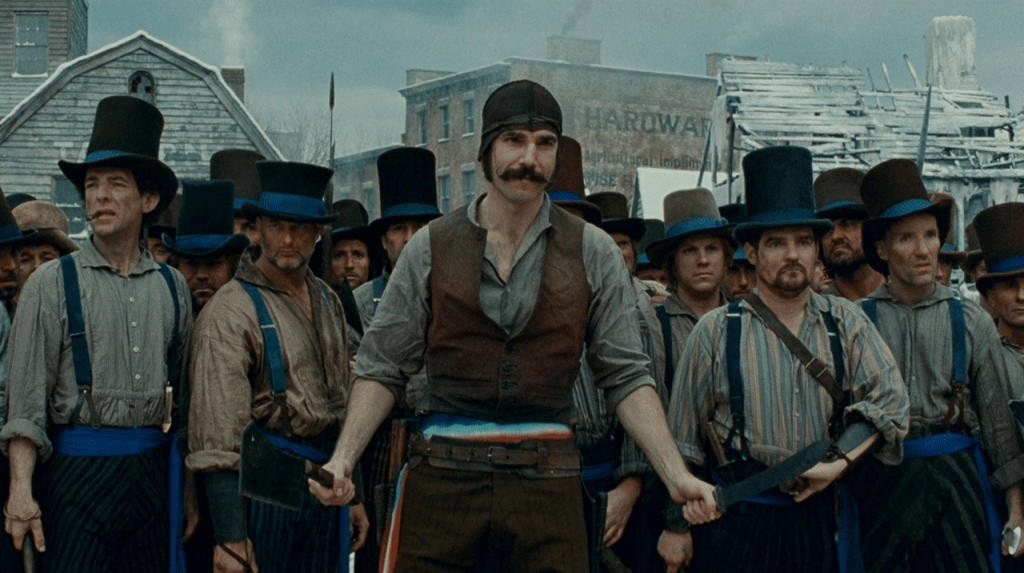
Opening in 1846, in the Five Points region of New York City we witness a battle between The Dead Rabbits gang led by ‘Priest’ Vallon (Liam Neeson) and The Confederation Of American Natives gang led by Bill ‘The Butcher’ Cutting (Daniel Day-Lewis). When Bill The Butcher is victorious over Priest Vallon he executes him in front of his young son whilst declaring The Dead Rabbits outlawed and his gang the rulers of the region.
Sixteen years later in 1862 Vallon’s son Amsterdam (Leonardo DiCaprio) emerges from the orphanage he has grown up in with vengeance on his mind. Immersing himself in the gang culture he gains the favour of Bill as a protégée and son that Bill has never had, all the time waiting for the opportunity to wreak revenge on the man who killed his father.
Gangs Of New York is an epic tale of how America was born of violence and is set against the backdrop of the Draft Riots of the Civil War. Whilst the north and south of the US are fighting each other against the backdrop of slavery and emancipation the Five Points region of New York is seeing a slew of Irish immigrants arriving resulting in clashes with the ‘natives’ of the area.
The story of how Gangs Of New York came to the screen is just as interesting as the film itself and one worth seeking out as I will not be doing it justice here. Scorsese acquired the rights to Herbert Asbury’s book The Gangs Of New York: An Informal History Of The Underworld (1927) in 1979 having initially come across it much earlier in his career. It took him twenty years to get to the point where he could make it and began filming in late 2000. In the pre-production process he originally had Robert De Niro lined up to play the towering figure of Bill The Butcher but scheduling resulted in him drawing Daniel Day-Lewis out of his first acting retirement. The majority of the film was shot at Cinecitta Studios in Rome where they built over a mile of mid-Nineteenth century buildings. Production designer Dante Feretti essentially created a city block of New York to ensure that the film was as authentic as possible. This authenticity extended into the characters’ accents as well. The film’s voice coach Tim Monich focused on different Irish dialects for the immigrants and had Daniel Day-Lewis learn a dead accent for his character that was compiled from written texts and one sound recording from the time. Whilst the film was originally scheduled for release at Christmas 2001 it had to wait until Christmas 2002 due to a mixture of production delays and the fact that the 9/11 terrorist attack on New York City meant that the producers felt it would not be appropriate to release at that time. When it was finally released the final shot of the film that sees New York age from the film’s setting to present day still includes The Twin Towers that were destroyed in the attack. Something that the film makers felt appropriate given it is about what New York had become.
So now we know just a tiny part of the amazing craft and passion that went into the film is the film actually good? Whilst I believe it just misses out on being one of the Scorsese greats it still is a phenomenal piece of work.
Perhaps the single greatest aspect of the film, which to some extent overshadows everything else here is the performance of Daniel Day-Lewis and the character of Bill The Butcher. The creation of the character itself is legendary, the aforementioned dead dialect/accent that was recreated and learnt, the stories of Day-Lewis being coaxed from retirement and refusing to break character for the entire length of the filming process and the ad-libs of tapping his glass eye and creations of lines in the moment. Day-Lewis is immense and manifests a completely different person. One who is imposing and scary and who carries himself and sounds completely differently from the man portraying him. Any talk of what De Niro may have done is moot given how much of a powerhouse performance this is. But, and this is important, can the remainder of the film live up to it?
DiCaprio in his first collaboration with Scorsese is solid as the lead and narrator of the film. His character certainly grows in stature as the story unravels as it should. Whilst other supporting actors such as Jim Broadbent as a corrupt politician, John C. Reilly as a policeman and Brendan Gleeson as an important figure in the community have the presence to stand alongside them. However Cameron Diaz as Jenny Everdeane, the adoptive daughter of The Butcher and love interest of Amsterdam is often overshadowed.
The story itself almost seems lightweight in comparison to the scale of the production and performances within it. There are momentary asides within it that seem far more powerful than the main plot, such as when we see Irish immigrants disembarking a boat that has brought them from their motherland to New York City only for them to immediately join a queue to join the US army, put on a uniform and get onto another boat ready to take them to war. Perhaps I am missing the point somewhat and the reason the main plot is straightforward is such that it can be juxtaposed with these historic moments that outline what shaped the city. But even knowing that it still does not resonate with me completely.
Gangs Of New York was nominated for a total of ten Academy Awards including Art Direction for Dante Ferretti and Francesca Lo Schiavo and Best Actor for Daniel Day-Lewis yet it came away with no wins whatsoever with Chicago the big winner at that year’s ceremony.
An epic film featuring stunning sets and outstanding performances that is not quite up with a great director’s classic films.
The Aviator (2004)
A story chronicling the life of Howard Hughes (Leonardo DiCaprio) between 1927 and 1947. Following the death of his parents in 1922 and 1924 Hughes inherited a huge fortune and his father’s business Hughes Tool Company and he would use that money to fund his forays into films and aviation. As his life went on his Obsessive Compulsive Disorder would worsen and impede him from functioning fully as the public figure he was.
The Aviator opens with a scene that signposts a possible reason for Hughes OCD. We see him as a young boy being bathed by his mother as she explains to him the word quarantine and the fact that he was not safe from outbreaks of cholera and typhus. The bar of soap held in a tin that she uses on him will be a key part of his later routines of washing his hands. Later as the film progresses Hughes condition worsens and prevents him from living a normal life. These sequences are really expertly put together where we see him need to follow routines and repetitively get stuck on certain phrases. They even call into doubt whether those around him at the time are really there in one key sequence. Hughes other afflictions that would exacerbate his OCD condition include the fact that he was partially deaf and over the course of his life suffered some catastrophic injuries as a result of plane crashes.
The rest of the film takes us on a whirlwind tour of his exploits and paints Hughes as something of a modern day renaissance man. We see his productions of Hells Angels and The Outlaw both of which courted controversy. The former for being at the time the most expensive film ever made and the latter for breaking moral ground with the extensive focus on Jane Russell’s cleavage. His obsessive eye for detail and perfectionism is shown in the fact that he decided to reshoot Hells Angels in order to bring sound to the picture and the fact that he hired a meteorologist to help him find clouds to improve his aerial footage. As an aviator we get to see him breaking the air speed record and the time taken to navigate around the globe as well as his attempts to build a spy plane and a flying boat that would act as a troop and vehicle carrier for the U.S. Government. The latter, designated The Hercules is probably better known in popular culture as “The Spruce Goose”. As a businessman we will see him battle with Pan Am and appear before a senate committee to fight for his right to have a competing commercial airline and defend the claim against him that he was a war profiteer. And we will also see his love life portrayed in the main in two relationships, the first with Katherine Hepburn (Cate Blanchett) and the second with Ava Gardner (Kate Beckinsale). The level of detail and the number of events encompassed within the film’s 170 minute running time is dizzying and all credit must go to writer John Logan for making it such a fascinating and illuminating story.
The production value and filming techniques on show are exemplary and there was one particular facet that stood out to me. During an early scene where Hughes and Hepburn are playing golf the grass appears blue and I was immediately then aware of the colour palette throughout. What is perhaps a brilliant parallel of Hughes obsessive eye for detail and perfectionism is that Scorsese ensured that the film emulated the appearance of the film technology at the time. All the scenes pre-1935 emulate the Multicolor process owned by Hughes which renders all colours as shades of only red and cyan blue. Whilst scenes post 1935 emulate the three strip Technicolor process. As a viewer you will just feel like the film has a fantastic period feel by the very fact it looks like a film of the era it is in but it is a particularly clever film making technique that I had not appreciated in my previous viewings.
Whilst DiCaprio was overshadowed by Daniel Day-Lewis in his first collaboration with Scorsese there is no chance of that here. He is the sole lead and delivers a brilliant performance. His depiction of a young driven man who is also a brilliant engineer and aviator is exemplary but it is perhaps when he is portraying Hughes afflictions when he is at his best. A scene where he crashes a test plane is brilliant and also one of the most violent sequences put together in any Scorsese film. Whilst his portrayal of OCD and its impact on Hughes stirs sympathy and upset that people have to manage this disease. Elsewhere Cate Blanchett won a Best Supporting Actress Academy award for her faultless portrayal of Katherine Hepburn. Their relationship is loving and sweet which only makes it more sad when it falls apart. His other love played by Kate Beckinsale is a much more fiery performance but equally as interesting. Scorsese was also able to get a swathe of big names and fantastic actors to play small roles including Jude Law, Alec Baldwin, John C. Reilly, Alan Alda, Danny Huston, Ian Holm and Willem Defoe. There is even time for singers Gwen Stefani and Rufus Wainwright to make cameos.
The film is an absolutely fascinating and gripping biopic spearheaded by a brilliant lead performance and with a plethora of fascinating supporting characters.

The Departed (2006)
Billy Costigan (Leonardo DiCaprio) and Colin Sullivan (Matt Damon) are both new recruits within the Massachusetts State Police in Boston. However their career paths will be significantly different. Billy’s family has mob ties and he is approached to go undercover to infiltrate the Irish Mob run by Frank Costello (Jack Nicholson). Whilst Colin was groomed by Costello from a young age to be his own personal mole within the police force. Both police officers are given the mission to seek out the rat undermining the allegiances of their chosen side.
The Departed is the film that finally resulted in Martin Scorsese winning an Oscar for Best Director, an award long overdue. But despite what some might say, this was not an “honourary” award. The Departed is a spectacular film that deserves the awards it garnered on merit. It also took Best Picture, Adapted Screenplay and Editing at the Academy Awards.
Let’s discuss that Adapted Screenplay award first. The Departed is an adaption of the superb Hong Kong film Infernal Affairs. A film that I can not recommend enough and I am sure many will prefer to this remake. However there is plenty of nuance and originality in William Monahan’s adapted screenplay and Scorsese’s direction to allow the two films to stand side by side. Monahan has added references to the real life Boston Irish Mob and historical figures in order to give the location of Boston a character within the film.
The plot is an intricate affair that unwinds at such a perfect pace that it is incredibly satisfying as all the puzzle pieces fit into place. The idea of two people pretending to be what they are not is simple enough for everyone to enjoy, but then when the other factors of their personal lives and the many double crosses within the film are layered on top it becomes fascinating in every way.
Billy Costigan is alone with no family that he can rely on so he accepts the offer of going undercover, a job that only isolates him further. He has two father figures vying for his loyalty. The evil that is Frank Costello or the light that is Captain Queenan (Martin Sheen), a man who genuinely cares for his charges. Colin Sullivan on the other hand has grown up surrounded by the support of Frank Costello, but his faith in him begins to erode as he discovers more about him in his role as a police officer. Billy and Colin’s lives are even further entwined by their relationship with police psychiatrist Dr. Madolyn Madden (Vera Farmiga). Billy is obliged to see her as part of his role undercover whilst Colin begins a relationship with her.
Performance wise the film is a veritable embarrassment of riches. DiCaprio now on his third consecutive film with Scorsese seems to put in a better performance each time whilst his co-lead Damon delivers one of his best ever performances. Jack Nicholson in one of his final films before retirement relishes the opportunity to grandstand in a character who is almost as large as Bill The Butcher was in Gangs Of New York. Mark Wahlberg was Oscar nominated for his role as an incredibly foul mouthed Sergeant who works alongside Martin Sheen’s Captain. Sheen of course resonates honour and goodness as he has in so many of his other roles. Vera Farmiga is astonishing as the conflicted psychiatrist who gets to see the more vulnerable nature of our lead characters. And then we have the likes of Alec Baldwin and Ray Winstone playing a fast talking cop and hard man respectively, both roles that should come easy for them which results in a short hand for audiences to know exactly what to expect.
Scorsese and his regular editor Thelma Schoonmaker then use music and editing to give the film a fast paced and frenetic out of control feel. Whilst the Dropkick Murphys ‘I’m Shipping Up To Boston’ and a number of Rolling Stones tracks keeps the music blaring Schoonmaker uses a reported 3,200 cuts in the film making the average shot only 2.7 seconds. Something that would normally be true of a special effects heavy action blockbuster is used here to keep you off balance at all times. One thing that it does result in is a lot of huge continuity mistakes, something I would be surprised you did not spot in your watching of the film. But it achieves the emotional response they were aiming for at the expense of perfection.
The Departed is a hugely entertaining watch.

Shutter Island (2010)
In 1954, U.S. Marshall Teddy Daniels (Leonardo DiCaprio) is called to Ashecliffe Hospital for the criminally insane to assist with finding a patient who has disappeared from her cell. Meeting his new partner Chuck Aule (Mark Ruffalo) on the ferry to Shutter Island in Boston Harbour where the hospital is housed they set out to unravel the mystery. Meanwhile a storm closes in on the island trapping them with their quarry.
On the island Teddy and Chuck are met by Deputy Warden McPherson (John Carroll Lynch) who gives them the details of the case and informs them that they must surrender their weapons to enter the facility. Their other guide on the island is that of Dr. Cawley (Ben Kingsley) who is helpful to a point, refusing to give them access to certain documents that he considers confidential. They learn that the prisoner, Rachel Solando murdered her three children by drowning them in a lake behind her home, but has blocked the event from her mind and believes the mental institution to be her real home where the guards and doctors are staff around the house.
As the case progresses Teddy is haunted by the ghosts of his past as his memories are churned up by the facts of the case. He remembers his wife Dolores (Michelle Williams) who died in an apartment fire and back to his time in the war when he was one of the soldiers who liberated the concentration camp at Dachau. Whilst Dolores begs him to let her go, a young girl he saw dead at the camp asks him why he did not save her. These scenes in particular are heartbreakingly emotional and explain why Teddy begins to break down as he and his partner become trapped on the island thanks to the storm whilst unable to get to the bottom of the case.
The puzzles and mysteries held within the film are outstanding. The elements of fire and water and Teddy’s relationship with them play an important part in the story as they created the loss that drives Teddy and the patient he is looking for. At one point in Teddy’s dreams we see him holding his wife Dolores as she turns to ash in the fire that claimed her whilst the missing Rachel claimed the lives of her children in water. Anagrams and riddles are important and feature in the clues that Teddy follows. Whilst the only witnesses that Teddy has to interview have questionable recollections given that they are in a home for the criminally insane. The absolute master stroke of course is that the film gets better and better on subsequent views. Even when you know the solution to the puzzle it is still fascinating to watch it unfold in front of you.
The performances on show are faultless and also get better with subsequent viewings as well. Leonardo DiCaprio now on his fourth consecutive Scorsese feature just seems to get better and better under the director. Teddy is a good man who wants to do everything in his power to stay that way and DiCaprio does a brilliant job portraying his demons and his drive. Ruffalo is quietly great as the new partner who Teddy forms a bond with. Kingsley and Lynch are both excellent as well as the ambiguous doctor and guard running the madhouse, can they be trusted? Elsewhere the film also has quite a stunning supporting cast that includes Michelle Williams, Elias Koteas (in what surely must have been a role intended for Robert De Niro?), Jackie Earle Hayley, Max Von Sydow, Emily Mortimer and Patricia Clarkson.
The cinematography and music featured take an interesting approach as well. Whilst the majority of the film is shot exactly as you would expect of a period detective mystery it uses occasional camera trickery here and there to put you into the mind space of the characters. The most obvious example is that of a glass of water offered to a patient disappearing and reappearing but there are other moments throughout. Musically though the film does not actually have a score of its own with Robbie Robertson hand selecting existing classical music to feature within the film. Perhaps the most startling of these is a piece of music called ““On The Nature Of Daylight” by Max Richter which plays in moments Teddy is recalling Dolores. It has also played on loop whilst I wrote this piece to allow me to remember how superb the entire film is.
I think ultimately what I am in awe of the most with this film is the relationships that it draws. Teddy has or forms a bond with the majority of characters within the film and how we interpret that relationship changes as the film progresses and we learn more about the mysteries held within Shutter Island. His love for his wife is profound and impossibly romantic. My heart breaks for him each time he remembers her and talks with her. Whilst the friendship he forms with Chuck as they investigate Rachel’s disappearance and he opens up more to him is equally as heartwarming. Yet despite all of this it is set against a grim and dark backdrop of murder that is unthinkable.
The film is also a heady mix of genres. A mystery, a detective story, a thriller, a love story and even elements of horror exist. It is Hitchcockian in the manner in which it unravels its mystery and creates multiple layers to enjoy on repeat viewings. Based on a novel by Dennis Lehane who has had many of his books turned into films such as Mystic River, Live By Night, The Drop and Gone Baby Gone it is a largely faithful adaptation. There is one crucial change though and that is the absolutely stellar final line of the film uttered by Teddy that sums up the man that he is.
Shutter Island should be talked about as one of Scorsese’s absolute best films. Total genius.
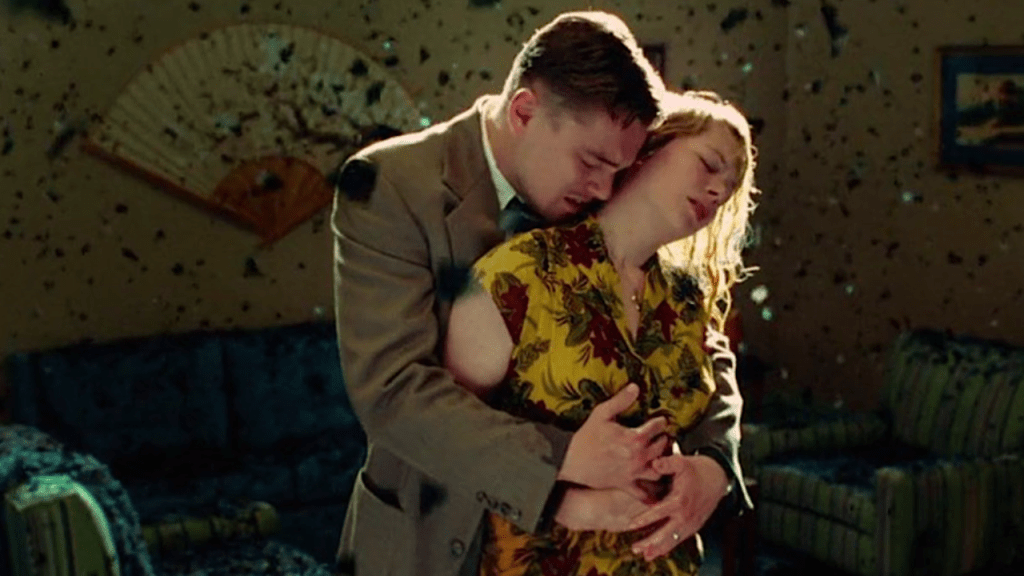
Hugo (2011)
1931, Paris and a young boy named Hugo Cabret (Asa Butterfield) lives in the Gare Montparnisse railway station keeping the clocks maintained and running whilst searching for parts that might fix the strange automaton robot left to him by his late father (Jude Law).
Abandoned by his alcoholic uncle (Ray Winstone) Hugo is alone in the station and spends his time hiding from the Station Inspector (Sacha Baron Cohen) whilst stealing clockwork parts from the toy shop owner Georges (Ben Kingsley) in the hope they will fix the automaton that Hugo hopes has one final message from his father. The friendship that he forms with Georges’ god daughter Isabelle (Chloe Grace Moretz) will lead him on an adventure that takes in the magic and wonder of clockwork, illusions and film.
Hugo is a hugely entertaining film that is a huge departure for Scorsese in one respect whilst playing utterly to his strengths in another and it is perhaps the clash between these two facets that lets it down slightly at its core. The departure is that this is a children’s film and the only one that I could watch on this project with my own kids. The strength though is that the main focus of Hugo is actually on the history, preservation and magic of film making. As I watched the film my inner child and love of film was completely satisfied and kept in awe whilst my actual children’s interest waned and fell away when the story stopped being about the children and begun to focus on Georges. To the point that they moved on with their day and did something else whilst I watched the fascinating second half of the film. Ultimately is a film aimed at children still a success if it is only an adult’s inner child that is excited by it?
Perhaps the other area then that lets Hugo down on home viewing is the fact that it is one of the greatest 3D films to have been shot. However whilst I have a Blu-Ray capable of playing in 3D I no longer have a television capable of displaying a film in that medium thanks to old age and current trends.
So those issues aside what makes Hugo so much fun?
The opening hour is a splendid mystery that gives us a wonderful setting, a sad back story and some fun and entertaining peripheral characters. Hugo’s home is shown to us in a glorious opening shot that appears to be one continuous take but is actually multiple spliced together through technical wizardry. The camera follows Hugo throughout the clock mechanisms in the ceiling of the station and it is exactly the sort of magical escape that children would be excited by. We then have the station itself which is populated by interesting characters and sub plots. Sacha Baron Cohen’s Station Master is a fun comic relief villain who uses a lot of physical humour and has a dog. He also does have a heart of gold deep within as can be seen with his interactions with a flower girl played by Emily Mortimer. Christopher Lee’s book shop owner has the sort of gravitas to be both scary and wise to young and old alike. Whilst Richard Griffiths and Frances De La Tour play out a silent romance throughout the film as Hugo looks on. Despite Jude Law and Ray Winstone only getting small parts in a flashback sequence they do a wonderful job of conveying what their characters meant to Hugo as well.
The second half of the film features much more heavily on Georges, his wife Jeanne (Helen McCrory) and a film historian played by Michael Stuhlbarg. It is here that the film fans and those who have bought into the wonder on offer of the first half of the film will be fed with some spectacular visuals.
The technical skills and details in the background of the film are probably what make it so fascinating. There is also far too many things on show here for even a devoted cinephile to really be aware of without background reading as well. I would strongly recommend reading about the skills used to piece together the opening shot that takes us through the clocks that Hugo lives in. It is also fascinating to understand how many film techniques are used in homage to the films that Hugo celebrates and are embedded within this work itself. Knowing that the Paris skyline matches that in the 1938 film ‘Under The Rooftops Of Paris’ or that one of the key action shots of Hugo hanging from a clock is an homage to 1923’s ‘Safety Last!’ does help give you a greater appreciation of what went into this film. Whilst the recreation of some of Georges Melies original films are a delight.
The source material for Hugo sounds equally fascinating. Based on a book called ‘The Invention Of Hugo Cabret’ by Brian Selznick which is a hybrid of a novel and a picture book which of course is based to an extent on true events.
The film’s technical facets were well rewarded at the 2012 Academy Awards, winning for Art Direction, Cinematography, Sound Editing, Sound Mixing and Visual Effects. On top of those five wins it missed out on a further six awards it was nominated for including Best Director and Best Picture.
Ultimately I am torn with Hugo. I loved the magical story about family and the magic of cinema but my children were bored when the focus moves away from Hugo. I love the huge amount of technical skills and homage to older films that is hidden deep within this feature but should additional reading and a love of film be required to enjoy the film on face value? And what of its 3D elements that are ultimately lost to me shy of making an expensive purchase or perhaps waiting for an anniversary cinema screening?

The Wolf Of Wall Street (2013)
The rise and fall of stock broker Jordan Belfort (Leonardo DiCaprio) navigating his personal and professional life and eventual arrest by the federal government for numerous financial crimes.
Opening in 1987 we see a young aspirational Jordan Belfort on his first day at the L.F. Rothschild stock brokerage. His boss Mark Hanna (Matthew McConaughey) takes him to lunch after being impressed by their opening conversation and imparts upon Jordan the secrets to being a stockbroker. You are not there to make a profit for your client, you are only there to make it for yourself. And to do so you need to keep your mind straight by ‘jerking off’ regularly and taking copious amounts of drugs and alcohol.
Later we will see Belfort lose his job on Black Monday before branching out into ‘penny stocks’ which offer a much higher commission and going on to create his own company called Stratton Oakmont in 1989. Hiring his neighbour Donnie Azoff (Jonah Hill) and an assortment of his friends he teaches them his aggressive sales techniques and the way to make huge amounts of money through many nefarious and illegal schemes.
As Jordan becomes richer and richer his acts of debauchery become so infamous that he is interviewed by Forbes magazine who declare him The Wolf Of Wall Street. A name he becomes proud of, whilst also alerting him to the attention of the FBI represented here by Agent Patrick Denham (Kyle Chandler).
Whilst at home one of his many affairs lead him to divorce his first wife for Naomi Lapaglia (Margot Robbie) whom he has children with whilst of course never abandoning his cheating lifestyle.
The entire film runs at a breakneck speed, seemingly a representation of the adrenaline high that the act of making money and taking drugs gives to its main protagonist. Over the course of 180 minutes we will be taken on a whirlwind ride that set a Guinness World Record for the most instances of swearing in a film. Coincidentally the previous holder was Scorsese’s own Casino.
DiCaprio’s fifth film with Scorsese delivers his most outlandish and funny performance yet. DiCaprio provides the film’s narration, breaks the fourth wall by speaking directly to camera and commits the most outrageous acts of drug taking and sexual acts throughout the film. But it is perhaps his office speeches to his workers that take the award for craziest moments in the film. He was nominated for an Academy Award for Best Actor here alongside his other Scorsese nomination for The Aviator but still failed to take home the award.
Jonah Hill was also nominated for acting honours with a Best Supporting Actor nomination. This film is still perhaps his greatest achievement in a dramatic acting role albeit one that is incredibly funny. His introduction to the film where he promises to quit his job immediately if Belfort can prove he earns what he says he does is side splitting.
Elsewhere the film has a veritable cast of thousands all delivering black comedy gold. Margot Robbie catapulted her film career with her bombshell performance as Jordan’s second wife. Rob Reiner delivers an hilarious turn as Jordan’s father and the likes of Jon Bernthal, P.J. Byrne, Kenneth Choi, Brian Sacca and Henry Zebrowski are brilliant as his inner circle of friends. You also get the likes of Jean Dujardin, Jon Favreau and Joanna Lumley turning up in small but brilliant roles.
In my review of Casino I said that many considered it to be the spiritual successor to Goodfellas but in reality this is the film that truly meets that accolade. A based on true story tale of how a nobody became a somebody by virtue of extensively breaking the law and taking what they want. Marital strife, mistresses and excessive drug taking feature extensively followed by cooperating with the authorities in return for a lighter sentence. The main difference here is that whilst Henry Hill is shown to have become a shell of a man remembering old glories, Jordan for all intents and purposes gets away with everything.
The Wolf Of Wall Street is without a doubt the most hilarious film Scorsese has created, as long as you are happy with the darkest of dark comedy. From Donnie’s hilarious first meeting of Naomi whilst under the influence of drugs, to Jordan’s dancing at his wedding to the hilarious sequence where Jordan drives his Lamborghini Countach whilst under the influence of quaaludes.
The fact that the film gives no pause or reflection on the damage done by Belfort or the fact that he essentially got away with his crimes may leave a sour taste in the mouth of some. But the reality is that this is a portrayal of a man who simply does not care and that is what is on display.
Astonishing.
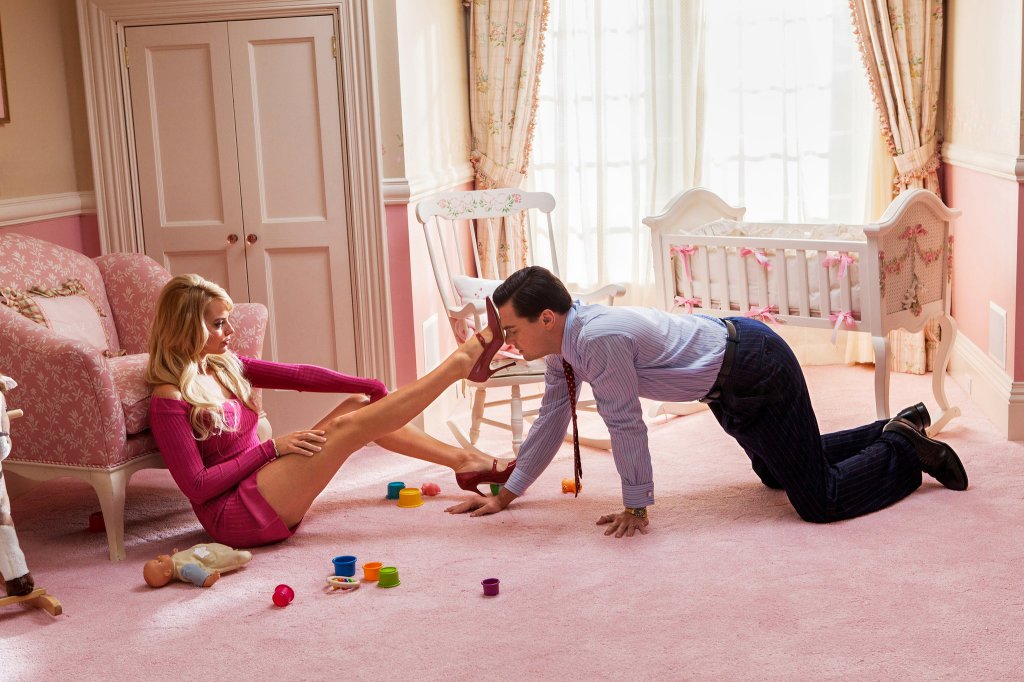
Silence (2016)
Opening in 1633 Silence tells the story of three Portuguese Jesuit priests acting as missionaries in Japan in a time when the government opposed and tried to crush Christianity.
It opens with Father Ferreira (Liam Neeson) witnessing the suffering of the Japanese Christians at the hands of the Government with him narrating the final letter that he would send back home to the Church. Later we see Father Rodrigues (Andrew Garfield) and Father Garrpe (Adam Driver) being given the news by their superior (Ciaran Hinds) that Ferreira has apostatised, renouncing God and is living amongst the Japanese. They can not believe that their former mentor would do such a thing and beg to be allowed to travel to Japan and find out the truth for themselves.
When they finally arrive in Japan aided by a fisherman named Kichijiro (Yosuke Kubozuka) they are kept hidden in a village where a small contingent of Japanese still secretly practice Christianity. When first offered food they start to eat as fast as they can before feeling humbled by the fact the villagers stop to pray before their meal. They proceed then to hide in a hut during the daytime and say Mass and offer the sacrament of confession under the cover of darkness.
However the local Inquisitor Inoue (Issei Ogata) is constantly on the look out for secret Christians and offers rewards for the capture of any and eventually Kichijiro betrays them. Garrpe and Rodrigues separate as they believe it will be safer to travel separately but Rodrigues is captured by the inquisitor and forced to watch the torture and suffering of Christians. All of which he can stop, if only he will renounce his God.
Arriving at this film in my Scorsese project is an exciting one for me as this was the second film that I ever reviewed for this blog on New Year’s Day 2017, the day that I began it. I found the film to be a powerful watch then and you can read my original thoughts here – Silence. I also placed it as one of my favourite films of that year which you can read here – 2017 – Year in Review.
Having now immersed myself in Scorsese films I can state categorically that for me this is the best of all his forays into overt explorations of religion and it is possibly the best film on the subject that I have ever seen. Perhaps the most important reason for that is that at no point are we ever told what faith should mean. Instead the film simply questions what faith is and the manner in which both the priests are trying to bring it to Japan and the way Japan is trying to suppress it. The story is based on a 1966 novel of the same name by Shusaku Endo which Scorsese read after he made The Last Temptation Of Christ in 1986. He had been trying to get it made ever since.
The film at its core is focused on Andrew Garfield’s Rodrigues. He narrates the film in the form of letters that he is writing in the hope he can return them to Portugal some day. We see the story only from his perspective and what he believes his role as a priest is within Japan and what his faith should mean in the terms of how he should behave. The fact that this smacks of colonialism should not be lost on the audience even though it is given from his perspective. His pain and suffering is that he must watch others be tortured and killed in his name. That he is simply told that if he renounces God it will all stop. But he simply can not conceive that his faith would allow him to do that. All the while of course God is silent to him.
The use of actual silence in the film is deafening. The film opens in darkness with only the sounds of nature audible. This sound gets increasingly louder and louder until suddenly there is complete silence as the title card comes on screen. Later in the film Rodrigues will experience some crucial moments in his journey in relation to his faith and each time they will happen in moments of complete silence.
As far as performances go this is Andrew Garfield’s film. The anguish and suffering that his journey take him on spiritually and physically is brilliantly portrayed. His character is by no means a saint and he is able to show the nuances in a man who is struggling with his entire belief systems. Both Garfield and Driver lost weight to perform their roles in the film and appear incredibly thin.
Visually the film is beautiful as well, shot in Taiwan rather than Japan it features stunning scenery and images.
Some may find it slow and ponderous, but if you allow yourself to ponder on the questions it asks I found it to be quite profound.
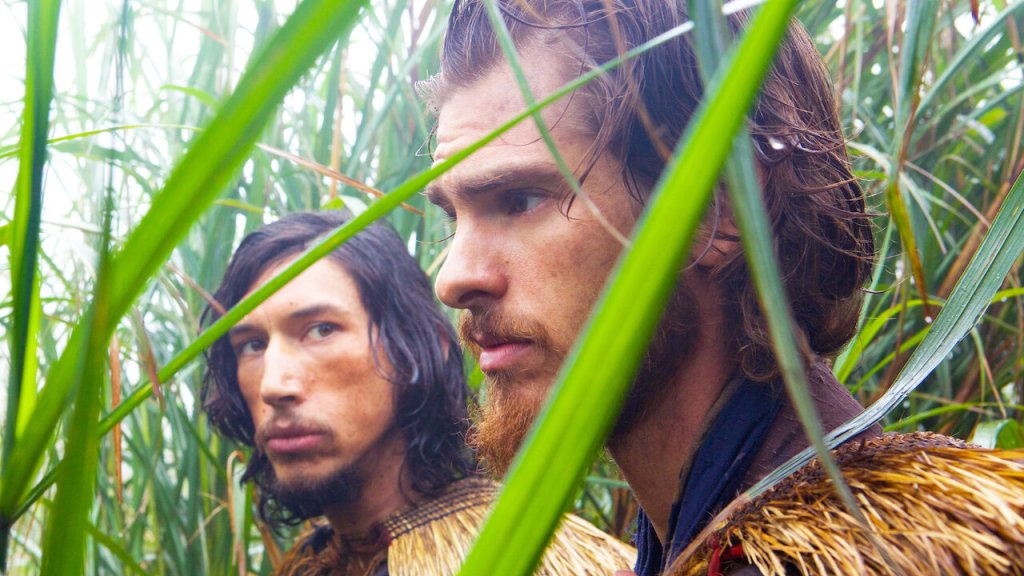
The Irishman (2019)
After watching the final film in this project on Netflix I read the review that I posted on its release and in a rarely experienced event I agreed with myself so much that I thought I would post my original review again with some further comments below…
Frank ‘The Irishman’ Sheeran (Robert De Niro) tells us the story of his life from the old peoples home where he is living out his last days. Over the course of 60 years he tells the account of how he returned from the war to be a delivery driver, made friends with people in the Italian mob, became a hitman, forged a close friendship with Jimmy Hoffa (Al Pacino) and slowly loses everyone around him.
Martin Scorsese’s ninth collaboration with Robert DeNiro is an epic and ambitious project for a number of reasons. Scorsese and DeNiro have plotted the path of a gangster before, so this time they decide they need to tell the mans story through his entire adult life. To do this the film uses a vast amount of digital de-ageing, spans a mammoth 209 minute running time and pulls together a cast that is gangster royalty. DeNiro is joined by Joe Pesci whom they begged out of retirement, Al Pacino for his first film with Scorsese, Harvey Keitel, Anna Paquin, Stephen Graham, Bobby Cannavale, Ray Romano and Jesse Plemons. And given the nature of the film industry at the moment, none of this was enough to land a major film studio, so Netflix stepped in with financing meaning that aside from a limited cinema release the main way to watch The Irishman will be on your home cinema system.
The story itself focuses wholly on Sheeran and to a large extent with the relationships that he has with Teamster Union President Jimmy Hoffa and Mob Boss Russell Bufalino. The two masters who ultimately would have diverging opinions and force Sheeran into making a decision about his allegiance. It covers the rise of an ordinary man within the mafia, the minutiae of how the mob make their money, the impact on family life, the fact that the friendships in the life are fragile and constantly reminds us how closely they live with death. There is a nice touch added to the many characters we meet where the film freezes and tells us how and when their real life counterpart met their comeuppance, constantly reminding us of death.
The film that it most reminded me of was another DeNiro passion project The Good Shepherd. That was a story about a man whose ambition lost him his family and his ability to feel and this is a similar story on the flip side of the law. DeNiro directed himself in that film but with Scorsese at the helm here it has much more visual flair.
Performance wise we are treated to a master class. DeNiro is back to his inimitable best here essaying a character across decades. Pacino is fantastic in a role that allows him to grandstand as only he knows how. But the absolute star of the show is Pesci. Persuaded out of retirement he steals the show. Russell is calm, controlled and even nice to people, but behind that persona there is an icily powerful man who is prepared to do what he needs to do to stay in control. It is a little bit disappointing that the women in the film are mostly relegated to giving disappointing glares or arguing about whether they can smoke in the car. Anna Paquin does a solid job with an underwritten role as Sheeran’s daughter.
Visually the two biggest things that you will be staring in wide eyed wonder at are the perfect period settings and costumes and the CGI de-ageing. This is not always successful with some odd looking moments, but the story is captivating enough and the effects solid enough that you should quickly forget about needing to constantly second guess what you are seeing. In fact it is more the age of the actors and their physical movements and need for stunt doubles that are more jarring. There is a scene where DeNiro attacks a man who he believes slighted his daughter and whilst he may look young his physical movements are jarring. In the same way that Pacino’s body double is fairly obvious in some scenes.
If I were to look for negatives, it could be argued that this is nothing necessarily that we have not seen before. DeNiro has played a man ageing and looking back on his deeds in Once Upon A Time In America and Scorsese has given us Goodfellas and Casino. It may also pay to have some knowledge of Kennedy, the Bay of Pigs and the Cuban Missile Crisis for some important political context. But it is an impressive and stirring achievement.
I was lucky enough to see The Irishman in the cinema as part of a BFI screening and will admit that is the only time I have watched the film in one sitting. I broke this viewing into two sittings mostly because it is very hard to watch a 209 minute ’18’ certificate film when you have young children without needing to stay up into the early hours of the morning. And frankly (pun intended) that is the only major issue that I have with The Irishman.
The only facet of my review that I now disagree with is that of Anna Paquin’s part in proceedings. She does exactly what is required of her incredibly well. She is an onlooker into this story, the daughter that Frank ignored and all that he knows is her silent disdain. Otherwise what struck me on second viewing is just how good De Niro is here. The final moments when he is discussing his actions with a priest and just seems completely unable to grasp that what he did was anything but a job is astonishing.
I placed The Irishman as my 2nd best film in my review of the year it was released which you can read here – 2019 – Year in Review
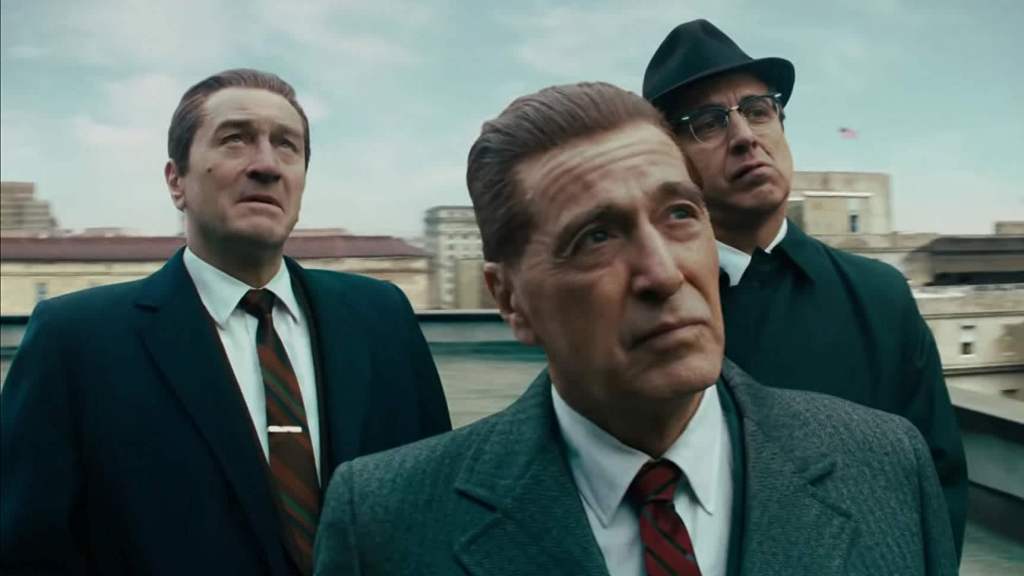
>This next section has been added to provide links to my reviews for Martin Scorsese’ films since I completed this article<
Killers Of The Flower Moon (2023)

>Original article resumes<
Summation
So this project took me a little while! I watched 25 Martin Scorsese films across 12 and a half months. When I started Scorsese’s next project, ‘Killers Of The Flower Moon’ was filming and when I finished it was in post production. Honestly though I am happy I managed to finish before it was released so that I have been able to immerse myself in every feature film he has made.
If you have sneaked ahead to my ranking of the films in this project you will probably have seen that I love an awful lot of these films. Whilst perhaps my biggest disappointment of the project is that none of my five first time watches are films that I will ever revisit.
Scorsese’s films do have themes. Religion and crime key amongst them. Many feature narration as a key means to tell the story. He is capable of getting the best actors to help tell his stories but it is his partnerships with Robert De Niro and Leonardo DiCaprio that have produced his absolute best work. Those films of his that I have ranked equally as highly as his work with those two phenomenal actors have also featured astonishing actors at the top of their game. The Color Of Money’s combination of Paul Newman, Tom Cruise and Mary Elizabeth Mastrantonio and The Age Of Innocence’s leads of Daniel Day-Lewis, Michelle Pfeiffer and Winona Ryder are the only films not featuring De Niro / DiCaprio that I have enjoyed as much.
After much discussion and thought I believe my top 5 Scorsese would be:
- The Color Of Money
- The Wolf Of Wall Street
- Taxi Driver
- Shutter Island
- Raging Bull
But I am sure that may change again in time. I absolutely can not wait for his next film that will bring De Niro and DiCaprio together for the first time under Scorsese in a feature film whilst I believe next on the agenda after that is ‘Roosevelt’. A biopic of Theodore Roosevelt starring DiCaprio.
Martin Scorsese Ranked
Essential – A must watch for everyone
- Taxi Driver
- Raging Bull
- The Color Of Money
- Goodfellas
- The Age Of Innocence
- The Aviator
- The Departed
- Shutter Island
- The Wolf Of Wall Street
- The Irishman
- Killers Of The Flower Moon
Good – Exactly that, a good film worth watching
- Mean Streets
- The King Of Comedy
- Cape Fear
- Casino
- Bringing Out The Dead
- Gangs Of New York
- Hugo
- Silence
For fans of their work – Fans will still enjoy these, less so for casual observers
- Who’s That Knocking At My Door
- Alice Doesn’t Live Here Any More
- New York, New York
Eminently missable – Even fans might struggle, for completionists only
- Boxcar Bertha
- After Hours
- The Last Temptation Of Christ
- Kundun
 Phil the Bear's Film Reviews
4 thoughts on “Martin Scorsese Retrospective”