
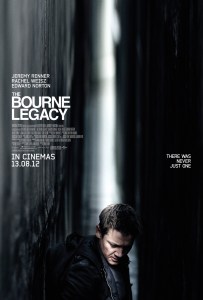
Aaron Cross (Jeremy Renner) is a CIA operative taking part in the “Outcome” project designed to enhance agents both physically and mentally via medication. However when Jason Bourne exposes to the world other CIA programs designed to create assassins Eric Byer (Ed Norton) is sent in to shut down “Outcome” and hide all evidence it exists.
Following the huge success of the Bourne trilogy starring Matt Damon development of further sequel ideas and expansions continued. But when Director Paul Greengrass bowed out of a new Bourne film, lead actor Matt Damon followed saying that he would not play Bourne without Greengrass. This led to the series writer Tony Gilroy stepping up to be both writer and director. Working on a script with his brother Dan Gilroy their decision was to make the entire Bourne trilogy be a smaller part of a larger conspiracy. The Bourne films had outlined Treadstone and Blackbriar as projects to create trained assassins through psychological means. So why would there not be more programmes using other means to enhance agents?
The resulting plot actually takes place for a significant portion in parallel with the events of The Bourne Ultimatum. As Bourne and Landy are exposing the CIA’s clandestine operations in that film the cover up operation that forms the plot of this film is triggered.
We meet Cross initially in an opening scene designed to mimic the beginning of the first Bourne film. Cross is floating in water in Alaska, part of a training program that shows us he is dependent on taking “chems” that enhance him physically and mentally.
When Byer triggers his clean up operation Cross manages to survive and tracks down Doctor Marta Shearing (Rachel Weisz) to seek help. She has been conducting tests and collating data on the project, but with it shut down the only way for her to help Cross is to head to Manila where the “chems” are manufactured.
The Bourne Legacy is an interesting proposition that results in a poor movie. Intellectually speaking the plot continuation from the Gilroy brothers is a good idea. Expand the conspiracy, give us a new protagonist who has similar but different issues, give us some more shadowy CIA agents who are as callous as those we have seen in earlier films and deliver hard hitting action. But it fails at almost every turn because it does not deliver a sympathetic or interesting protagonist and delivers insipid action.
Jeremy Renner at this point in his career was considered the next big action star. Having delivered a superb performance in Best Picture winning The Hurt Locker in 2008 he found himself elevated to co-star with Tom Cruise in Mission: Impossible – Ghost Protocol in 2011 and star of the new Bourne film in 2012. All of which alongside his new role as Hawkeye in the Marvel Cinematic Universe. But his performance here feels almost robotic trying to somehow deliver as much plot in one film as what had previously been given in three. It does not help that his character ultimately is just in a race for medication before his brain explodes. In fact it is very hard to care at all about Aaron Cross.
Rachel Weisz’ character is even less sympathetic. A doctor who knew what she was doing was sketchy but still complains that it meant she could not publish any research. By the halfway point when Weisz and Renner’s characters are discussing their predicament and possible solutions I was terminally bored.
Which leads to the imbalance of action. Whilst the original Bourne trilogy felt as though you were continually on the edge of your seat, Legacy has the majority of its good action sequences saved till the end. The foot chase and car chase in Manila are both well conceived but the lack of investment in our lead characters at this point make them less emotionally taxing.
The Bourne Legacy is a good idea on paper but fails to deliver. The pacing is off thanks to it needing to deliver huge amounts of exposition in the first half of the film before moving on to action at the end of the film. Ed Norton’s interesting CIA villain is sidelined almost completely by the end and our heroes are uninspiring.
Thankfully all of that disappointment can be mulled over to Moby’s “Extreme Ways” which again plays over the credits.
If you want to read more of my opinions on Bourne check these out:

 Phil the Bear's Film Reviews
5 thoughts on “The Bourne Legacy”