

Two sisters negotiate the emotional impact of their absent father re-entering their lives when their mother dies.
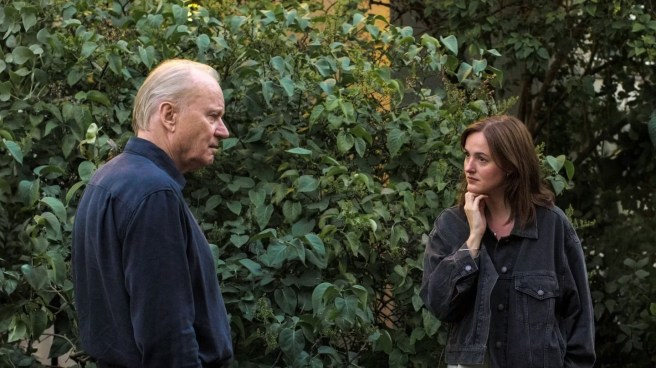
Nora (Renate Reinsve) and Agnes (Inga Ibsdotter Lilleaas) spent most of their formative years being raised by their psychiatrist mother following their parents’ split. Both have emotional scars as a result of their sense of abandonment. It is only natural then that they have a very real sense of trepidation when Gustav (Stellan Skarsgård) appears again at the wake of his ex-wife and they discover that it is he who now owns their family home.
Gustav has ulterior motives to his olive branch of reconciliation. Once a revered director, his career is now on the wane. Nora, however, is a now famous stage actor and if he can get her to sign up to be the star of his latest passion project, then her cache would help with obtaining funding. He also is quite keen on utilising Agnes’s young son in a pivotal role and filming in the family home. The project being about his own mother who took her life in the property as a result of the mental torment of the tortures she faced at the hands of the Nazis in World War II.
But when Nora rebukes him, Gustav finds himself lucky enough to hook famous actress Rachel Kemp (Elle Fanning). But can she live up to the dramatic calibre of film Gustav is looking for?
Sentimental Value is a dense story about familial pain and the use of art as a means to overcome and work through it. But at no point does it ever lose itself in the heaviness of the subject matter. It is at times funny and emotional and as its title suggests, finds the sentimental value in the memories that have shaped the families’ lives.
Key to its success are two story framing devices that allow us to understand the importance of the family’s history in their home and how for them art and life sometimes blend together. The first is that as a child, Nora was asked to write an essay from the perspective of an object. Choosing the family home for her project results in us not only hearing her essay but giving us the opportunity to hear stories of the different generations of the family from the perspective of the home. The home, which is of course vitally important to Gustav’s project and the place where Nora and Agnes share so many memories. The second is that on occasion, as we watch the story unfold, unbeknownst to us, we find ourselves unwittingly watching footage of the acting projects that are being worked on. Something that plays beautifully into the final moving scene and reinforces the idea that art is a cornerstone of the family’s means to heal.
The superbly crafted script from Eskil Vogt and director Joachim Trier is delivered with subtle brilliance from the four protagonists. Something recognised by the upcoming Academy Awards, which has nominated Reinsve, Skarsgård, Ibsdotter Lilleaas, and Fanning for acting awards, with the latter two in the same category.
Skarsgård’s character is perhaps the most enigmatic. A man unable to articulate his love for his children who is so wrapped up in his work that the only way his children ever felt his love was by being involved in it. His character delivers some of the more comedic moments of the film and is, of course, responsible for the outlooks of his children. Reinsve gets to deliver the most emotionally devastating performance as an actress who is both in love with her art and always attempting to run from it. Ibsdotter Lilleaas’s character does not hate her father quite so readily but is nervous to allow him in too far. Whilst Fanning does a great job as the outsider trying to understand her role and coming to realise how deeply it is intertwined with Gustav’s daughters.
The result is a powerful film with emotions that run deep and one that is incredibly rewarding to experience.
 Phil the Bear's Film Reviews