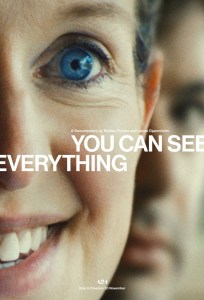
Thirty-four days before Theranos founder Elizabeth Holmes begins her prison sentence for fraud, she invites a documentary crew into her home.
Promising “radical transparency” to documentarian Nathan Fielder, we embark on a three-year journey exploring the nature of truth and human perception.
You Can See Everything is a remarkable piece of art which, at some level, discusses the nature of film, the idea of truth and the reality that human perception is different for every single individual. It will have you questioning the blurred lines of documentary filmmaking, the phrase “based on a true story” and fictional work. Ultimately, it will leave you conjecturing about how the filmmakers arrived at the means to present their subject. How early they came up with this idea is perhaps the most fascinating aspect, given the relatively short timescale they had access to Holmes.
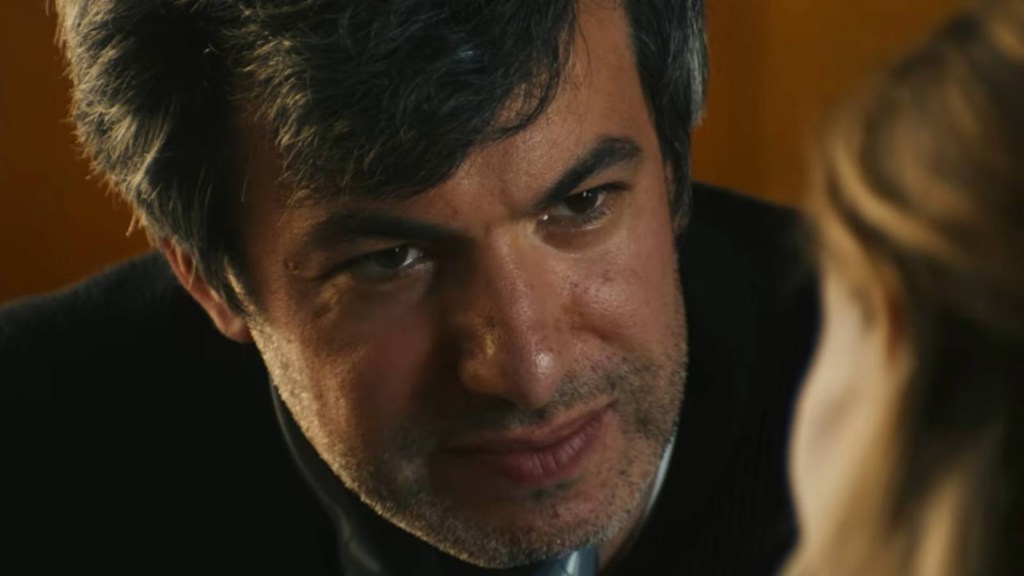
As the film progresses, it defies synopsis, but its opening premise is simple enough. In November 2022, Elizabeth Holmes, the founder of Theranos, was sentenced to just over eleven years in prison for fraud. Due to begin her sentence at the end of May 2023, she and her partner Billy Evans invite a documentary crew into their home in order to give the world an accurate view of who she is as a person. Nathan Fielder accepts the challenge and probes the couple with searching questions and elongated silences. Holmes presents as either the most manipulative or the most naive person to have walked the earth. Evans, on the other hand, presents as a protector and Machiavellian schemer whose end goal seems hidden.
Despite the promise of radical transparency, the pair seem to weaponise their “honesty”. Words omitted from sentences become as important as those used. But all the while, Fielder appears to be falling under the spell of Holmes’ large eyes and seemingly pure answers. Of course, this is itself a filmmaking conceit, another carefully constructed element of the film that encourages us to question what we are seeing and how much of it is real. Fielder’s decision to place himself front and centre within the production takes this mind-bending discussion about perception and interpretation to another level.
At times hilarious, at times thrilling, but never, ever predictable, You Can See Everything seems to get to the heart of what filmmaking can achieve. The process allows filmmakers to create their own perception. Perhaps something that Elizabeth Holmes is also an expert at.
A truly wonderful piece.